UN agency expands meals programme to more than 1,600 schools across Guinea
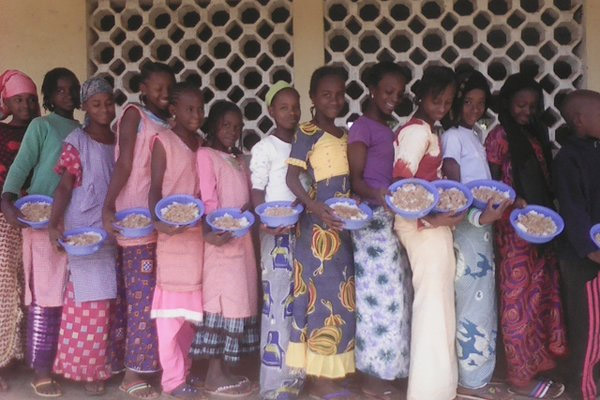
“When a nutritious hot meal is available at school, attendance rates increase significantly. School meals provide food security for children, keeping them in school and enabling them to concentrate on their studies,” Elisabeth Faure, WFP Country Director in Guinea, said in a statement released today.
As schools reopen across Guinea this week, WFP confirmed the resumption of its meals programme in all four regions of the country and also noted that the agency, in collaboration with the Ministry of Education and partners, will provide daily hot meals to children in the most food-insecure areas of the country, where poverty and malnutrition rates are the highest.
Public schools in Guinea remained closed after the 2014 summer holidays due to the Ebola outbreak.
According to the news release, as schools began to reopen since January, “WFP played an important role in encouraging families to send their children to school by gradually scaling-up the number of school canteens.”
In Guinea, high repetition and dropout rates remain serious concerns, particularly among adolescent girls.
According to the Ministry of Education’s school statistics for 2014, more than 17 per cent of the country’s primary-school-aged population is not attending classes – three-quarters of them are girls.
WFP indicated that it would provide take-home rations to girls who attend school regularly.
“WFP’s take-home rations encourage parents to send their daughters to school. When girls are educated, they are more likely to have fewer and healthier children, breaking the cycle of hunger and malnutrition,” explained Ms. Faure.
Photo: WFP/Sanoussy Barry
Support Our Journalism
We cannot do without you.. your contribution supports unbiased journalism
IBNS is not driven by any ism- not wokeism, not racism, not skewed secularism, not hyper right-wing or left liberal ideals, nor by any hardline religious beliefs or hyper nationalism. We want to serve you good old objective news, as they are. We do not judge or preach. We let people decide for themselves. We only try to present factual and well-sourced news.
Support objective journalism for a small contribution.