


 Pakistan Pollution
Toxic air crisis! Pakistan, Bangladesh lead world’s worst pollution rankings in 2025
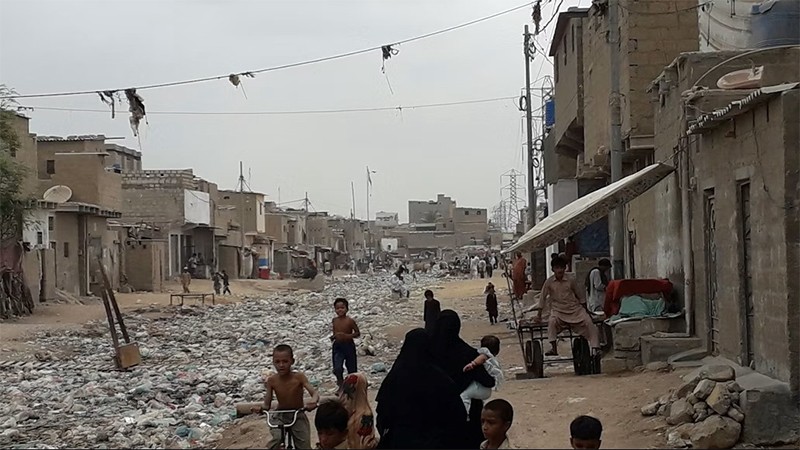
Pakistan has been ranked the world’s most polluted country in 2025, according to data released by Swiss air quality monitoring firm IQAir.
As per the IQAir report, the country’s average PM2.5 concentration is currently 13.5 times higher than the annual guideline set by the World Health Organization (WHO). Bangladesh and Tajikistan secured the second and third spots, respectively.
For this year’s assessment, IQAir analyzed air quality data from monitoring stations across 9,446 cities spanning 143 countries, regions, and territories. The report also expanded its coverage by adding 12 new countries and territories, seven of which were included for the first time.
Compared to last year, 54 countries recorded an increase in annual average PM2.5 levels, while 75 saw a decline. Two countries remained unchanged, and 12 were newly added to the dataset.
Key Findings from the 2025 World Air Quality Report:
Only 14% of global cities met the WHO’s annual PM2.5 guideline of 5 µg/m³, down from 17% last year.
Just 13 countries and territories met the WHO standard, including French Polynesia, Puerto Rico, Iceland, Australia, and Estonia.
A staggering 91% (130 out of 143) of countries exceeded the WHO’s recommended PM2.5 levels.
The five most polluted countries in 2025 were:
Pakistan (67.3 µg/m³)
Bangladesh (66.1 µg/m³)
Tajikistan (57.3 µg/m³)
Chad (53.6 µg/m³)
Democratic Republic of the Congo (50.2 µg/m³)
Loni in India emerged as the world’s most polluted city, with an annual average PM2.5 level of 112.5 µg/m³—nearly 23% higher than in 2024 and more than 22 times the WHO guideline. In contrast, Nieuwoudtville in South Africa was the cleanest city, recording just 1.0 µg/m³.
Notably, the world’s 25 most polluted cities were all located in India, Pakistan, and China, with India accounting for three of the top four.
Regional Highlights:
United States: El Paso, Texas, was the most polluted major city, while Seattle, Washington, remained the cleanest for the second consecutive year.
East Asia: No city met WHO PM2.5 guidelines for the second year in a row, with pollution patterns in China shifting westward.
Europe: Trends were mixed, with 23 countries seeing increases and 18 recording declines, influenced by wildfire smoke and Saharan dust.
Latin America & Caribbean: Air quality improved overall, with 208 cities reporting reduced PM2.5 levels.
Oceania: Continued to be among the cleanest regions, though seasonal spikes were recorded due to extreme weather conditions.
Wildfires, intensified by climate change, significantly impacted global air quality in 2025. Record biomass emissions from Europe and Canada released approximately 1,380 megatons of carbon, with Canada experiencing one of its worst wildfire seasons on record.
The report also highlighted concerns over reduced air quality monitoring after the United States State Department ended its global monitoring program in March 2025, weakening data access in several countries.
“Air quality is a fragile asset that requires active stewardship to protect public health,” said IQAir Global CEO Frank Hammes. “Expanding access to real-time data empowers communities to act. By reducing emissions and addressing climate change, we can achieve lasting improvements in global air quality.”
Support Our Journalism
We cannot do without you.. your contribution supports unbiased journalism
IBNS is not driven by any ism- not wokeism, not racism, not skewed secularism, not hyper right-wing or left liberal ideals, nor by any hardline religious beliefs or hyper nationalism. We want to serve you good old objective news, as they are. We do not judge or preach. We let people decide for themselves. We only try to present factual and well-sourced news.
Support objective journalism for a small contribution.


