 Zambia
Thousands head home voluntarily from Zambia to DR Congo
New York: Nearly 5,000 refugees who fled violence in the Democratic Republic of the Congo (DRC) four years ago, are opting to head home voluntarily from Zambia over the coming months, with the first 100 people setting out on Tuesday.
The UN refugee agency, UNHCR, said that security had improved sufficiently in DR Congo’s Pweto territory, Haut-Katanga province, for them to go home “in safety and dignity”.
Inter-ethnic clashes as well as fighting between Congolese security forces and militia groups in parts of southeastern DRC in 2017, have uprooted communities.
Through intention surveys carried out in October by UNHCR, some 4,774 refugees expressed their aim to voluntarily return to DRC.
International agreement
The voluntary repatriation, which will continue into 2022, is part of the ongoing 2006 tripartite agreement between UNHCR and the Governments of Zambia and DR Congo.
Partners are supporting the returning refugees by providing voluntary repatriation documents, expedited immigration clearance, health screening and school certificates to allow children to resume their education in the DRC.
“As security has improved in some areas of Haut-Katanga, an estimated 20,000 refugees have spontaneously left Zambia since 2018 to return to their areas of origin – mainly to Pweto territory”, UNHCR spokesperson Babar Baloch told journalists in Geneva.
Meanwhile, the UN refugee agency is working with authorities and development partners – such as Catholic aid confederation CARITAS – in DRC to advance reintegration projects, including education, health and agriculture, and to ensure conditions for safe and dignified returns.
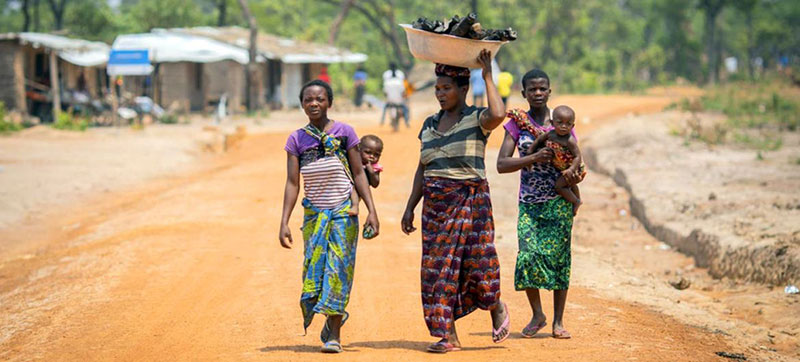
Currently, some 18,000 Congolese refugees farm at Mantapala settlement – established in early 2018 to accommodate displaced people – alongside 5,000 Zambians, across 11 integrated villages.
As Zambia continues to host 103,000 refugees, asylum seekers, and former refugees, including more than 63,000 from DR Congo, over the past three years around 20,000 Congolese have left to return home.
The UN Children’s Fund (UNICEF) and World Food Programme (WFP) are assisting in repatriation efforts.
Agency support
The two agencies have provided buses and trucks to help transport refugees, their belongings and food for the journey, Families will receive a cash grant to help them pick up their lives again in the DRC.
“UNHCR will disinfect the buses, provide face masks, hand sanitizers and, together with the authorities, ensure that COVID-19 prevention measures are observed, including loading of buses to half the capacity”, Mr. Baloch said.
UNICEF has improved water and sanitation facilities at the reception centre in Chiengi district, where returning refugees are being housed for the night to process immigration documents, before embarking on the final leg of their journey home.
And Zambian authorities are providing rapid COVID-19 tests for the returning refugees, at the Mantapala Rural Health Centre.
Support Our Journalism
We cannot do without you.. your contribution supports unbiased journalism
IBNS is not driven by any ism- not wokeism, not racism, not skewed secularism, not hyper right-wing or left liberal ideals, nor by any hardline religious beliefs or hyper nationalism. We want to serve you good old objective news, as they are. We do not judge or preach. We let people decide for themselves. We only try to present factual and well-sourced news.
Support objective journalism for a small contribution.