


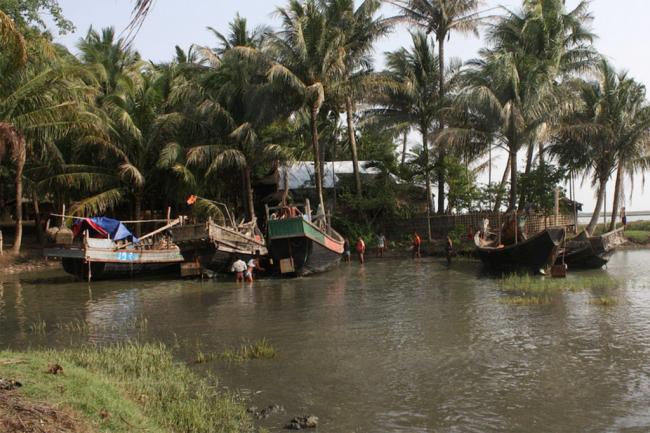
Thailand: UN urges action against trafficking after finding bodies in smugglers' camp
“It’s distressing to hear that people who escaped difficult conditions back home have had to put their lives in the hands of ruthless smugglers, only to be killed before they could reach safety,” said James Lynch, Regional Representative and Regional Coordinator for South-East Asia for the Office of the UN High Commissioner for Refugees (UNHCR).
The agency says it has been helping the Thai authorities to care for people of concern who are caught in these situations.
According to UNHCR, its staff assists people rescued in law enforcement raids from the smugglers’ camps by providing immediate relief such as clothes, blankets and hygiene kits, and also conduct interviews, help reunite families who were split during the journey, provide counseling support and identify possibilities of resettlement to third countries for the most vulnerable people.
Thai authorities announced this week that they found the remains of some 30 people believed to originate in Myanmar and Bangladesh, according to a UNHCR press release issued in Bangkok, Thailand.
“Investigations are still ongoing, with initial police accounts citing illness and abuse as likely causes of death,” according to UNHCR.
In Myanmar’s Rakhine state – where many of the smuggling victims originate – UNHCR has long advocated for and stands ready to support concerted efforts to stabilize the situation through the realization of rights for all, reconciliation, socio-economic equality and addressing issues related to citizenship.
But the refugee agency said, “This is the first time that graves of a large number of people believed to be of concern to UNHCR have been identified.”
UNHCR says it has learned from hundreds of Rohingya survivors about horrific abuse and deprivation by smugglers on boats in the Bay of Bengal and in camps along the Thai-Malaysian border, including some who reported they saw people dying from beatings and lack of food.
“These findings have been shared with governments to advocate for urgent action,” the agency said.
In Malaysia, UNHCR also conducts protection monitoring in Rohingya communities and intervenes for the release of new maritime arrivals known to be in detention.
Lynch said human smuggling is a regional problem that requires a joint effort.
“Smuggling is a regional problem that requires coordinated efforts by countries in the region, including countries of origin, transit and destination,” he said.
He added, “Law enforcement measures must be accompanied by efforts to reduce the need for migrants and refugees to turn to smugglers in the first place, including by addressing the root causes driving people to undertake these dangerous journeys.”
Photo: UN
Support Our Journalism
We cannot do without you.. your contribution supports unbiased journalism
IBNS is not driven by any ism- not wokeism, not racism, not skewed secularism, not hyper right-wing or left liberal ideals, nor by any hardline religious beliefs or hyper nationalism. We want to serve you good old objective news, as they are. We do not judge or preach. We let people decide for themselves. We only try to present factual and well-sourced news.
Support objective journalism for a small contribution.


