


 Sudan
Sudan
Sudan: ‘lost generation’ of children amid war, hunger, disease: UN humanitarians
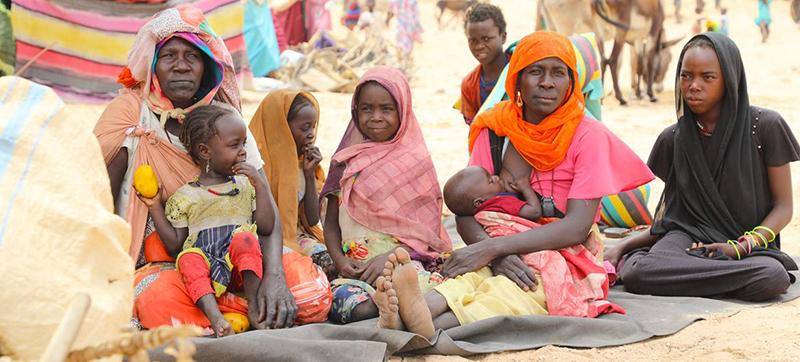
UN humanitarian chief Martin Griffiths said on Friday that the spread of fighting and hunger in Sudan could destroy the country, as the future of a “lost generation” of children lies in the balance.
Griffiths said that the conflict spelled trauma for Sudan’s youth and cited “deeply disturbing” reports that some children were being used in the fighting.
He also warned that hundreds of thousands of children in the country were severely malnourished and “at imminent risk of death” if left untreated. Those children were particularly vulnerable to disease outbreaks, while access to medical treatment was lacking.
Healthcare ‘decimated’
A “staggering” 67 per cent of all main hospitals in areas affected by the fighting were already out of service as of 31 May, the UN World Health Organization (WHO) said. Only 29 hospitals were operating fully or partially and were at risk of closure due to shortages of medical staff, supplies, water and electricity.
Griffiths stated that the conflict had simply “decimated” Sudan’s health care sector.
The UN health agency warned that critical services, including maternal and child health care and management of severe acute malnutrition, have been discontinued in many areas. WHO noted the high prevalence of wasting and stunting among children, and said that cases of dengue, measles and acute watery diarrhoea were being reported across the country.
‘Lethal combination’
The UN Children’s Fund (UNICEF) joined other UN humanitarians in sounding the alarm over the future of the country’s youth, saying that “the lethal combination of measles, malnutrition and displacement is putting lives of children at a very high risk if urgent action is not taken”.
According to UNICEF, at least two million children have been forced from their homes since the start of the conflict just over four months ago. The UN agency also deplored that as the conflict dragged on, an entire generation of young Sudanese was likely to miss out on education.
‘Viral’ spread of conflict
Humanitarians expressed fears of a long war given the relentless, “viral” spread of fighting across the country. Mr. Griffiths noted that the violence and ensuing food shortages had reached the country’s Kordofan region. In South Kordofan’s capital Kadugli, food stocks have been depleted while fighting and roadblocks barred aid workers from reaching those in need, he said.
Griffiths added that in West Kordofan’s El Fula, humanitarian offices have been ransacked and supplies looted.
He also expressed concern for the safety of civilians in Al Jazira in the eastern part of the country. The state was known for its wheat production and Mr. Griffiths underscored that the conflict was moving ever closer to “Sudan’s breadbasket”.
Region under pressure, funding scarce
With cross-border displacement nearing the one million mark, “a protracted conflict in Sudan could tip the entire region into a humanitarian catastrophe”, Griffiths said.
He called on the warring parties to “put the people of Sudan above the pursuit of power or resources”, and on the international community to respond “with the urgency this crisis deserves”.
According to the UN humanitarian affairs coordination office (OCHA), the $2.57 billion humanitarian appeal for Sudan is currently only 26 per cent funded, while funding for the response plan to support neighbouring countries has reached just over 30 percent.
Support Our Journalism
We cannot do without you.. your contribution supports unbiased journalism
IBNS is not driven by any ism- not wokeism, not racism, not skewed secularism, not hyper right-wing or left liberal ideals, nor by any hardline religious beliefs or hyper nationalism. We want to serve you good old objective news, as they are. We do not judge or preach. We let people decide for themselves. We only try to present factual and well-sourced news.
Support objective journalism for a small contribution.


