


Southeast Asia: UN rights office appeals for halt in executions for drug crimes
“According to international human rights jurisprudence, capital punishment could only be applied to the crime of murder or intentional killing,” OHCHR spokesperson Ravina Shamdasani told reporters in Geneva, where the Office is based.
“Drug-related offences, economic crimes, political crimes, adultery, and offences relating to consensual same-sex relationships did not fall under the threshold of ‘most serious crimes’ required under international law for application of the death penalty,” Shamdasani said.
OHCHR expressed its concern about the continued use of the death penalty for drug-related crimes in parts of South East Asia, where last Sunday, six people convicted of drug offences were executed in Indonesia in spite of several national and international appeals. Further, a court in Vietnam on Tuesday reportedly sentenced eight people, including two women, to death for heroin trafficking.
The Office is particularly concerned about the respect for due process in such cases after Indonesian President Joko Widodo reportedly stated that he would reject all requests for clemency for drug-related crimes, the Spokeswomen said.
OHCHR urged the Indonesian authorities to reinstate a moratorium on the death penalty and to conduct a thorough review of all requests for pardon with a view to commutation of sentence, Shamdasani said.
According to the International Covenant on Civil and Political Rights, which Indonesia has ratified, "anyone sentenced to death shall have the right to seek pardon or commutation of the sentence," according to the spokeswoman.
OHCHR also called on Vietnam not to carry out those executions of the eight people sentenced on Tuesday , to ensure judicial review of the sentences, and to consider elimination of the death penalty for drug-related crimes.
In Southeast Asia, drug-related crimes are punishable by death in Indonesia, Malaysia, Singapore, Thailand and Viet Nam.
While those crimes are also punishable by death in Brunei Darussalam, the Lao Peoples’ Democratic Republic and Myanmar, those three countries have not carried out executions since 1957, 1989 and 1988, respectively.
The OHCHR Spokesperson said the International Narcotics Control Board had encouraged States that still imposed the death penalty for drug-related offenses to abolish that punishment.
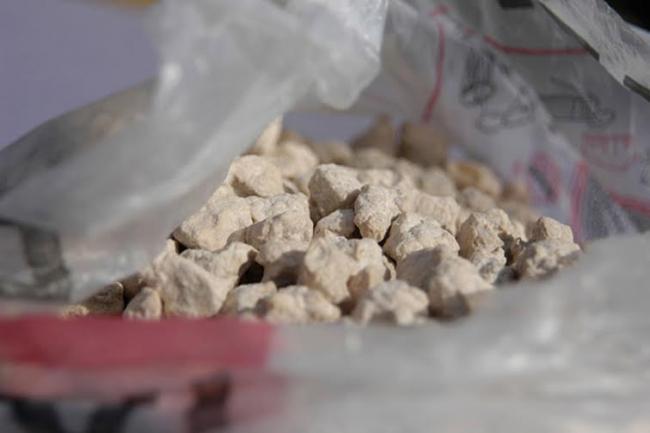
Photo: UNODC (file)
Support Our Journalism
We cannot do without you.. your contribution supports unbiased journalism
IBNS is not driven by any ism- not wokeism, not racism, not skewed secularism, not hyper right-wing or left liberal ideals, nor by any hardline religious beliefs or hyper nationalism. We want to serve you good old objective news, as they are. We do not judge or preach. We let people decide for themselves. We only try to present factual and well-sourced news.
Support objective journalism for a small contribution.


