Somalia: UN, partners seek $1.6 billion to protect millions of lives from drought
New York, Jan 18 (JEN): While Somalia, with the international community’s help, averted famine last year, long-term solutions for drought, conflict and displacement must still be found, the United Nations office in the country said Wednesday, launching the 2018 humanitarian response plan, which calls for $1.6 billion to protect the lives of 5.4 million people.
“I am proud that we averted a possible famine last year. Lasting solutions […], however, out of our reach, and much more must be done to eliminate the looming threat of famine in this country,” said the Humanitarian Coordinator for Somalia, Peter de Clercq, in the Somali capital, Mogadishu.
With that in mind, he called for tackling humanitarian needs while simultaneously looking at longer-term solutions. “If we do not continue to save lives and in parallel build resilience, then we have only delayed a famine, not prevented one,” warned de Clercq.
According to the UN Office for the Coordination of Humanitarian Affairs (OCHA), the plan prioritizes immediate relief operations in areas with significant numbers of people living in crisis and emergency situations, and now includes a strategy to address protection gaps for those most vulnerable, such as the internally displaced, women and children.
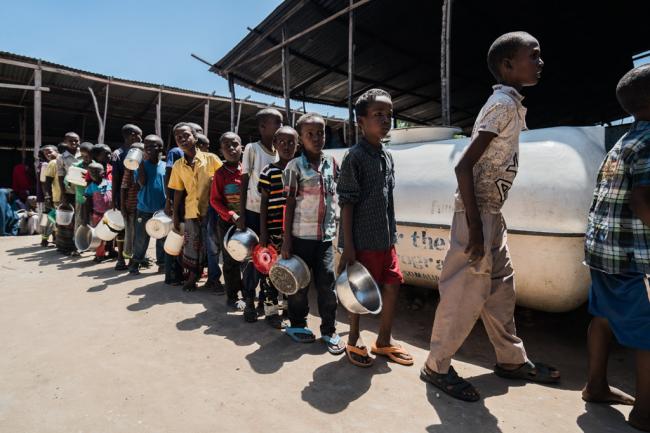
In 2017, displacement reached unprecedented levels, with food security needs nearly doubling the five-year average. The number of Somalis on the brink of famine has grown tenfold since this time last year. An estimated 1.2 million children are projected to be malnourished in 2018, 232,000 of whom will face life-threatening severe acute malnutrition.
To mitigate future crises, humanitarians are working with development partners and Somali authorities to address the underlying causes of recurring crises, including food insecurity and mass displacement.
“With important progress made on the political and governance fronts, Somalia is on a positive trajectory, despite ongoing crises. The country has more effective institutions than it has for decades,” said de Clercq.
However, he noted that these gains are reversible and must be protected. “With continued international support, we can break the cycle of recurrent crises that undermine the peacebuilding and State-building process in Somalia,” he concluded.
Photo: Giles Clarke for Getty/OCHA
Support Our Journalism
We cannot do without you.. your contribution supports unbiased journalism
IBNS is not driven by any ism- not wokeism, not racism, not skewed secularism, not hyper right-wing or left liberal ideals, nor by any hardline religious beliefs or hyper nationalism. We want to serve you good old objective news, as they are. We do not judge or preach. We let people decide for themselves. We only try to present factual and well-sourced news.
Support objective journalism for a small contribution.