Somalia remains one of the largest, most complex emergencies: UN official
“We are dealing with a country putting things together again,” said Philippe Lazzarini.
He said, “We have a post-conflict situation but we also have a conflict existing. We have military operations but we also have different stages of recovery and development.”
That meant that aid delivery remained incredibly dangerous, and Lazzerini had described to UN Member States the challenges of delivering humanitarian assistance, as highlighted by the attack three weeks earlier in northern Somalia on UN Children’s Fund (UNICEF) workers, where four lost their lives and five were wounded.
“I think it’s an understatement to say that Somalia remains one of the largest and most complex emergencies in the world,” he said.
He pointed to figures, such as the fact that three million people need humanitarian assistance or livelihood support, among whom 740,000 are unable to meet food needs, as well as 200,000 children who are severely malnourished.
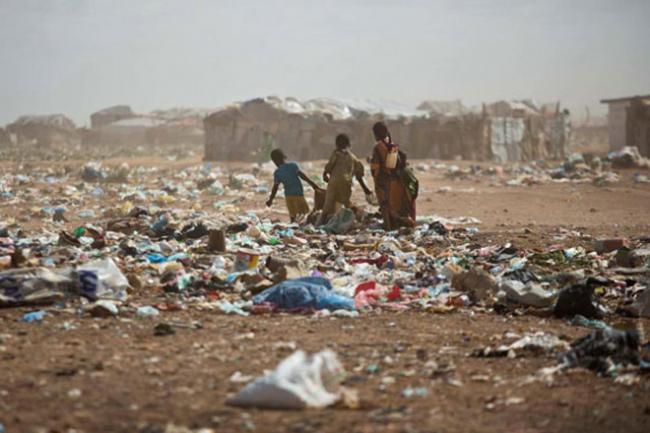
He stressed the vulnerability of the one million internally displaced persons (IDPs) in the country, whose vulnerability made them “pariahs among pariahs” as they continued to live in appalling conditions.
Lazzerini underlined Somalia’s susceptibility to natural disasters and food insecurity and said it was still too early to say whether the harvest would be sufficient or not.
The country also faced challenges due to a money transfer operator ceasing operations there and he pointed out that 40 per cent of Somalia’s population is dependent on remittances.
He said they accounted for between $1.3 and $1.5 billion of annual gross domestic product (GDP) and amounted to twice the value of the international humanitarian effort.
Lazzerini also pointed to several achievements including the arresting of a polio outbreak.
After a large number of cases was found, there followed “sustained mobilization of the aid community” and the vaccination of 4 million people to put an end to the outbreak.
While the country was not polio free, there had been no new cases since August 2014.
Also in health sector, he noted a drop in prevalence of malaria, which had been reduced from 20 per cent to less than two per cent.
Vaccination campaigns had also allowed Somalia’s livestock to recover to an extent that exports had re-started, generating profits of $350 million for Somali farmers.
He called on the international community to address the root causes of the problems in Somalia, pointing out that the international activity in Somalia had been humanitarian focused for 25 years.
“Humanitarian assistance is a band aid that allows us only to keep people alive,” said Lazzerini, calling for a durable solution for IDPs.
Photo: UNICEF/Kate Holt
Support Our Journalism
We cannot do without you.. your contribution supports unbiased journalism
IBNS is not driven by any ism- not wokeism, not racism, not skewed secularism, not hyper right-wing or left liberal ideals, nor by any hardline religious beliefs or hyper nationalism. We want to serve you good old objective news, as they are. We do not judge or preach. We let people decide for themselves. We only try to present factual and well-sourced news.
Support objective journalism for a small contribution.