 Press Freedom
Press freedom more important than ever, as UN condemns killing of 59 media workers
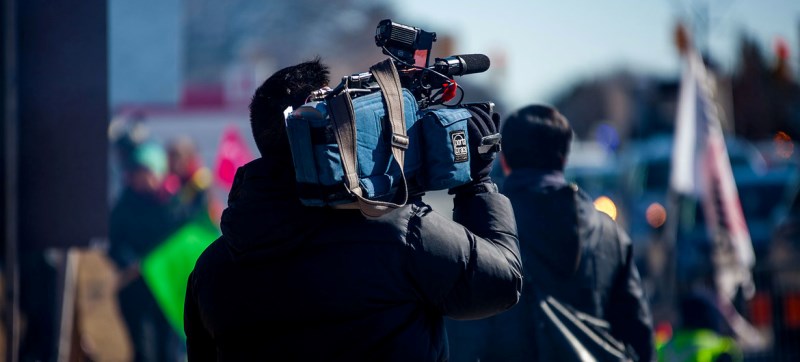
New York: At least 59 media workers have been killed this year, four of them women, the UN said on Wednesday, in a call to stand up for access to information and factual reporting “as a public good”.
On average over the past decade, one journalist has lost their life every four days, according to UNESCO, the UN Educational, Cultural and Scientific Organization, in a statement on Wednesday.
Although 2020 saw one of the lowest tolls in years, UNESCO Director-General Audrey Azoulay, said that rarely, if ever, had journalism been so relevant to democracy and to the protection of human rights, as the world continues battling the coronavirus and the ‘infodemic’ that surrounds it.
‘Protecting the truth’
The pandemic has been a “perfect storm” that has affected press freedom worldwide, Ms Azoulay continued, before insisting that “protecting journalism is protecting the truth”.
With 22 killings each, Latin America and the Caribbean, together with Asia and the Pacific, registered the highest number of fatalities among journalists.
This was followed by the Arab States Region with nine deaths, and Africa with six.
Impunity for crimes against journalists has continued to prevail in nearly nine out of 10 cases, despite a small improvement in 2020, UNESCO said.
The 2020 UNESCO Director-General’s Report on the Safety of Journalists and the Danger Impunity, published to coincide with the International Day to End Impunity for Crimes Against Journalists, provided insight into the patterns of killings of journalists over the past two years.
The launch of the report was accompanied by a high-impact global awareness-raising campaign from UNESCO, Protect Journalists. Protect the Truth.
“All too many killings still occur and non-fatal attacks and harassment continue to soar. 2020 brought to the fore the dangers facing journalists as they report on protests such as Black Lives Matter demonstrations and other movements around the world”, said UNESCO.
Protest dangers
Earlier this year, the agency identified 125 protests in 65 countries at which journalists were attacked or arrested, between 1 January 2015 and 30 June 2020. Twenty-one of these events took place during the first half of 2020, but the number of incidents has gone on rising during the second half of the year.
Additionally, said UNESCO, the safety of women journalists remains a major source of concern. “Targeted for their profession and gender, women journalists are particularly affected by online harassment and gender-based violence.”
Contagion crisis
Challenges to the safety of journalists were exacerbated by COVID-19. “The crisis it unleashed has threatened the very viability and survival of professional media outlets”, said the agency, due to the associated advertising revenue loss, creating “an even more precarious environment for media workers with new challenges to their right to seek, receive and impart information.”
Additionally, in many countries, emergency legislation and measures adopted to curtail the spread of the virus have served as an alibi to restrict freedom of expression and of the press, the agency noted.
Journalists have also been prosecuted for exposing the failings in how governments have handled the pandemic.
Together, these conditions have formed what many have called a “perfect storm”, UNESCO added, leading to fear that the profession of journalism risks facing “extinction”, as noted in the agency’s brief Journalism, Press Freedom and COVID-19.
UN pushing back
To face these challenges, UNESCO has reinforced its awareness-raising programmes, engaged with the judicial systems worlwide to fight impunity; reinforced the UN Plan of Action on the Safety of Journalists and the Issue of Impunity; produced rapid and reliable information about the challenges, and increased capacity building opportunities for journalists and other media workers.
Support Our Journalism
We cannot do without you.. your contribution supports unbiased journalism
IBNS is not driven by any ism- not wokeism, not racism, not skewed secularism, not hyper right-wing or left liberal ideals, nor by any hardline religious beliefs or hyper nationalism. We want to serve you good old objective news, as they are. We do not judge or preach. We let people decide for themselves. We only try to present factual and well-sourced news.
Support objective journalism for a small contribution.