 WHO
WHO
Preserving dignity, public health: Managing deceased bodies during crises
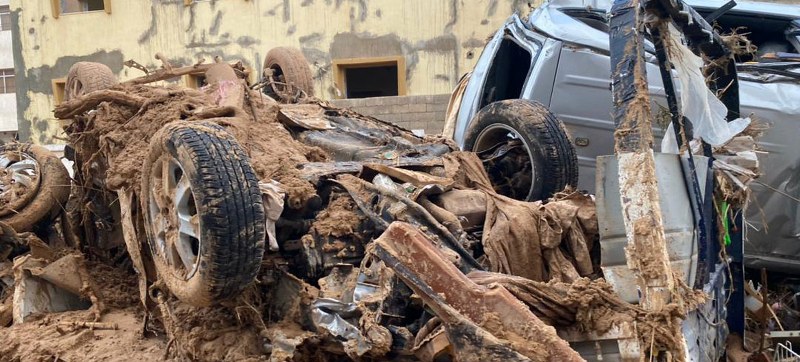
The UN World Health Organization (WHO) on Friday joined with the Red Cross and Red Crescent Societies, to underline the critical importance of preserving the dignity of the dead in the wake of recent natural disasters in Libya and Morocco.
The UN health agency together with the IFRC, and the International Committee of the Red Cross (ICRC), emphasized that proper care of the deceased also provides emotional closure for surviving families, and promotes public health.
The statement emphasized that the fear and misunderstanding caused by large scale fatalities “is often unfounded”, highlighting that communities need the right tools and information to manage the dead safely.
Dignity amid tragedy
In response to large scale natural disasters or the aftermath of armed conflict, some survivors may choose to expedite burials, often in mass graves, which can have adverse consequences, including long lasting mental distress for family members as well as social and legal problems.
“An unnecessary rush to dispose of bodies of those killed in disasters or conflict deprives families of the opportunity to identify and mourn their loved ones, while providing no public health benefit” said Gwen Eamer, IFRC’s Senior Officer for Public Health in Emergencies and Head of Emergency Operations, Morocco Earthquake Response.
Misconception of epidemic risks
Studies have shown that individuals who have succumbed to injuries resulting from disasters or war, generally do not present a health risk.
However, an exception arises when these bodies are near water sources, potentially contaminating water and increasing the risk of diarrheal and other illnesses.
“The belief that dead bodies will cause epidemics is not supported by evidence. We see too many cases where media reports and even some medical professionals get this issue wrong,” said Pierre Guyomarch, the head of ICRC’s forensics unit.
Burial guidelines
In order to better manage burials, some organisations outline guidance which includes easily traceable and properly documented individual graves in demarcated burial sites.
This guarantees precise information regarding the location of loved ones, along with their associated details and personal belongings.
Caution over mass graves
“We urge authorities in communities touched by tragedy to not rush forward with mass burials or mass cremations. Dignified management of bodies is important for families and communities, and in the cases of conflict, is often an important component of bringing about a swifter end to the fighting,” said Dr Kazunobu Kojima, Medical Officer for biosafety and biosecurity in WHO’s Health Emergencies Programme.
The ICRC, IFRC and WHO strongly encourage all parties involved in conflicts and disaster response, to stick to established principles for the management of deceased individuals.
Support Our Journalism
We cannot do without you.. your contribution supports unbiased journalism
IBNS is not driven by any ism- not wokeism, not racism, not skewed secularism, not hyper right-wing or left liberal ideals, nor by any hardline religious beliefs or hyper nationalism. We want to serve you good old objective news, as they are. We do not judge or preach. We let people decide for themselves. We only try to present factual and well-sourced news.
Support objective journalism for a small contribution.