Powerful El Niño intensifying in Asia and the Pacific region: UN
“The impact of the 2015-2016 El Niño could be even more severe in certain locations, such as the uplands of Cambodia, central and southern India, eastern Indonesia, the central and southern Philippines, central and northeast Thailand...” stated the Third Advisory Note on El Niño issued jointly by the UN Economic and Social Commission for Asia and the Pacific (ESCAP) and the Regional Integrated Multi-Hazard Early Warning System for Africa and Asia (RIMES).
While many southeast Asian countries, particularly India and Sri Lanka, expect to face severe flooding caused by heavy rainfalls, some Pacific islands – Papua New Guinea, Timor-Leste, and Vanuatu, among others – have been experiencing a serious drought, causing water shortage and food insecurity, according to the report.
“One of the most significant impacts is on agriculture, which is a key component of the GDP (Gross Domestic Product) for many Pacific countries,” warned the report.
Noting that the current UN climate change conference (COP21) in Paris has discussed and addressed the impacts brought by El Niño, and that actions are being taken in some countries, the publication provided key guidance in this regard.
Regional cooperation, the note stressed, is of great importance, given the transboundary nature of El Niño risks.
Early warning and monitoring, pre- or in-season mitigation, adaptation and response, as well as long-term risk management should be considered to tackle some shared vulnerabilities and risks.
“Only by coming together in the spirit of cooperation can the Asia-Pacific region hope to become truly disaster resilient and achieve sustainable development in the future,” said the guidance.
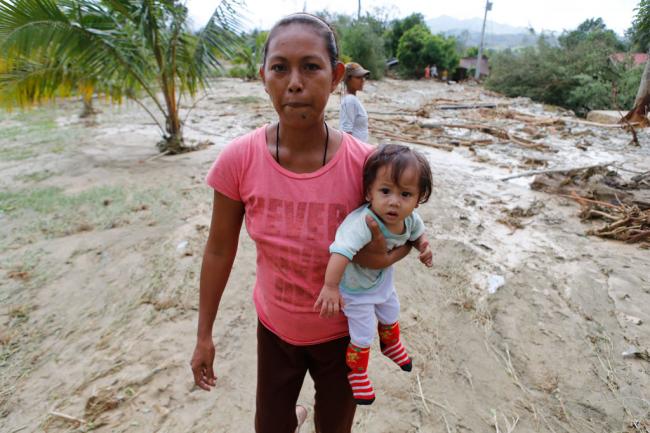
Photo: UNICEF/Jeoffrey Maitem/www.justearthnews.com
Support Our Journalism
We cannot do without you.. your contribution supports unbiased journalism
IBNS is not driven by any ism- not wokeism, not racism, not skewed secularism, not hyper right-wing or left liberal ideals, nor by any hardline religious beliefs or hyper nationalism. We want to serve you good old objective news, as they are. We do not judge or preach. We let people decide for themselves. We only try to present factual and well-sourced news.
Support objective journalism for a small contribution.