 PoK
PoK
PoK erupts in violence: Over 30 killed, 200 injured as security forces open fire on protesters
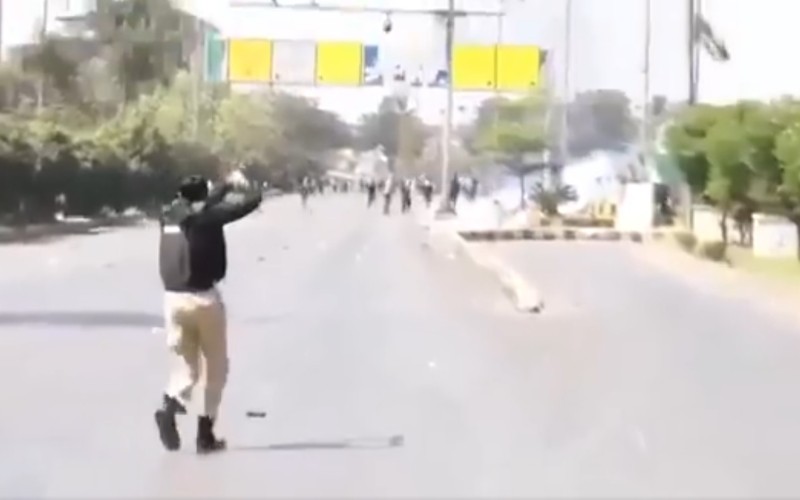
More than 30 people were killed and around 200 others injured after clashes broke out between protesters and security forces in Pakistan-occupied Kashmir (PoK), following a government ban on the Joint Awami Action Committee (JAAC), a prominent civil society alliance leading campaigns over economic and political grievances in the region.
The violence has triggered international concern, with members of the Kashmiri diaspora staging demonstrations in the United Kingdom and nearly 30 British parliamentarians urging diplomatic intervention amid reports of arrests, communication restrictions and escalating tensions.
Deadly clashes follow JAAC ban
According to police, the unrest intensified after JAAC supporters gathered outside a hospital mortuary where the body of a fellow activist had been taken following an earlier police firing incident.
Authorities said security personnel attempted to disperse the crowd, leading to violent confrontations.
Reports claim around 150 people were killed and hundreds injured in Rawalakot, PoK's Kashmir, after Pakistani forces opened fire.
— Megh Updates 🚨™ (@MeghUpdates) June 8, 2026
Protests seeking independence from Pakistan have continued intensely for several days. Situation out of control! pic.twitter.com/WLnYndryMc
Police alleged that some protesters used automatic weapons, petrol bombs and other projectiles against security forces during the clashes.
The JAAC had called for a strike to protest the reservation of 12 seats for refugees in the July 27 elections to the region's legislative assembly, where 45 seats are being contested.
The latest escalation came shortly after authorities formally banned the organisation, citing concerns over public order and security.
Protest movement rooted in economic demands
The JAAC has led several demonstrations in recent months, demanding implementation of a 38-point charter that includes subsidised flour, affordable electricity and governance reforms.
The movement has also opposed the continuation of reserved seats in the regional assembly.
🚨 MASSACRE in Rawalkot, PoK: Protests by JAAC over economic woes, rights & refugee policies turned deadly on June 7-8.
— Megh Updates 🚨™ (@MeghUpdates) June 9, 2026
Pakistan army has killed 200+ people last night in Rawalakot.
— SHAMEFUL ACT by Pakistan. pic.twitter.com/5jtg1IbLJZ
Activists say the protests reflect broader public frustration over rising living costs, shortages of essential services and demands for greater accountability from authorities.
Reports indicate that demonstrations have intensified since early June, particularly in Rawalakot, which has emerged as a focal point of the unrest.
Diaspora demonstrations reach Pak consulate in UK
As violence unfolded in PoK, members of the Kashmiri diaspora gathered outside Pakistan's Consulate in Bradford, United Kingdom, to protest the security crackdown.
According to ANI, demonstrators accused Pakistani authorities of using excessive force against civilians participating in protests across the region.
पीओके के कश्मीरी लोग ब्रिटेन में पाकिस्तान दूतावास के बाहर एकत्र होकर विरोध प्रदर्शन कर रहे हैं।
— Nirvesh Yadav (נירבש ידב) (@MYadavNirvesh) June 9, 2026
वहां के लोगों को अंततः यह एहसास हो गया है कि उनका असली दुश्मन कौन है। pic.twitter.com/TupkGaGN3T
Organisers claimed that multiple civilians had been killed and injured during security operations, particularly in Rawalakot, where tensions have remained high.
The overseas protests highlighted growing concern among diaspora communities over developments in the region and allegations of human rights violations.
British MPs seek diplomatic intervention
The unrest has also prompted intervention from a cross-party group of British lawmakers.
Bradford East MP Imran Hussain, who chairs the All-Party Parliamentary Group (APPG) on Kashmir, led a letter signed by nearly 30 Members of Parliament to the UK Foreign Office.
The letter cited reports of communication blackouts, arrests and increasing restrictions in Pakistan-occupied Kashmir.
The parliamentarians urged the British government to "engage proactively and use all appropriate diplomatic channels to encourage de-escalation and a peaceful resolution" of the crisis.
The MPs also expressed concern over reports involving British nationals.
"We are also concerned by reports of arrests, including those of British nationals, restrictions on communications, and a breakdown in dialogue between the authorities and representatives of the JAAC," the lawmakers stated in the letter, according to reports.
The group warned that communication restrictions in a politically sensitive environment could further inflame tensions and erode public confidence.
Arrests and Communication Restrictions Raise Concerns
Following the ban on JAAC, authorities reportedly detained dozens of individuals associated with the movement.
British parliamentarians noted that discussions between government representatives and protest leaders had stalled amid disagreements over longstanding civic, governance and human rights concerns.
The MPs called for restraint, renewed dialogue and meaningful engagement with those raising grievances.
They also sought clarification from the UK government regarding its assessment of the situation, efforts to assist British nationals and their families in the region, and measures being considered to prevent further escalation.
Longstanding grievances behind renewed unrest
The current wave of protests reflects issues that have surfaced repeatedly in Pakistan-occupied Kashmir over recent years.
Residents have previously staged demonstrations over electricity shortages, rising utility costs and food-related concerns.
The latest agitation has brought those demands back into focus while adding political representation and governance issues to the debate.
Support Our Journalism
We cannot do without you.. your contribution supports unbiased journalism
IBNS is not driven by any ism- not wokeism, not racism, not skewed secularism, not hyper right-wing or left liberal ideals, nor by any hardline religious beliefs or hyper nationalism. We want to serve you good old objective news, as they are. We do not judge or preach. We let people decide for themselves. We only try to present factual and well-sourced news.
Support objective journalism for a small contribution.