

 Pandemic
 showcases need for partnerships: ECOSOC President
New York: The COVID-19 pandemic has shown how all countries are connected, underscoring that global cooperation and solidarity are the only way out of the crisis, senior UN officials said on Monday during the annual Partnership Forum, organized by the UN Economic and Social Council (ECOSOC).
“If ever there was need for partnership, it is now”, ECOSOC President Munir Akram said in his opening remarks to the virtual gathering.
Highlighting the UN’s unique role in bringing together countries, companies and civil society, he outlined several areas where partnerships can be used to respond to COVID-19 and achieve the Sustainable Development Goals (SDGs).
Vaccines for all
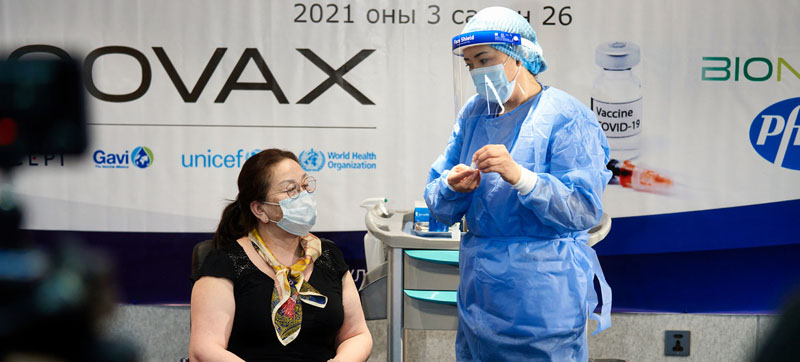
Mr. Akram said defeating the pandemic is the top priority, which calls for universal and equitable access to vaccines and related materials, equipment and technologies. Countries also must work together to prevent millions from descending into extreme poverty and destitution.
“This means helping the poorest people with direct and indirect economic support and social safety nets”, Mr. Akram said. “It means providing the poorest countries with fiscal space through debt relief, emergency grants and concession financing to save lives and livelihoods.”
Pandemic recovery also must be sustained. He said while richer countries have devoted some $17 trillion to revive their economies, developing nations will need around $4.3 trillion to not only recover from the pandemic but to get back on the path to sustainable development.
Promote financing solutions
The ECOSOC President said global partnerships must help to promote financing solutions such as debt restructuring, low-interest loans and greater foreign investment. The creation of $650 billion in new special drawing rights (SDRs), a type of foreign reserve asset developed by the International Monetary Fund, is another important component.
“We need to redress the structurally induced economic and social inequalities among and within nations, including through reformed and equitable trade, investment, tax and technology instruments”, Mr Akram continued.
He added that roughly $100 trillion in investment in sustainable infrastructure will be needed over the next three decades to bring about a resilient and environmentally-friendly global economy.
Pandemic recovery fund
The overall costs of the pandemic have been profound, Jens Wandel, Special Advisor to the UN Secretary-General on Reforms, told ambassadors.
He reported on the UN COVID-19 Response and Recovery Fund, established to help countries cope with the staggering social and economic impacts of the crisis.
The Fund supported innovations in healthcare and education, such as health digitalization in Morocco and establishment of telehealth technologies in Tajikistan.
Mr Wandel recommended that as the international community begins moving towards recovery, “some of the partnerships should also take a look at the innovation that has taken place…and then seek not only to sustain them but also to scale them.”
Support Our Journalism
We cannot do without you.. your contribution supports unbiased journalism
IBNS is not driven by any ism- not wokeism, not racism, not skewed secularism, not hyper right-wing or left liberal ideals, nor by any hardline religious beliefs or hyper nationalism. We want to serve you good old objective news, as they are. We do not judge or preach. We let people decide for themselves. We only try to present factual and well-sourced news.
Support objective journalism for a small contribution.