


 Pakistan
Pakistan fears major disease outbreaks after severe floods
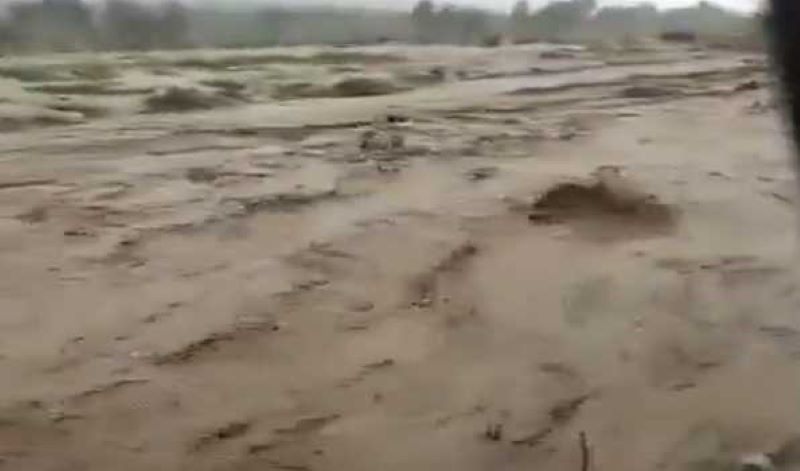
Islamabad/UNI: Pakistan health officials have warned of large-scale outbreaks of disease in the aftermath of biblical flooding that displaced millions of people.
A rise in cases of diarrhoea and malaria has been reported after months of heavy rains left people stranded and without access to clean water.
Authorities fear spread of waterborne diseases after the floods killed almost 1,200 people since June.
More than 880 clinics have been damaged, according to the World Health Organization, which has allocated $10 million to emergency health relief efforts in the SouthAsian nation .
WHO chief Tedros Adhanom Ghebreyesus said on Wednesday that the agency has classified the floods as the highest level of emergency.
He said the threat of waterborne diseases meant access to health services and disease monitoring and controls were a “key priority”.
Arif Jabbar Khan, director of WaterAid Pakistan, visited the worst-affected Sindh province and said there was a severe risk of diarrhoea and dysentery because of the lack of clean water.
“Families are now living on the banks of overflowed canals and rivers in ramshackle huts made of bamboo and plastic. They have even been drinking flood water because there is no other option – a recipe for large-scale disease outbreaks. We are doing all we can to reach them,” the Guardian quoted Khan as saying.
Over 33 million people have been affected by the floods, which have contaminated water sources and left latrines unusable.
The Guardian quoted government spokesperson, Kamran Bangash, who said "hundreds of people had contracted waterborne diseases. With evacuation operations almost completed, the authorities would focus on providing clean water and food".
The UN and Pakistan have asked for $160m to provide emergency support to 5 million people, including food, water, sanitation and shelter.
The WHO said it was working with the Pakistani government to respond to outbreaks of diarrhoea, cholera, besides malaria and dengue fever compounded by the floods.
Pakistan also risks an increase in measles and polio cases, which are still endemic there.
Aid agencies also warned that pregnant and menstruating women and girls were facing increased challenges.
The UN’s reproductive health agency, UNFPA, estimates there are 650,000 pregnant women in flood-affected areas, and up to 73,000 are expected to give birth in the next month.
Support Our Journalism
We cannot do without you.. your contribution supports unbiased journalism
IBNS is not driven by any ism- not wokeism, not racism, not skewed secularism, not hyper right-wing or left liberal ideals, nor by any hardline religious beliefs or hyper nationalism. We want to serve you good old objective news, as they are. We do not judge or preach. We let people decide for themselves. We only try to present factual and well-sourced news.
Support objective journalism for a small contribution.


