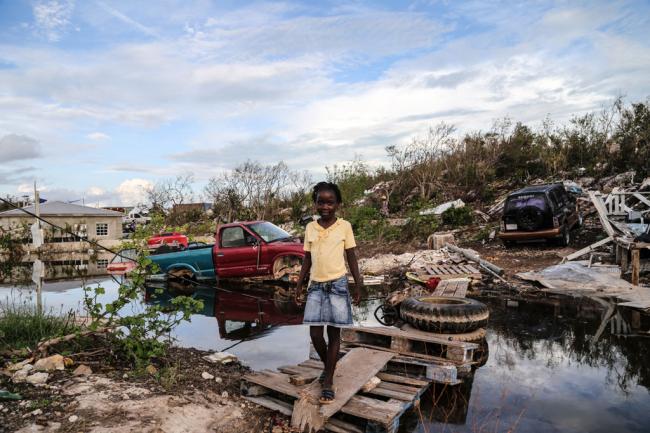
On International Day, UN forecasts 14 million people made homeless each year by disasters
“This is an important baseline against which we can measure progress in reducing disaster risk. The findings underline the challenge we have, to reduce the numbers of people affected by disasters,” said Robert Glasser, the UN Secretary-General’s Special Representative for Disaster Risk Reduction.
“Apart from death or severe injury in a disaster event, there is no more crushing blow than the loss of the family home which is often a place of work in many of the countries worst affected,” he added.
The numbers of internally displaced people, refugees and migrants are at an all-time high. Besides conflict, disasters trigger a significant percentage of such movements. Unless disaster risk is managed better, homelessness among people in the world’s most disaster-prone countries is predicted to continue rising.
The study, covering 204 countries and territories, shows that eight of the 10 countries with the highest risk of future displacement and loss of housing are in South and Southeast Asia.
In India, 2.3 million people face such risk, followed by China at 1.3 million; Bangladesh at 1.2 million; Vietnam at 1 million; the Philippines at 720,000; Myanmar at 570,000; Pakistan at 460,000; Indonesia at 380,000; Russia at 250,000; and the United States at 230,000.
The study was conducted by the Internal Displacement Monitoring Centre of the Norwegian Refugee Council and the UN Office for Disaster Risk Reduction (UNISDR), using probabilistic risk models for disasters, developed by UNISDR, which have been used to calculate estimates of future economic losses from a range of natural hazards.
This is the first time that these techniques have been applied to forecast potential average numbers of people made homeless over long periods of time. Slow on-set disasters attributed to drought and sea-level rise are not included.
“The Sendai Framework for Disaster Risk Reduction adopted by UN Member States two years ago has a key target for a substantial reduction in the numbers of people affected by disasters by 2030 and these findings should spur efforts to improve land zoning and the quality of buildings especially in seismic zones and on land exposed to storms and floods.” Glasser said.
Photo: UNICEF/Moreno Gonzalez
Source: www.justearthnews.com
Support Our Journalism
We cannot do without you.. your contribution supports unbiased journalism
IBNS is not driven by any ism- not wokeism, not racism, not skewed secularism, not hyper right-wing or left liberal ideals, nor by any hardline religious beliefs or hyper nationalism. We want to serve you good old objective news, as they are. We do not judge or preach. We let people decide for themselves. We only try to present factual and well-sourced news.
Support objective journalism for a small contribution.