New UN survey reveals extensive damage to health system in war-torn Yemen
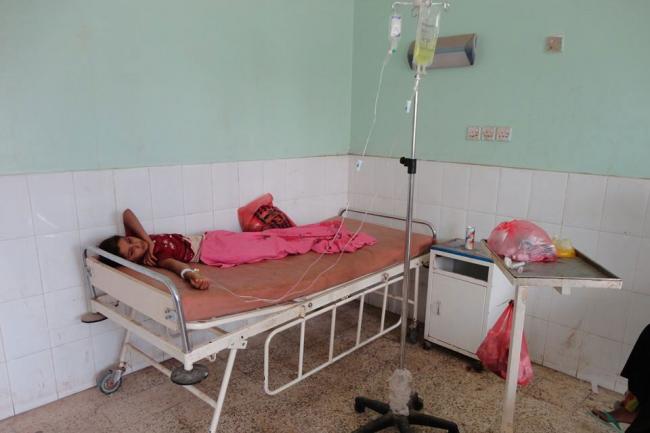
After examining 16 out of 22 Yemen’s governorates, the WHO’s Health Resources Availability Mapping System (HeRAMS) found that out of total 3,507 surveyed health facilities, only 1579 (45 per cent) are fully functional and accessible, 1,343 (38 per cent) are partially functional and 504 (17 per cent) are non-functional. Findings also revealed that 274 health facilities were damaged as a result of the ongoing conflict.
The WHO stated that 49 out of 276 districts have no medical doctors, with 42 per cent of surveyed districts having two doctors or less, and only 6.2 beds available for every 10,000 people, which is below the international benchmark.
Less than 40 per cent of health facilities are able to provide a full package of health care services, and only 21 per cent of facilities offer full services for non-communicable diseases and mental health conditions.
Child health and nutrition services are available in 63 per cent of health facilities, while communicable disease management is available in 43 per cent of the surveyed facilities, the WHO reports.
The agency also expressed concerns over the critical shortages in health services, which leads to more people being deprived of access to live-saving interventions, adding that there is a lack of essential antenatal care, skilled birth care and postpartum/postnatal interventions and immunization services for mothers and their new-born babies.
The WHO stressed that the absence of adequate communicable diseases management increases the risk of outbreaks such as cholera, measles, malaria, and other endemic diseases.
More than 21 million people are in need of urgent health services as a result of the ongoing conflict in Yemen, including 2.1 million of internally displaced people. The fighting affected almost all 22 governorates, killing 7070 and injuring 36,818 people, according to health facility-based data.
Yemen has been engulfed in violence for more than 18 months – a confrontation between the country's Houthis (Ansar Allah) and the Government of Yemen in early 2014 led to a Houthi advance on the capital, and an ensuing conflict which has involved support from outside parties. The UN has been heavily involved in efforts to resolve the crisis.
Photo: WHO Yemen
Source: www.justearthnews.com
Support Our Journalism
We cannot do without you.. your contribution supports unbiased journalism
IBNS is not driven by any ism- not wokeism, not racism, not skewed secularism, not hyper right-wing or left liberal ideals, nor by any hardline religious beliefs or hyper nationalism. We want to serve you good old objective news, as they are. We do not judge or preach. We let people decide for themselves. We only try to present factual and well-sourced news.
Support objective journalism for a small contribution.