


New UN report reveals barriers to inclusive development and highlights key steps to progress
While there has been unprecedented global social progress, it has not been evenly experienced. Some 40 per cent of the world’s population does not have access to education in a language they understand. Children of ethnic minorities and those who are disabled are much less likely to finish their primary and secondary educations. Even among those who are educated, youth, migrants, and indigenous peoples continue to be underpaid and unpaid. In some cases, social and economic inequalities have actually worsened.
The theme of this year’s report is ‘Leaving No One Behind – The Imperative of Inclusive Development.’ It examines key causes of social exclusion and identifies social, economic and political disadvantages that some groups face as a result. The report concludes with concrete policy recommendations that are central to the 2030 Sustainable Development Agenda.
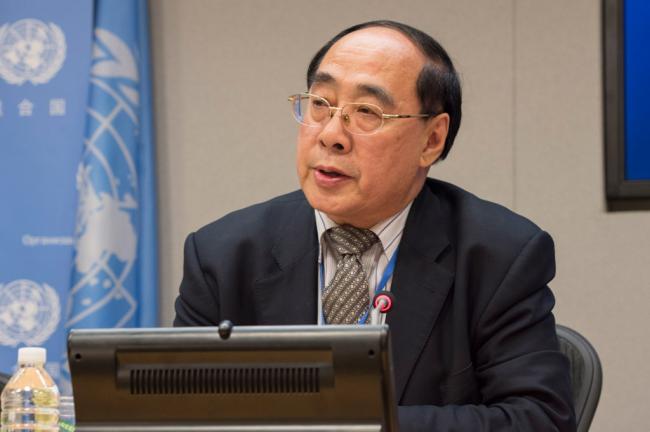
“The Sustainable Development Goals recognize that development will only be sustainable if it is inclusive,” said Wu Hongbo, the UN Under-Secretary-General for Economic and Social Development, adding: “Pursuing development grounded in social justice will be fundamental to achieving a socially, economically and environmentally sustainable future for everyone.”
A central pledge of that Agenda is to ensure that ‘no one is left behind;’ inclusiveness and shared prosperity are at the core of sustainable development. The report argues that in order to promote social inclusion, barriers to participation must be broken down by revising laws, policies, institutional practices, discriminatory attitudes and behaviours, and taking steps to ensure that participation is easier.
The report’s analysis focuses on three sets of indicators: those measuring access to opportunities – such as education and health; access to employment and income; and those measuring participation in political, civic, and cultural life.
Of course, many of these indicators overlap – lower levels of health and education tend to correlate with high levels of poverty and unemployment, for example.
Such inequalities tend to persist even after the structural conditions that created them change. That is, formal barriers may disappear, but discrimination can operate in less overt ways to perpetuate inequality.
For example, labour markets continue to reflect socially driven distinctions based on race, age, gender and other personal attributes, even after the effects of educational attainment and other sociodemographic traits are taken into account.
“Not only are these differences in life chances fundamentally unfair, they also lead to loss of human potential and development opportunities,” said Assistant Secretary-General for Economic and Social Development Lenni Montiel.
Such trends extend to participation in political, civic, and cultural life as well, such as in voting patterns and engagement in political activities. It is perhaps unsurprising, then, that the data reveals lower levels of trust and confidence in policing and justice systems among ethnic and racial minorities.
It is not enough for countries to remove discriminatory policies; subtler forms of discrimination, through attitudes and entrenched practices, must be confronted and rooted out, contends the report.
While there is no “one size fits all” solution for all countries, certain efforts like a universal approach to social policy and integration of measures that tackle discrimination have been successful in the past.
The report also advocates that stakeholders must promote inclusive institutions. Examples of ways to achieve that goal are by engaging with civil society, supporting equitable work environments, and challenging exclusionary attitudes.
Such changes, however slow to unfold, are necessary for sustainable progress, especially at the highest levels in powerful institutions.
UN Photo/Eskinder Debebe
Source: www.justearthnews.com
Support Our Journalism
We cannot do without you.. your contribution supports unbiased journalism
IBNS is not driven by any ism- not wokeism, not racism, not skewed secularism, not hyper right-wing or left liberal ideals, nor by any hardline religious beliefs or hyper nationalism. We want to serve you good old objective news, as they are. We do not judge or preach. We let people decide for themselves. We only try to present factual and well-sourced news.
Support objective journalism for a small contribution.


