New UN report highlights link between gender, climate and security
New York/IBNS: Even as countries buckle under the devastating social and economic impacts of the COVID-19 pandemic, they must consider the links between gender inequality and crisis, particularly in communities affected by climate change and conflict.
That’s the premise of a new UN report which argues that understanding these connections can help policymakers and donors to mitigate risks of violence and support the building of resilient, inclusive and peaceful societies.
“The climate crisis stretches well beyond just climate, and tackling it effectively requires responses that address the links between gender, climate and security - we must ensure no one is left behind”, said Inger Andersen, Executive Director at the UN Environment Programme (UNEP), which co-authored the study alongside UN Women, the UN Development Programme (UNDP), and the UN Department of Political and Peacebuilding Affairs (UNDPPA).
Gender influences response
The report - Gender, Climate & Security: Sustaining Inclusive Peace on the Frontlines of Climate Change - features case studies from across the globe.
They reveal how gender norms and power structures determine how women and men are affected by, and respond to, crises.
In Sudan and Nepal, for example, climate change has forced men to leave their villages to seek work elsewhere, leaving women to shoulder increased household responsibilities in degraded environments.
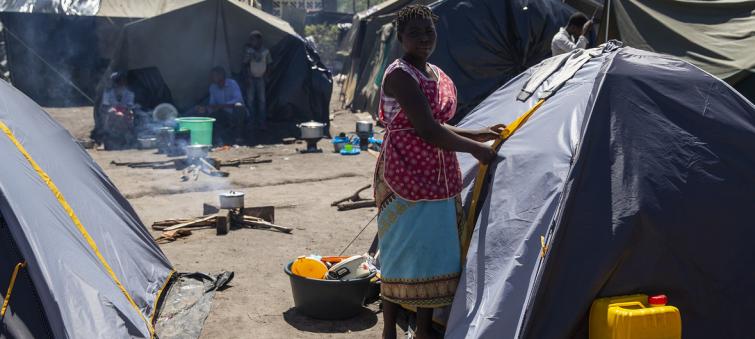
Other examples focus on risks faced by women in informal settlements in urban areas, including in Pakistan and Sierra Leone.
COVID-19 compounding challenges
The authors warn that the COVID-19 pandemic is further compounding the impacts of climate change on food security, livelihoods, social cohesion and security.
This threatens to undermine development gains, escalate violence and disrupt fragile peace processes.
Interventions around natural resources, the environment and climate change, provide opportunities for women’s political and economic leadership, according to the report.
“Strengthening the role of women in the management of natural resources also creates opportunities for them to act as peacebuilders and manage conflicts in non-violent manners,” said Oscar Fernández-Taranco, UN Assistant Secretary-General for Peacebuilding Support.
Tackle inequality to build back better
The report calls for greater investment in gender equality and women’s empowerment in fragile states.
“Gender inequality, climate vulnerability, and state fragility are strongly interlinked - we know, for example, that countries with higher values in one of these areas tend to score higher in the other two", said UNDP Administrator Achim Steiner.
“At the same time, aid targeting initiatives that empower women and promote gender equality remains very low.”
The authors hope the report will help to reinforce women’s roles in peacebuilding, which is fundamental to achieving sustainable development for all.
“Building back better with a gender lens means ensuring our post-COVID economies tackle the fundamental inequalities in society and end violence against women”, said Phumzile Mlambo-Ngcuka, Executive Director at UN Women.
“Women are a powerful force to rebuild societies more securely, from providing food and shelter, to generating vital income and leading sustainable change.”
Support Our Journalism
We cannot do without you.. your contribution supports unbiased journalism
IBNS is not driven by any ism- not wokeism, not racism, not skewed secularism, not hyper right-wing or left liberal ideals, nor by any hardline religious beliefs or hyper nationalism. We want to serve you good old objective news, as they are. We do not judge or preach. We let people decide for themselves. We only try to present factual and well-sourced news.
Support objective journalism for a small contribution.