 Myanmar
Myanmar overtakes Afghanistan to become world’s top opium producer
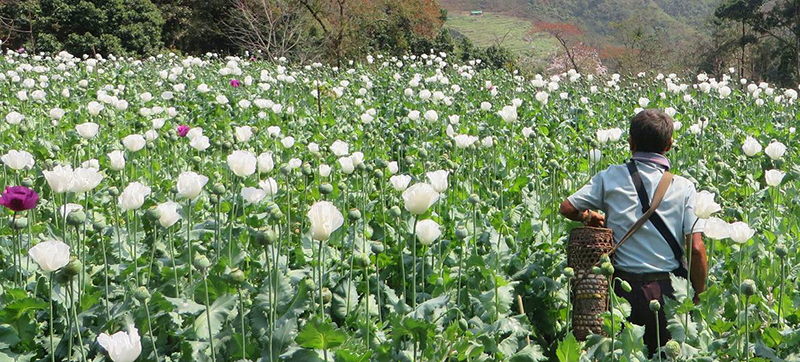
Myanmar is now the world’s largest opium producer, the UN Office on Drugs and Crime (UNODC) reported on Tuesday, as the economic and political crisis following the 2021 coup and widening conflict between the military and armed groups continues to drive farmers towards illicit opium poppy production.
The southeast Asian country’s opium output has surpassed that of Afghanistan, where the Taliban imposed a ban on its production in April last year – leading to a 95 per cent fall in cultivation, UNODC said.
The area under opium cultivation this year is estimated to be 47,100 hectares, up from 40,100 last year, while the corresponding yield is estimated to be 1,080 metric tonnes, up 36 per cent from the 2022 estimate.
Trend accelerating
“The economic, security and governance disruptions that followed the military takeover of February 2021 continue to drive farmers in remote areas towards opium to make a living,” said Jeremy Douglas, UNODC Regional Representative, based in Bangkok.
“The intensification of conflict in Shan and other border areas is expected to accelerate this trend,” he added.
The conflict erupted in October between the junta and an alliance of well-armed ethic groups and forces backing the National Unity Government (NUG, set up by lawmakers of the erstwhile parliament) has spread to over two-thirds of the country, with the military reported to have lost key towns.
Source: UNODC report Changes in area under opium cultivation between 2022 and 2023
Click here for the report
More sophisticated farming
UNODC also reported that the most significant increases were registered in the Shan state, which lies in the so-called Golden Triangle, considered to be the hub of narcotic production and smuggling.
The cultivation there increased by 20 per cent, followed by Chin and Kachin states – bordering India –where it increased by 10 per cent and six per cent, respectively.
The average estimated opium yield expanded to 22.9 kilogrammes per hectare, up from the previous record of 19.8 kg/ha set in 2022, “reflecting more sophisticated farming practices and investments in irrigation systems and fertilizers by farmers and buyers,” the Office said.
Fuelling other crimes
The expansion of opium cultivation is feeding a growing illicit economy in the Mekong region, bringing together high levels of synthetic drug production and drug trafficking, money laundering and online criminal activities including casinos and scam operations.
“The crime and governance challenges in the region are compounded by the crisis in Myanmar. Southeast Asia needs to come together to find solutions to both traditional and emerging threats,” Mr. Douglas said.
UNODC noted that solutions within the country need to consider the complex realities and vulnerabilities faced by people living in opium-cultivating areas.
It added that it works directly with farmers and communities to improve socio-economic conditions for long-term income generation, helping build resilience to conflict and economic disruptions.
Support Our Journalism
We cannot do without you.. your contribution supports unbiased journalism
IBNS is not driven by any ism- not wokeism, not racism, not skewed secularism, not hyper right-wing or left liberal ideals, nor by any hardline religious beliefs or hyper nationalism. We want to serve you good old objective news, as they are. We do not judge or preach. We let people decide for themselves. We only try to present factual and well-sourced news.
Support objective journalism for a small contribution.