More reliable data needed to combat racism and discrimination: UN rights expert
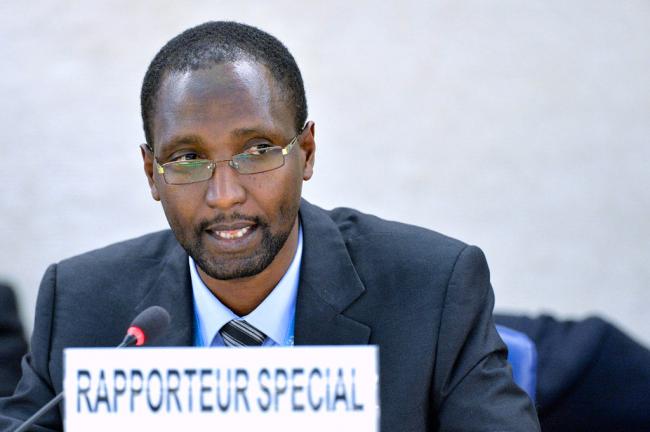
“The lack of disaggregated data has led to a serious information gap that limits the effective identification of population groups that are suffering discrimination,” the UN Special Rapporteur on contemporary forms of racism, Mutuma Ruteere, said after presenting his latest report to the UN General Assembly.
“It also hinders adequate policymaking at the national, regional and international levels and promotes impunity,” Ruteere said.
He noted that, although there is no clearly stated international obligation to collect ethnic data, the human rights legal framework provides a strong mandate to gather this kind of data.
“The right to be free from discrimination includes the right to access information that could serve as evidence to prove discrimination,” he said.
The human rights expert acknowledged the fears and anxieties expressed by some states and vulnerable groups regarding the collection of sensitive data, but he said that these concerns can be overcome if strict human rights rules are observed, including the right to privacy, the protection of data, the establishment of participatory processes based on informed consent as well as the self-identification of respondents.
“The collection of data disaggregated by ethnicity on economic, social, cultural, civil and political indicators is a pre-requisite if we are to identify patterns of discrimination and existing gaps,” Ruteere said.
He added, “Through better data collection, discriminated groups will become more visible and get better protection.”
Equality is at the heart of the newly adopted sustainable development agenda which, under Goal 17, calls for the collection of disaggregated data to measure progress while leaving “no one behind,” to promote and foster non-discrimination while upholding the universality of human rights, he said.
“At a time where the international community is discussing how to measure progress on the new agenda, the adoption of indicators capturing levels of discrimination will demonstrate States’ commitment,” Mr. Ruteere said.
Ruteere was appointed by the Human Rights Council as Special Rapporteur on contemporary forms of racism, racial discrimination, xenophobia and related intolerance in November 2011.
As Special Rapporteur, he is independent from any government or organisation and serves in his individual capacity. He is not UN staff and does not receive a salary for their work.
UN Photo/Jean-Marc Ferré
Support Our Journalism
We cannot do without you.. your contribution supports unbiased journalism
IBNS is not driven by any ism- not wokeism, not racism, not skewed secularism, not hyper right-wing or left liberal ideals, nor by any hardline religious beliefs or hyper nationalism. We want to serve you good old objective news, as they are. We do not judge or preach. We let people decide for themselves. We only try to present factual and well-sourced news.
Support objective journalism for a small contribution.