


Millions of children will fall behind unless new UN development goals focus on most in need – UNICEF
“As the global community comes together around the sustainable development goals [SDGs], we should set our sights first on reaching the children left behind as we pursued the MDGs,” UNICEF Executive Director Anthony Lake writes in the foreword of the reportProgress for Children: Beyond Averages, the agency's final report on the child-related MDGs released late on Mondayevening.
The report concludes that despite significant achievements, unequal opportunities have left millions of children living in poverty, dying before they turn five, without schooling and suffering chronic malnutrition. Indeed, UNICEF warns that progress still eludes the nearly 6 million children who die every year before their fifth birthday, the 289,000 women who die every year while giving birth and the 58 million children who don't go to primary school.
“The MDGs helped the world realize tremendous progress for children – but they also showed us how many children we are leaving behind,” Lake said press release on the report. “The lives and futures of the most disadvantaged children matter – not only for their own sake, but for the sake of their families, their communities and their societies.”
Lake also noted in the report that “in setting broad global goals the MDGs inadvertently encouraged nations to measure progress through national averages. In the rush to make that progress, many focused on the easiest-to reach children and communities, not those in greatest need. In doing so, national progress may actually have been slowed.”
“The problem is not that we were too ambitious,” he said. “It is that we were not ambitious enough.”
UNICEF said that at current rates of progress continued failure to reach these children can have dramatic consequences and listed the following:
· 68 million more children under five will die from mostly preventable causes by 2030;
· An estimated 119 million children will still be chronically malnourished in 2030;
· Half a billion people will still be defecating in the open, posing serious risks to children's health in 2030;
· It will take almost 100 years for all girls from sub-Saharan Africa's poorest families to complete their lower secondary education.
The report also highlights notable successes since 1990 such as the drop in under-five mortality by more than half, from 90 per 1,000 live births to 43 per 1,000 live births; the decrease in underweight and chronic malnutrition among children under five by 42 per cent and 41 per cent, respectively; as well as the decline maternal mortality by 45 per cent.
The landmark Millennium Development Goals (MDGs) were agreed 15 years ago and while there has been significant progress in meeting the targets challenges persist. With the deadline of the MDGs set for the end of this year, UN Member States are crafting a new set of targets, now known as sustainable development goals (SDGs).
This new agenda will aim to address a raft lingering and emerging challenges, such as the fact that globally, 73 million young people are looking for work and many more are trapped in exploitative jobs. The new global sustainability agenda is expected to be approved by world leaders at special summit ahead of the annual high-level segment of the General Assembly this coming September.
“The SDGs present an opportunity to apply the lessons we have learned and reach the children in greatest need – and shame on us if we don't,” Lake said “For greater equity in opportunity for today's children means less inequality and more global progress tomorrow.”
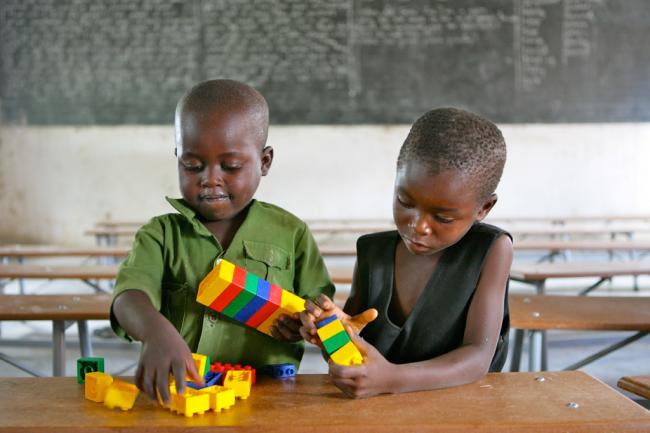
Photo: UNICEF/Giacomo Pirozzi
Support Our Journalism
We cannot do without you.. your contribution supports unbiased journalism
IBNS is not driven by any ism- not wokeism, not racism, not skewed secularism, not hyper right-wing or left liberal ideals, nor by any hardline religious beliefs or hyper nationalism. We want to serve you good old objective news, as they are. We do not judge or preach. We let people decide for themselves. We only try to present factual and well-sourced news.
Support objective journalism for a small contribution.


