Lake Chad Basin: Vulnerable people ‘a step away from starvation,’ says UN aid chief
Having visited Niger and Nigeria earlier this month, the Under-Secretary-General for Humanitarian Affairs, Mark Lowcock, told reporters on Thursday at UN Headquarters in New York: “There are still millions of people who have suffered a lot and continue to suffer, many of them just a step away from starvation.”
He said that in field visits to Ngagam in Diffa – “the poorest region in the poorest country in the world” – and to Maiduguri, Pulka, and Gwoza in Borno state in Nigeria, he met “extremely vulnerable people” displaced by conflict.
“Those people want to go home, they want a chance to rebuild their lives. But they want to do that when it’s safe to do so,” stressed Lowcock.
About 1.8 million people in Niger are food-insecure. Some 800,000 children are affected by acute malnutrition and almost 250,000 people are either internally displaced persons, returnees or refugees from Nigeria, he highlighted.
In north-east Nigeria, around 6.5 million people need life-saving assistance. Nearly 5.2 million are severely food-insecure and 450,000 children will suffer from severe acute malnutrition, this year.
The crisis in the Lake Chad Basin, which covers Cameroon, Niger, Nigeria and Chad, is complex as countries grapple with insecurity, climatic shocks, extreme poverty, the legacy of inadequate governance across vast parts of the region.
“But the way forward is also clear,” he asserted, highlighting the need to sustain the effective humanitarian response, and to ensure see better protection for people.
“Access has improved in many towns, but there’s also been a recent upsurge in horrific attacks on civilians in all four countries. In Niger, hostage-taking has increased, while in Nigeria children have been used as ‘human bombs,’” he said.
Turning to other areas of the world, Lowcock said “so far in Somalia, famine has been averted” while in South Sudan, there was “a famine declaration in a couple of counties in Unity state, that affected about 50,000 people earlier in the year, but that situation was brought under control pretty quickly.”
Calling it the world’s biggest humanitarian crisis, Lowcock pointed out that in Yemen, “we have so far again averted formal famine declaration, but the levels of suffering in Yemen are really astronomical. I mean, there’s a really dreadful situation.”
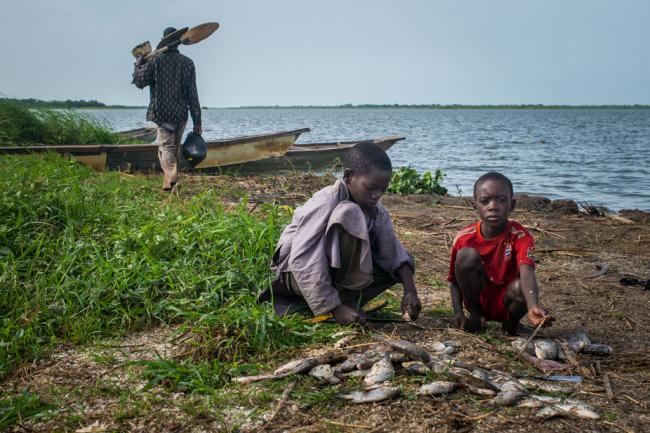
Photo: UNICEF/Tremeau
Source: www.justearthnews.com
Support Our Journalism
We cannot do without you.. your contribution supports unbiased journalism
IBNS is not driven by any ism- not wokeism, not racism, not skewed secularism, not hyper right-wing or left liberal ideals, nor by any hardline religious beliefs or hyper nationalism. We want to serve you good old objective news, as they are. We do not judge or preach. We let people decide for themselves. We only try to present factual and well-sourced news.
Support objective journalism for a small contribution.