International collaboration on wheat rust can curb threat to global supplies – UN agen
Two studies produced by scientists in collaboration with the UN Food and Agricultural Organization (FAO) show the emergence of two new groups – or races – of both yellow rust and stem rust last year in various regions of the world.
“These new, aggressive rust races have emerged at the same time that we're working with international partners to help countries combat the existing ones, so we have to be swift and thorough in the way we approach this,” said FAO Plant Pathologist Fazil Dusunceli.
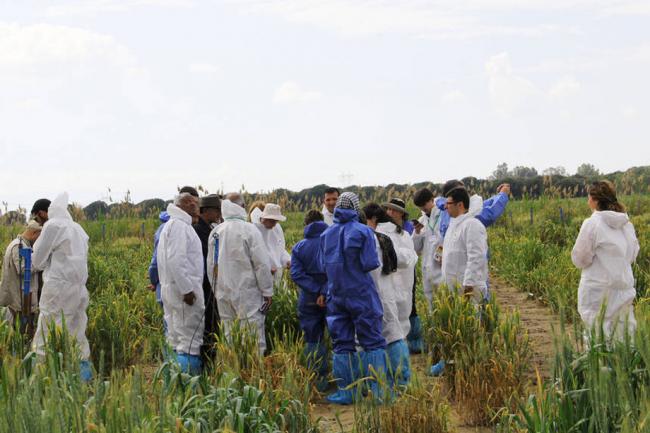
Wheat rusts spread rapidly over long distances by wind. If not detected and treated on time, they can turn a healthy looking crop, only weeks away from harvest, into a tangle of yellow leaves, black stems and shriveled grains.
“It's more important than ever that specialists from international institutions and wheat producing countries work together to stop these diseases in their tracks,” Dusunceli said.
That would involve work such as continuous surveillance, sharing data and building emergency response plans to protect their farmers and those in neighbouring countries.
Wheat is a source of food and livelihoods for over 1 billion people in developing countries, according to FAO.
Some of the most vulnerable regions are also the highest producers of wheat. Northern and Eastern Africa, the Near East, and West, Central and South Asia alone account for some 37 per cent of global wheat production.
The most recently identified race of stem rust pathogen – called TTTTF – hit the Italian island of Sicily in 2016, causing the largest stem rust outbreak in Europe in decades.
In addition, farmers in the mainland Italy, Morocco and some Scandinavian countries are battling a yet-to-be-named race of yellow rust, while Ethiopia and Uzbekistan fights outbreaks of yellow rust AF2012.
“Preliminary assessments are worrisome, but it is still unclear what the full impact of these new races will be on different wheat varieties in the affected regions,” said Dusunceli. “That's what research institutions across these regions will need to further investigate in the coming months.”
The FAO-supported reports have been highlighted in the journal Nature following their publication by Aarhus University and the International Maize and Wheat Improvement Center (CIMMYT).
Photo: FAO/Fazil Dusunceli
Source: www.justearthnews.com
Support Our Journalism
We cannot do without you.. your contribution supports unbiased journalism
IBNS is not driven by any ism- not wokeism, not racism, not skewed secularism, not hyper right-wing or left liberal ideals, nor by any hardline religious beliefs or hyper nationalism. We want to serve you good old objective news, as they are. We do not judge or preach. We let people decide for themselves. We only try to present factual and well-sourced news.
Support objective journalism for a small contribution.