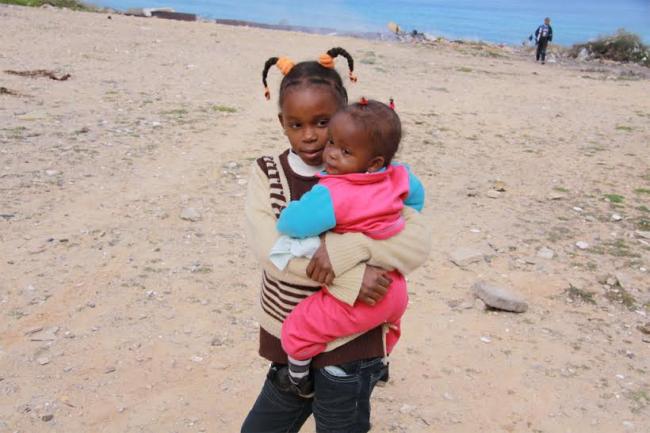
Internal displacement doubles in Libya since September, UN refugee agency warns
The numbers could be higher, warned UNHCR, but with limited access, the agency relies heavily on local partners, who are themselves unable to reach all affected areas because of a volatile situation. “This also reduces communication and monitoring and for these reasons their figures are an estimate”, stressed Fleming.
The largest bloc, about a quarter of the IDP population (105,000), is located in the eastern city of Benghazi, where UNHCR has been working with the municipality, as well as local and international NGOs to distribute items to some 6,000 of the most vulnerable IDPs between March and June.“The main areas of concern in Benghazi relate to the collapse of the health sector, the closure of more than 60 schools as well as universities, criminality stemming from the absence of rule of law, and frequent reports of civilian casualties as a result of fighting in the coastal city,” the UNHCR spokesperson explained.
“Landmines and unexploded ordinance are also a danger to the internally displaced.”The conflict has also undermined the security of civilians and prevented the safe return of IDPs in Misrata, Tripoli, Warshafana and the Nafusa Mountains in the west, and Awbari in the south. IDPs and host communities in these areas have also been equally affected by diminishing access to education, affordable health care, electricity and other key services, Fleming added.
“Despite the mounting challenges, we have, through partners on the ground, distributed non-food items to more than 10,000 IDPs in Misrata since May. The distribution initially targeted newly displaced populations and vulnerable groups. This represents 17,000, more than half of the IDP population in Misrata.”With sporadic fighting in the south and a resumption of tribal tensions between the Tebu and Tuareg communities, the displacement situation threatens to become protracted with many IDPs unable to return or returning to unsustainable conditions such as in the border province of Awbari. “Access to southern Libya and delivery of relief items remains a challenge for us because of conflict and disrupted supply chains,” the spokesperson acknowledged.
In Libya, she said, UNHCR is also providing medical assistance to refugees and asylum-seekers in urban areas and financial support to the most vulnerable in Tripoli and Benghazi, as well as critical non-food items to people held in detention after being rescued or intercepted at sea by the Libyan Coastguard, or arrested on land for lack of legal residence permit.
Support Our Journalism
We cannot do without you.. your contribution supports unbiased journalism
IBNS is not driven by any ism- not wokeism, not racism, not skewed secularism, not hyper right-wing or left liberal ideals, nor by any hardline religious beliefs or hyper nationalism. We want to serve you good old objective news, as they are. We do not judge or preach. We let people decide for themselves. We only try to present factual and well-sourced news.
Support objective journalism for a small contribution.