


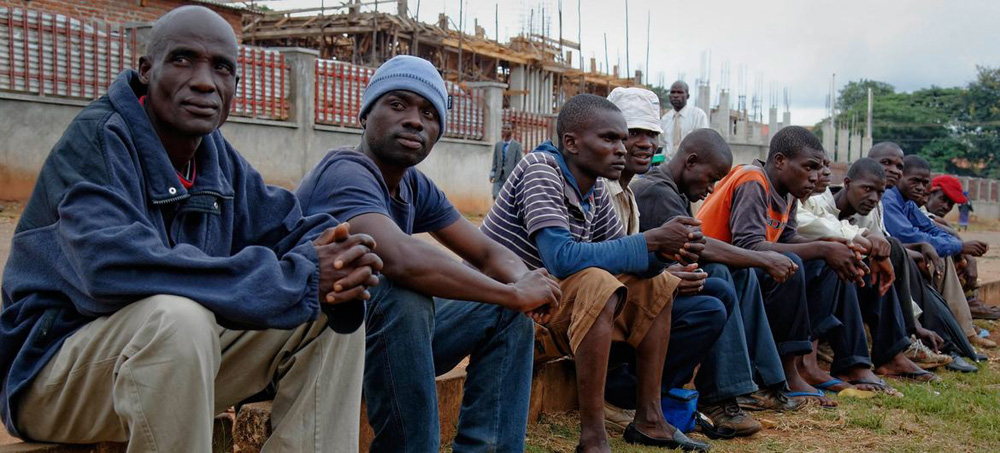
 Unemployment
ILO report suggests global unemployment to increase in 2024
Global unemployment is expected to rise this year, with growing inequality and stagnant productivity also a cause for concern on the economic horizon, the UN labour agency ILO said on Wednesday.
Just over five per cent of the world’s workforce is without a job, according to the International Labour Organization’s World Employment and Social Outlook Trends 2024 report.
This is a better situation than before the pandemic, but it isn’t set to last, as an extra two million people are expected to be looking for a job over the next 12 months, the ILO said.
The UN agency’s findings chime with a new World Bank report released on Tuesday indicating that the global economy is on track for the slowest half-decade of growth in 30 years.
In addition to the uncertain jobs market outlook, ILO noted that the majority of the world’s richest nations had seen living standards eroded, because of inflation, which is now in decline in many major economies.
The erosion of living standards resulting from inflation is, “unlikely to be compensated quickly,” said the UN agency.
Big disparities
ILO experts underscore that there are significant differences between higher and lower income countries. While the jobs gap rate (the number of jobless who are looking for work) in 2023 was 8.2 per cent in richer nations, it stood at 20.5 per cent in poorer countries.
Similarly, while the 2023 unemployment rate stuck at 4.5 per cent for wealthier countries, it was 5.7 per cent in low-income countries.
ILO Director-General, Gilbert Houngbo warned that “falling living standards and weak productivity combined with persistent inflation create the conditions for greater inequality and undermine efforts to achieve social justice.
“And without greater social justice we will never have a sustainable recovery.” He called for workforce challenges overall to be tackled quickly and effectively.
The working poor
Despite quickly declining after 2020, the number of workers living in extreme poverty (earning less than US$2.15 per person per day) grew by about a million in 2023.
Income inequality has also widened, the trends show: the erosion of real disposable income, “bodes ill for aggregate demand and a more sustained economic recovery”, notes the report.
Despite various policy initiatives to tackle the underground economy, the number of people employed informally is expected to remain static, accounting for around 58 per cent of the global workforce in 2024.
Uneven post-pandemic recovery
The World Health Organization (WHO) declared an end to COVID-19 as a public health emergency last May, but the aftershocks of the pandemic are still being felt, the ILO report reveals.
Residual symptoms and health problems for those 20 per cent or so who suffered ‘long COVID’ persist for many and have impacted productivity.
Many who have re-entered the labour market post-pandemic tend not to be working the same number of hours while the number of sick days taken has increased significantly.
Women's participation in the job market has bounced back quickly, but a notable gender gap persists, especially in emerging and developing nations. Youth unemployment rates continue to present a challenge.
The report also finds that despite technological advances and increased investment, productivity growth has continued to slow.
Support Our Journalism
We cannot do without you.. your contribution supports unbiased journalism
IBNS is not driven by any ism- not wokeism, not racism, not skewed secularism, not hyper right-wing or left liberal ideals, nor by any hardline religious beliefs or hyper nationalism. We want to serve you good old objective news, as they are. We do not judge or preach. We let people decide for themselves. We only try to present factual and well-sourced news.
Support objective journalism for a small contribution.


