


If passed, Israeli legislation would be ‘another nail in the coffin’ for two-state solution – UN expert
Michael Lynk, the Special Rapporteur on the situation of human rights in the occupied Palestinian territories, expressed deep concern over the proposal to legalize more than 100 illegal outposts in the occupied West Bank. The legislation passed its first reading in the Knesset on 16 November.
According to Lynk, the unauthorized outposts have been set up on private Palestinian land, deep within the occupied West Bank, and are considered illegal under current Israeli domestic law. To retroactively legalize them would be “another nail in the coffin for the two-state solution,” he said.
“These outposts undermine the Palestinian right to self-determination, violate their rights to property, freedom of movement, and development, and continue to confine the Palestinians into smaller and smaller cantons of non-contiguous lands within their own territory.”
If adopted, the legislation would allow the Israeli State to appropriate private Palestinian lands where the outposts have been built, thereby repurposing them for use by Israeli settlers. The Special Rapporteur emphasized that international law prohibits the confiscation of private property, such as proposed by the current law.
“The Knesset should not be giving the green light to theft by changing the law,” said Lynk, adding that violating international law would be neither lessened nor mitigated by the bill’s proposed measures to compensate Palestinians whose land has been unlawfully taken.
The current draft follows a recent ruling by the Israeli Supreme Court that the Amona outpost must be evacuated by 25 December – thereby rejecting a request for delay from the Israeli Government.
“Among the purposes of this legislation is to regularize the legal status of Amona,” said the Special Rapporteur.
Lynk was alarmed to note that some senior Israeli cabinet ministers not only supported the bill, but were also openly calling for annexation of large parts of the West Bank.
“The international community must be very clear with the Government of Israel,” he said. “The annexation of occupied territory likewise would be a profound breach of international law. If Israel proceeds with either step, the international community must be prepared not only to condemn the action, but also to adopt appropriate measures to reverse these violations.”
“An occupying power is expressly prohibited from transferring its civilian population into an occupied territory. This violates the 4th Geneva Convention of 1949, and is contrary to numerous UN Security Council and General Assembly resolutions, as well as a major advisory opinion by the International Court of Justice in 2004,” he said.
Lynk is part of the Special Procedures of the Human Rights Council, which is part of the Council’s independent fact-finding and monitoring mechanisms that address either specific country situations or thematic issues in all parts of the world. Special Rapporteurs are neither UN staff, nor are they paid for their work.
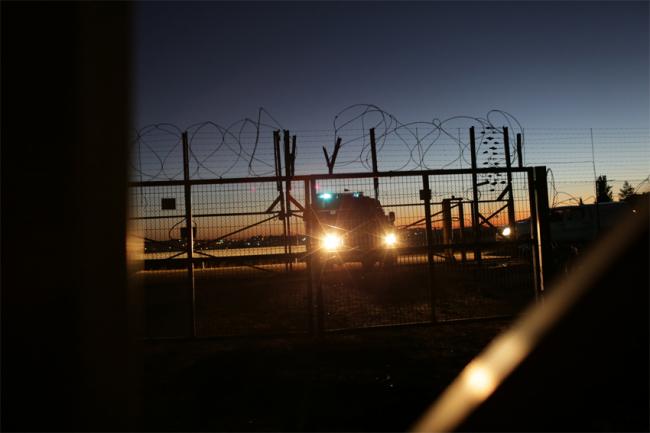
Photo: Alaa Ghosheh/UNRWA Archives
Source: www.justearthnews.com
Support Our Journalism
We cannot do without you.. your contribution supports unbiased journalism
IBNS is not driven by any ism- not wokeism, not racism, not skewed secularism, not hyper right-wing or left liberal ideals, nor by any hardline religious beliefs or hyper nationalism. We want to serve you good old objective news, as they are. We do not judge or preach. We let people decide for themselves. We only try to present factual and well-sourced news.
Support objective journalism for a small contribution.


