Human rights experts discuss plights of minorities in Pakistan
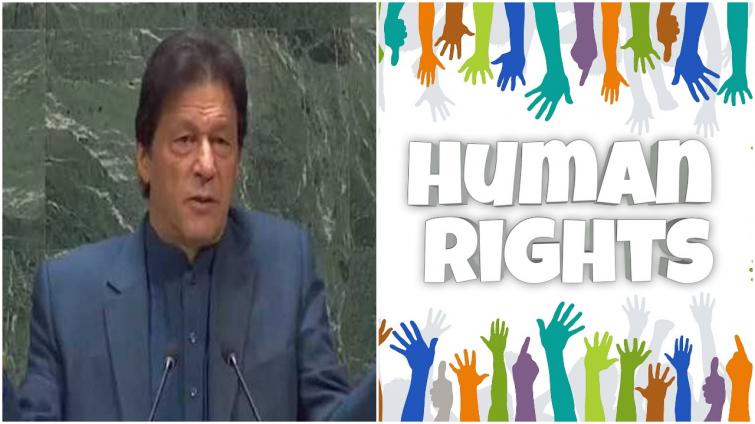
Washington: Human rights experts recently discussed the condition of minorities in Pakistan and expressed their hardships and sufferings in the south Asian nation at a time when the world is combating COVID-19.
The discussion was organized by Alliance for Persecuted People WorldWide (APPWW), a non-profit government organization, working with the oppressed groups around the world through education and outreach. It organized an online panel discussion titled “Oppression of Pakistan’s Indigenous Minorities during COVID-19 “.
Tariq Fateh, a Pakistani-Canadian journalist and author, well-known for his outspoken views on Pakistan, said Pakistan will collapse and break away.
“Sooner or later, Pakistan has to collapse and break away. And until Pakistan breaks away into four or five of its contiguous parts, it’s not that the minorities will suffer, it’s the people who will suffer. Their destiny will suffer,” he was quoted as saying by India America Today.
Senge Hasnain Sering, Director of Institute of Gilgit-Baltistan Studies, spoke about the challenges that the people of Gilgit-Baltistan (GB) have faced during the coronavirus outbreak.
Pinpointing the challenges, Sering said the basic issue that is a serious challenge for the people of GB is “lack of medical benefits and facilities”, which he said has come under pressure during the coronavirus outbreak.
“Lack of medical benefits and facilities is the first major issue for the people of Gilgit-Baltistan. And it is there because of two reasons”, he said.
Speaking in reference to the coronavirus pandemic, Nabi said that mishandling of the pilgrims from Iran, who entered Balochistan from the Taftan border, created serious problems for the people.
“There is no quarantine shelter in Balochistan. There is no medical facility in Balochistan. The cases are getting higher every day”, he said.
“The basic essential medical equipment required to treat the coronavirus patients is not present in hospitals or the lone quarantine center in Balochistan”, he added.
The panelist discussion concluded with an observation that the Imran Khan led government of Pakistan is not capable to take steps towards curbing the coronavirus outbreak and that the powerful military establishment is dictating terms to Imran Khan.
The panelists also agreed that the oppression of minorities in Pakistan is directly dependent on the crisis of establishment of identity among the masses, who are vulnerable to the increasing presence of China in the region and the discrimination based on language, culture and what they called distorted historical ideologies.
Support Our Journalism
We cannot do without you.. your contribution supports unbiased journalism
IBNS is not driven by any ism- not wokeism, not racism, not skewed secularism, not hyper right-wing or left liberal ideals, nor by any hardline religious beliefs or hyper nationalism. We want to serve you good old objective news, as they are. We do not judge or preach. We let people decide for themselves. We only try to present factual and well-sourced news.
Support objective journalism for a small contribution.