


Global malaria target met amid sharp drop in cases: UN
“Global malaria control is one of the great public health success stories of the past 15 years,” said Dr. Margaret Chan, Director-General of the UN World Health Organization (WHO).
She said, “It’s a sign that our strategies are on target, and that we can beat this ancient killer, which still claims hundreds of thousands of lives, mostly children, each year.”
The joint report by WHO and the UN Children’s Fund (UNICEF) – Achieving the Malaria Millennium Development Goal Target – shows that the MDG target of halving and beginning to reverse the incidence of malaria by 2015 has been met “convincingly.”
UNICEF Executive Director Anthony Lake said “malaria kills mostly young children, especially those living in the poorest and most remote places. So the best way to celebrate global progress in the fight against it is to recommit ourselves to reaching and treating them.”
“We know how to prevent and treat malaria,” Lake said. “Since we can do it, we must.”
Malaria death rates have plunged by 60 per cent over the past 15 years, translating into 6.2 million lives saved, and new malaria cases have dropped by 37 per cent since 2000, according to the report, which was released in London.
“An increasing number of countries are on the verge of eliminating malaria,” stated the report.
“In 2014, 13 countries reported zero cases of the disease and six countries reported fewer than 10 cases,” it said. “The fastest decreases were seen in the Caucasus and Central Asia, which reported zero cases in 2014, and in Eastern Asia.”
But malaria remains an acute public health problem in many regions.
“In 2015 alone, there were an estimated 214 million new cases of malaria, and approximately 438,000 people died of this preventable and treatable disease,” the report said.
It added, “About 3.2 billion people – almost half of the world’s population – are at risk of malaria.”
And some countries carry a disproportionately high share of the global malaria burden. Fifteen countries, mainly in sub-Saharan Africa, accounted for 80 per cent of malaria cases and 78 per cent of deaths globally in 2015.
According to WHO, children under five account for more than two-thirds of all deaths associated with malaria.
Between 2000 and 2015, the under-five malaria death rate fell by 65 per cent or an estimated 5.9 million child lives saved.
A surge in funding has led to an unprecedented expansion in the delivery of core interventions across sub-Saharan Africa.
In May 2015, the World Health Assembly adopted the WHO Global Technical Strategy for Malaria – a new 15-year road map for malaria control. The strategy aims at a further 90 per cent reduction in global malaria incidence and mortality by 2030.
The WHO-UNICEF report noted that annual funding for malaria will need to triple – from $2.7 billion today to $8.7 billion in 2030.
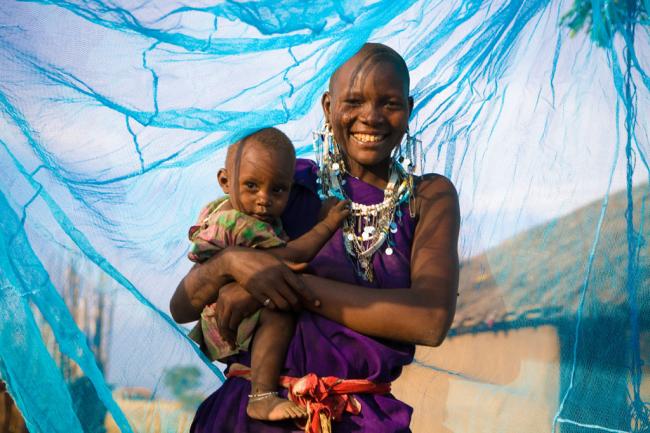
Photo: ©UNICEF/PFPG2014-1191/Hallahan
Support Our Journalism
We cannot do without you.. your contribution supports unbiased journalism
IBNS is not driven by any ism- not wokeism, not racism, not skewed secularism, not hyper right-wing or left liberal ideals, nor by any hardline religious beliefs or hyper nationalism. We want to serve you good old objective news, as they are. We do not judge or preach. We let people decide for themselves. We only try to present factual and well-sourced news.
Support objective journalism for a small contribution.


