October 04, 2026 03:42 am (IST)

Follow us:


Funding shortfall leaves millions hungry in DR Congo: UN
New York, Jun 4 (IBNS): Senior United Nations officials for the Great Lakes region of Africa are in the Democratic Republic of the Congo (DRC) to draw attention to continuing insecurity there, while the world body reported on Tuesday that the fighting and a decrease in financial resources is causing millions of people to go hungry.
Currently 6.7 million people live in acute food insecurity which represented a “humanitarian crisis,” World Food Programme (WFP) spokesperson Elisabeth Byrs told journalists in Geneva.
Ninety-five per cent of the population in the DRC lives on less than two dollars per day, and nine per cent of children under the age of five are acutely malnourished, according to WFP.
Displaced families living in camps, most of whom are female-headed households, as well as refugees from the Central African Republic, are also particularly vulnerable.
The deteriorating situation was caused by the continuing conflict and insecurity which prevented people from growing food and a decrease in international food aid, Byrs said. In addition, low levels of government spending on socio-economic sectors such as education, health, sanitation, infrastructure and agriculture, are worsening the situation.
She warned that WFP needs USD 21 million to carry out its humanitarian operations through October, and will be forced to cut its programmes if it does not receive the aid.
Meanwhile, the Secretary-General’s Special Envoy to the Great Lakes Region, Mary Robinson, is in the DRC on Tuesday wrapping up a two-day visit to assess the progress being made on the Peace, Security and Cooperation Framework for the DRC and the Region – signed by 11 nations in February 2013 – and since dubbed the “framework of hope.”
She is joined by Ban Ki-moon’s Special Representative in the DRC, Martin Kobler, who is also the head of the UN peacekeeping mission in the country, known by its French acronym MONUSCO.
Also with them are the United States Special Envoy for the Great Lakes Region and the DRC, Russ Feingold; the Special Representative of the African Union, Boubacar Diarra; and the European Union Senior Coordinator for the Great Lakes Region, Koen Vervaeke.
During the visit, the envoys met with representatives of the government, civil society and the international community “to hear firsthand about the implementation of commitments to the Peace, Security and Cooperation Framework and what they can do to support further progress,” according a UN spokesperson.
Earlier, the group was in Burundi, where the envoys met with President Pierre Nkurunziza and other political leaders, as well as civil society representatives.
In a joint statement issued after that visit, the envoys said that they were very concerned about the constraints on political space and civil liberties in the lead-up to next year’s general election.
They added that Burundi had made commendable progress in overcoming a history of conflict, but that progress risked being lost without an inclusive, transparent and peaceful election process.
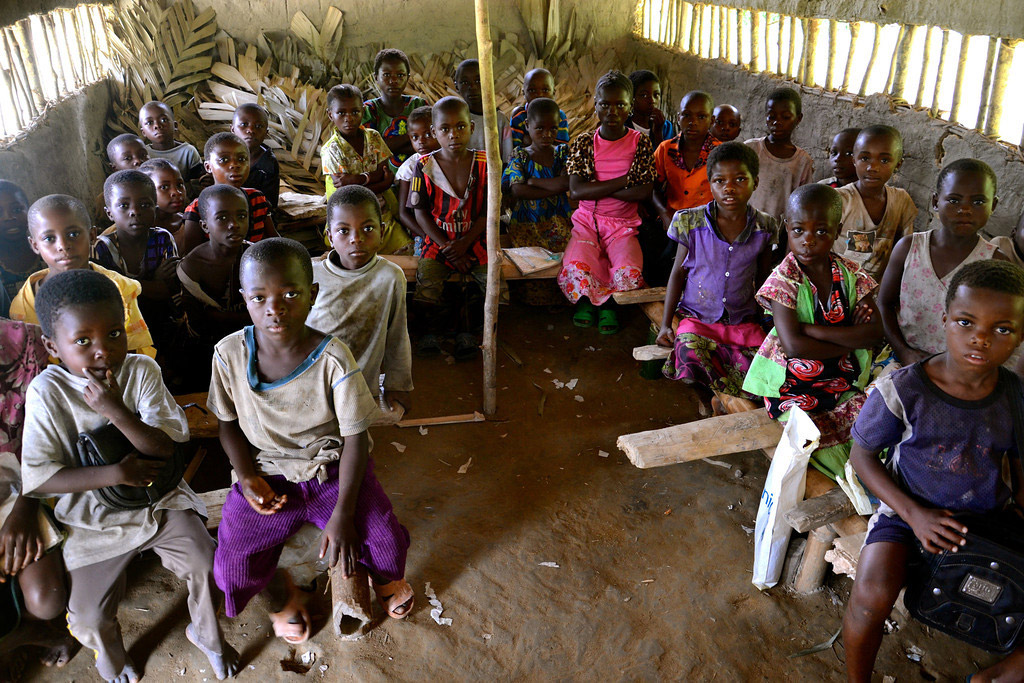
(Children returned to their classroom in Kolula, South Kivu, Democratic Republic of the Congo, after armed conflict had forced the whole population to flee and hide in the forest for several weeks. Photo: OCHA/Naomi Frerotte)
Support Our Journalism
We cannot do without you.. your contribution supports unbiased journalism
IBNS is not driven by any ism- not wokeism, not racism, not skewed secularism, not hyper right-wing or left liberal ideals, nor by any hardline religious beliefs or hyper nationalism. We want to serve you good old objective news, as they are. We do not judge or preach. We let people decide for themselves. We only try to present factual and well-sourced news.
Support objective journalism for a small contribution.



Latest Headlines
UAE calls Flydubai cockpit attack a ‘terrorist act’; Omani pilot tried to take control
Sat, Oct 03 2026
flydubai cockpit attack: Deleted posts expose Omani co-pilot’s views on women, alleged extremist past
Sat, Oct 03 2026
flydubai cockpit horror: Omani co-pilot Hamam al-Hammami attacked Captain Smit Machchhar with crash axe, tried to seize control
Sat, Oct 03 2026
flydubai temporarily suspends all Israel flights after co-pilot’s alleged cockpit attack, crash attempt
Sat, Oct 03 2026
Grounded in Oman over ‘radical views’, then hired by flydubai: What we know about Omani pilot Hamam al-Hammami
Sat, Oct 03 2026
Flydubai co-pilot who stabbed Smit Machchhar identified, was banned from flying by Oman due to suspected extremism: Report
Sat, Oct 03 2026
UK-Iranian national arrested over RAF Fairford terror plot probe
Fri, Oct 02 2026