 Khaleda Zia
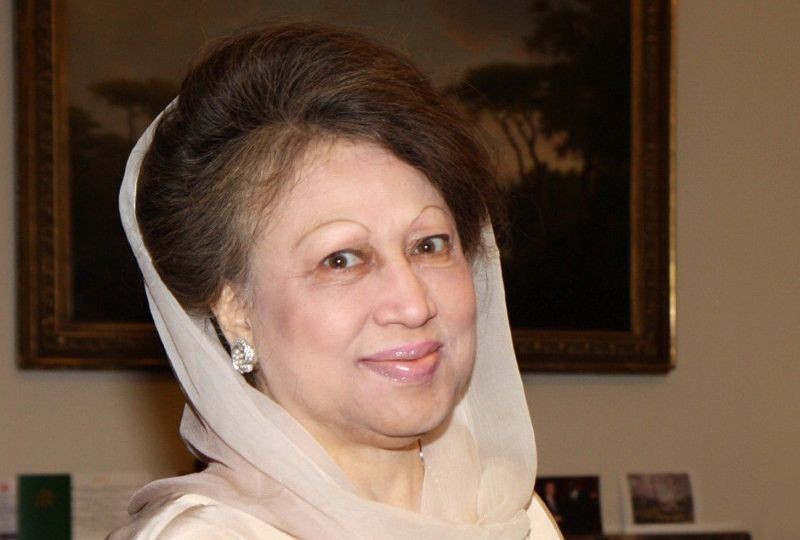
End of an era: Bangladesh’s first female Prime Minister Khaleda Zia passes away at 80
Dhaka/IBNS: Former Bangladesh Prime Minister Khaleda Zia passed away after a prolonged illness at the age of 80 on Tuesday.
The Bangladesh Nationalist Party (BNP) confirmed that the country’s first woman Prime Minister died at 6 a.m., shortly after the Fajr prayer.
In a post on X, the BNP said: “The BNP Chairperson and former Prime Minister, Begum Khaleda Zia, passed away today at 6:00 a.m., shortly after the Fajr prayer. Inna lillahi wa inna ilayhi raji‘un. We pray for the forgiveness of her soul and request everyone to offer prayers for her departed soul.”
The BNP Chairperson and former Prime Minister, Begum Khaleda Zia, passed away today at 6:00 a.m., shortly after the Fajr prayer. Inna lillahi wa inna ilayhi raji‘un. We pray for the forgiveness of her soul and request everyone to offer prayers for her departed soul. pic.twitter.com/KY2948UPD5
— Bangladesh Nationalist Party-BNP (@bdbnp78) December 30, 2025
Zia was undergoing treatment at Evercare Hospital in Dhaka. She passed away in the presence of family members, including her eldest son and BNP acting chairman Tarique Rahman, who had returned to Bangladesh from London, where he had been living in exile since 2008.
Born on August 15, 1945, Khaleda Zia was the widow of former President Ziaur Rahman, the founder of the BNP, which she later led to national prominence.
She entered politics following her husband’s assassination in 1981 and gradually rose as a key opposition leader during Bangladesh’s movement against military rule.
In 1991, Khaleda Zia became Bangladesh’s first woman Prime Minister, serving two terms from 1991–1996 and 2001–2006. Her administrations focused on restoring parliamentary democracy, economic liberalisation and infrastructure development.
For decades, Bangladeshi politics was dominated by her intense rivalry with Sheikh Hasina, leader of the Awami League, a phase often referred to as the era of “Begum politics.”
In her later years, Khaleda Zia faced multiple corruption cases that led to imprisonment, while prolonged health issues kept her largely out of active politics.
Support Our Journalism
We cannot do without you.. your contribution supports unbiased journalism
IBNS is not driven by any ism- not wokeism, not racism, not skewed secularism, not hyper right-wing or left liberal ideals, nor by any hardline religious beliefs or hyper nationalism. We want to serve you good old objective news, as they are. We do not judge or preach. We let people decide for themselves. We only try to present factual and well-sourced news.
Support objective journalism for a small contribution.