 Geopolitics
Don’t play ‘geopolitical games’ with vulnerable lives, urges UN Assembly President
Life-saving relief programmes should not be held hostage by political interests, the President of the General Assembly said on Wednesday, as Member States gathered to debate the use of the veto by a permanent member of the Security Council, that halted vital cross-border aid last week into northern Syria.
“The lives of those in need should never be reduced to the tactics of geopolitical games,” Csaba Kőrösi, President of the 77th session of the General Assembly, said.
“Humanitarian action must always be guided by the principles of impartiality, neutrality and independence. As such, effective humanitarian assistance can never be held hostage by any political interest,” he added.
Two failed resolutions
The veto is a special voting power of the Permanent Member States at the Council, whereby if any one of the five permanent members — China, France, Russia, the UK and the US — cast a negative vote, the resolution or decision automatically fails.
On 11 July, a Security Council resolution on the renewal of a cross-border aid delivery mechanism from Türkiye into northern Syria, failed after Russia vetoed the draft. Thirteen of the 15 Council members voted in favor and China abstained.
Also on 11 July, a second resolution for a six-month extension of the mechanism also failed to adopt as it lacked the required number of affirmative votes. The resolution was submitted by Russia and supported by China. Three Member States (France, UK and US) voted against and 10 abstained.
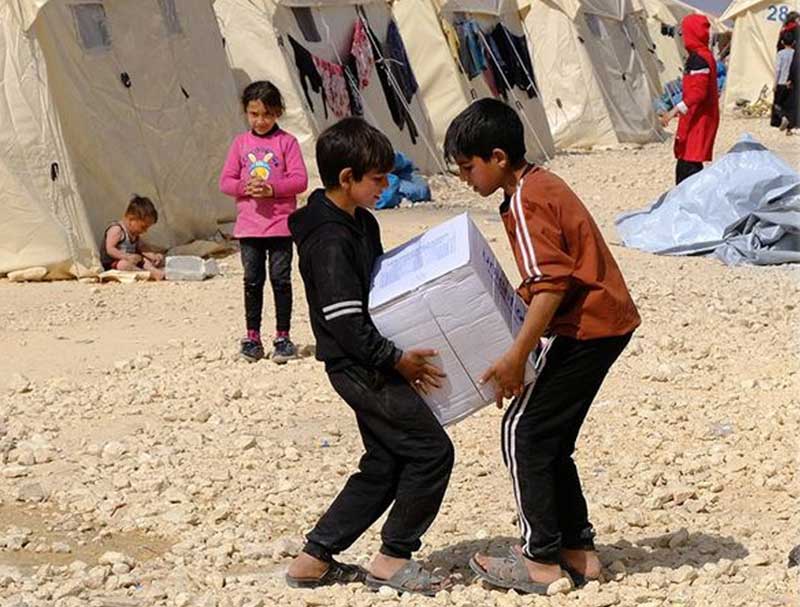
The failure to extend the mechanism virtually halted all aid convoys, leaving over 4.1 million people, mostly women and children, cut off from essential supplies.
The Bab al-Hawa crossing had been the backbone for relief operations in the region since 2014, handling over 85 per cent of aid deliveries.
Prioritize needs
Assembly President Csaba Kőrösi urged members of the Security Council to prioritize the needs of the affected population.
“To the Security Council, I call on you to be alive to the realities and oriented towards genuine solutions; to urgently prioritize long-term cooperation over division; and the humanitarian imperative over brinksmanship,” he said.
“Together, we have the power to make a meaningful difference. The people of Syria are counting on us to deliver,” Mr. Kőrösi concluded.
Support Our Journalism
We cannot do without you.. your contribution supports unbiased journalism
IBNS is not driven by any ism- not wokeism, not racism, not skewed secularism, not hyper right-wing or left liberal ideals, nor by any hardline religious beliefs or hyper nationalism. We want to serve you good old objective news, as they are. We do not judge or preach. We let people decide for themselves. We only try to present factual and well-sourced news.
Support objective journalism for a small contribution.