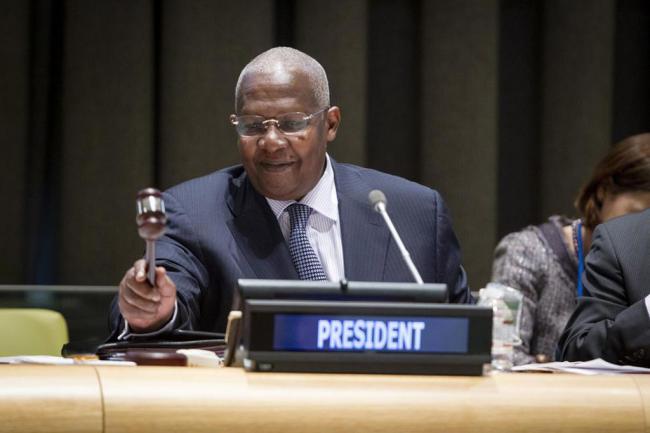
Closing thematic debate, UN Assembly President urges better funding for post-2015 development
Delivering the closing remarks to a High-Level Thematic Debate on Means of Implementation for a Transformative Post-2015 Development Agenda, Kutesa reiterated participants’ calls for “a fair, rules-based international trading regime” which, he said, would help fuel investments for development into the near-future.
Kutesa had underscored the need for better financing in order to fully satisfy the breadth and scope of the new UN development agenda at the High-Level Debate’s opening on 9 February and, addressing delegates earlier today, he reiterated that “a huge financing gap for infrastructure” remained despite sufficient global liquidity.
Nonetheless, he added, proposals had been made on how to channel the necessary funding in the most valuable manner and, in particular, from “all sources” – public and private, domestic and international.
Moreover, the General Assembly President reminded participants about “the important development role of parliaments” in determining budgets and monitoring policy implementation.
This year marks the wrap-up of the ground-breaking UN Millennium Development Goals (MDGs), which world leaders agreed on 15 years ago. There has been significant progress in meeting the targets. For example, global poverty has been halved well ahead of the 2015 deadline; in developing countries, 90 per cent of children now enjoy primary education; the number of people lacking access to improved drinking water has halved, and the fight against malaria and tuberculosis has shown results, according to the UN.
But challenges persist, and with the deadline of the MDGs set for the end of this year, the UN will craft a new set of targets known as sustainable development goals (SDGs). The new agenda will aim to address a raft lingering and emerging challenges, such as the fact that globally, 73 million young people are looking for work and many more are trapped in exploitative jobs.
UN Photo/Loey Felipe
Support Our Journalism
We cannot do without you.. your contribution supports unbiased journalism
IBNS is not driven by any ism- not wokeism, not racism, not skewed secularism, not hyper right-wing or left liberal ideals, nor by any hardline religious beliefs or hyper nationalism. We want to serve you good old objective news, as they are. We do not judge or preach. We let people decide for themselves. We only try to present factual and well-sourced news.
Support objective journalism for a small contribution.