


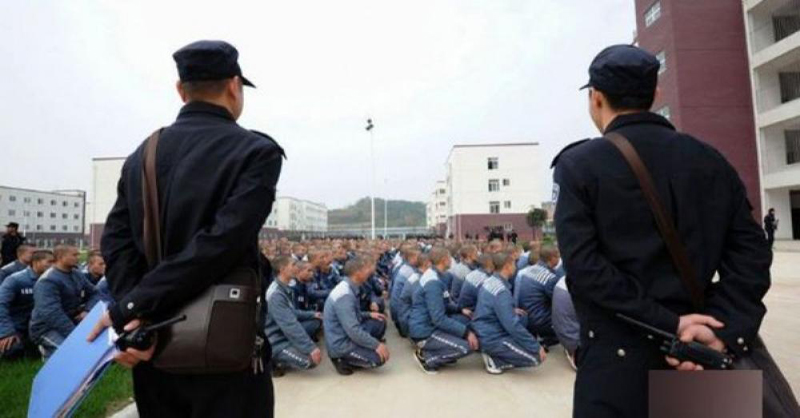
Chinese companies forcing Uyghur population to produce face masks
An investigation conducted by an American newspaper has unveiled that Chinese companies are using Uyghur Muslims to produce protective gears needed to fight COVID-19 which include masks.
A New York Times visual investigation has found that some of those companies are using Uighur (Uyghur) labour through a contentious government-sponsored programme that experts say often puts people to work against their will.
Uyghurs are a Muslim ethnic minority group primarily belonging to the Xinjiang region of northwest China.
"The program sends Uighurs and other ethnic minorities into factory and service jobs. Now, their labor is part of the P.P.E. supply chain," reports The New York Times.
According to China’s National Medical Products Administration, only four companies in Xinjiang produced medical grade protective equipment before the pandemic, reported the American newspaper.
As of June 30, that number was 51. After reviewing state media reports and public records, The Times found that at least 17 of those companies participate in the labour transfer programme.
The companies produce equipment primarily for domestic use, but The Times identified several other companies outside Xinjiang that use Uighur labour and export globally.
"We traced a shipment of face masks to a medical supply company in the U.S. state of Georgia from a factory in China’s Hubei Province, where more than 100 Uighur workers had been sent. The workers are required to learn Mandarin and pledge their loyalty to China at weekly flag-raising ceremonies," the newspaper said.
.jpg)
The programme is widely publicized in state media as a form of poverty reduction.
The Human Rights Investigations Lab at the University of California, Berkeley and the Uyghur Human Rights Project have both collected dozens of videos and social media reports that document the recent labour transfers, The New York Times reported.
Uighurs have been persecuted by the Chinese government for a long time now.
In a response to The Times, the spokesman for China’s Embassy in the U.S. said the programme helps “local residents rise above poverty through employment and lead fulfilling lives.”
“There are these coercive quotas that cause people to be put into factory work when they don’t want to be,” Amy K. Lehr, the director of the Human Rights Initiative at the Center for Strategic and International Studies, was quoted as saying by the newspaper. “And that could be considered forced labor under international law.”
Support Our Journalism
We cannot do without you.. your contribution supports unbiased journalism
IBNS is not driven by any ism- not wokeism, not racism, not skewed secularism, not hyper right-wing or left liberal ideals, nor by any hardline religious beliefs or hyper nationalism. We want to serve you good old objective news, as they are. We do not judge or preach. We let people decide for themselves. We only try to present factual and well-sourced news.
Support objective journalism for a small contribution.


