Celebrating the diversity of radio, the medium people use the most
New York/IBNS: In an era of rapid media evolution, radio still has the power to bring people together and provide communities with vital news and information, the UN Secretary-General has said.
In a message for World Radio Day 2020, celebrated on Thursday, António Guterres highlighted how the pioneering medium celebrates diversity and contributes to global peace.
“Radio offers a wonderful display of diversity in its formats, in its languages, and among radio professionals themselves. This sends an important message to the world”, the UN chief said.
“As we strive to achieve the Sustainable Development Goals and tackle the climate crisis, radio has a key role to play as a source of information and inspiration alike.”
Radio promotes cultural diversity
The diversity of radio content and programming, as well as the plurality of opinions expressed, is matched by the variety of broadcasting channels, according to the UN cultural agency, UNESCO.
Whether you listen to AM, FM or digital radio in your car, stream stations on the web, or download podcasts to your phone, you are experiencing what is the world’s most widely consumed medium.
“Through the freedom it offers, radio is thus a unique means of promoting cultural diversity. This is particularly the case for indigenous peoples, for whom radio can be an accessible medium for sharing their experiences, promoting their cultures and expressing their ideas in their own languages,” Director-General Audrey Azoulay stated.
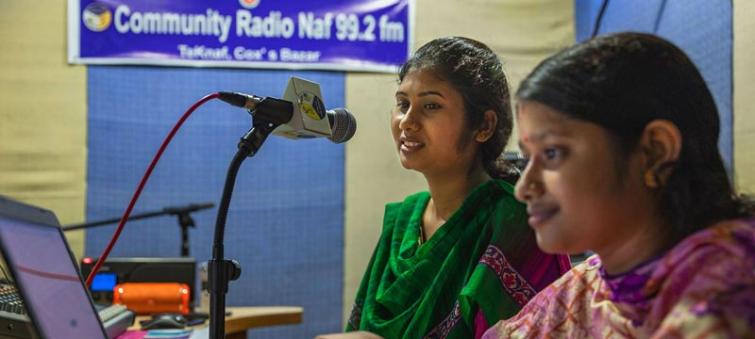
“It is also the case with community radio stations, which relay the concerns of many social groups whose voices would have much less impact in public debate without radio.”
Origins of World Radio Day
Following endorsement of a UNESCO proclamation, the UN General Assembly adopted a resolution in 2012 declaring 13 February World Radio Day.
The date marks the establishment of United Nations Radio in 1946.
UN audio programming continues into the digital age, with daily news bulletins, weekly magazine shows and monthly podcasts produced by teams working in the six UN official languages—Arabic, Chinese, English, French, Russian and Spanish—as well as in Hindi, Kiswahili and Portuguese.
Step back in time by clicking this link to listen to a 1948 UN Radio documentary about the plight of children in post-war Europe, narrated by the great American broadcaster Edward R. Murrow.
Radio fosters dialogue for change
As UNESCO observed, radio is uniquely positioned to bring communities together and foster positive dialogue for change.
It remains a vital component of some UN field operations as they help countries navigate the difficult path from conflict to peace.
A handful of peacekeeping missions either have or are supporting stations, such as Radio Miraya at the UN Mission in South Sudan (UNMISS).
Said the Secretary-General: “On this World Radio Day, let us recognize the enduring power of radio to promote diversity and help build a more peaceful and inclusive world.”
Support Our Journalism
We cannot do without you.. your contribution supports unbiased journalism
IBNS is not driven by any ism- not wokeism, not racism, not skewed secularism, not hyper right-wing or left liberal ideals, nor by any hardline religious beliefs or hyper nationalism. We want to serve you good old objective news, as they are. We do not judge or preach. We let people decide for themselves. We only try to present factual and well-sourced news.
Support objective journalism for a small contribution.