 Immigration
Britain reopens refugee routes for Afghans, Palestinians as immigration and integration battle intensifies
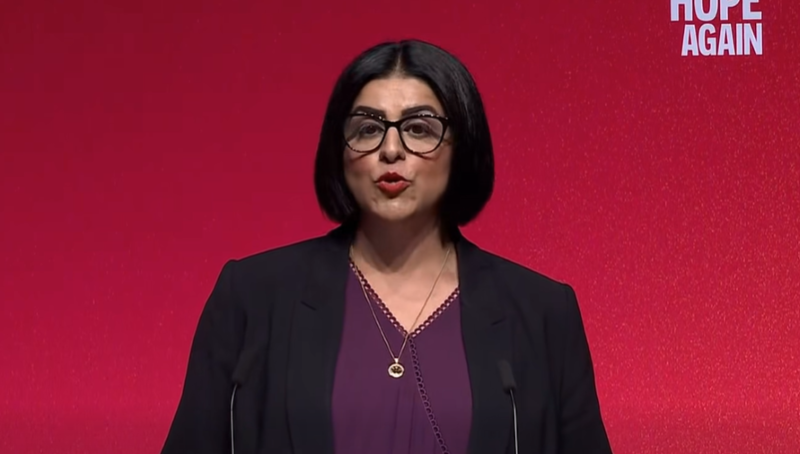
London: Britain is reopening its refugee resettlement system to new referrals, with Home Secretary Shabana Mahmood promising “safe and legal routes” for vulnerable refugees — including Afghan women and girls and Palestinians who have fled Gaza.
But the announcement is likely to intensify an already bitter British debate over immigration, integration and the future shape of the country.
Under the reopened UK Resettlement Scheme, around one in four referrals is expected to involve Afghan women and girls and Palestinian refugees.
The Pakistani parasite Shabana Mahmood has today announced that the UK will begin accepting "refugee applications" from charities NGOs.
— Tommy Robinson 🇬🇧 (@TRobinsonNewEra) September 28, 2026
They'll be put ahead of the native for housing and everything else.
The enemy within.
pic.twitter.com/XtD6hAb6D1
The programme will operate through established referral mechanisms involving the UN refugee agency UNHCR and, for Palestinian cases, the International Refugee Assistance Project. The first arrivals are expected before the end of 2026.
Mahmood insists the system will be “capped and controlled”, arguing that Britain can combine tighter action against illegal Channel crossings with humanitarian routes for people genuinely fleeing war and persecution. She has also announced community, university and eventually work-based sponsorship routes.
Yet the political question is increasingly difficult to avoid: how much migration can Britain absorb while maintaining social cohesion, housing capacity and a common civic identity?
Britain has experienced sustained immigration-driven demographic change over recent decades, and the expansion of refugee and humanitarian routes has become part of a much broader argument about integration.
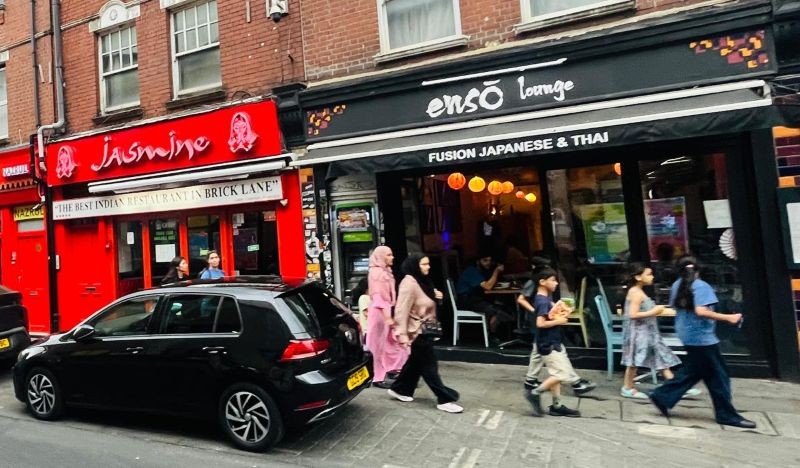 Women in traditional headscarves walk through London’s East End, reflecting the city’s evolving demographic landscape. Photo: Sujoy Dhar/IBNS
Critics say successive governments have concentrated heavily on admitting people while failing to adequately address the long-term consequences for housing, schools, healthcare, local government and community cohesion.
Some critics go further, warning that continued migration from predominantly Muslim countries could contribute to the Islamisation of sections of British society. That is a political interpretation rather than an established description of Britain’s future, and Muslim identity is itself diverse; nevertheless, concerns over cultural integration, parallel communities, religious conservatism and the ability of newcomers to integrate into British civic life have become increasingly prominent in the immigration debate.
The government faces an obvious balancing act. It says the new routes are intended to reduce dangerous irregular migration by giving genuinely vulnerable refugees a controlled alternative.
At the same time, people arriving through the resettlement and new sponsorship routes will initially have a five-year path to permanent settlement, making the policy a question not merely of temporary humanitarian protection but of who will eventually become part of Britain’s permanent population.
Mahmood has sought to draw a sharp distinction between those arriving through legal humanitarian channels and people making unauthorised Channel crossings.
But for voters increasingly concerned about the scale and consequences of migration, the deeper issue is whether “safe and legal” migration can remain politically sustainable if the overall immigration system continues to produce substantial population growth.
The reopening of the scheme therefore represents more than another refugee programme. It is a test of whether Britain can reconcile its humanitarian obligations with a public increasingly demanding control, integration and limits on immigration.
Support Our Journalism
We cannot do without you.. your contribution supports unbiased journalism
IBNS is not driven by any ism- not wokeism, not racism, not skewed secularism, not hyper right-wing or left liberal ideals, nor by any hardline religious beliefs or hyper nationalism. We want to serve you good old objective news, as they are. We do not judge or preach. We let people decide for themselves. We only try to present factual and well-sourced news.
Support objective journalism for a small contribution.