Billions of plastic pollutants dragged into Arctic Ocean: Study
Ottawa, Apr 24 (IBNS): Researchers from the Alfred Wegener Institute in Germany had found that billions of plastic pollutants were being dragged into the Arctic Ocean, media reports said.
It was also revealed by the researchers that the Arctic may look clear but up to 12,000 tiny pieces of plastic may be embedded in a single chunk small enough to sit on your hand.
Researchers were able to identify 17 kinds of plastic in the ice, many of which were used in plastic bags and bottles, paint, fishing gear and cigarette filters.
Some of the highest levels of microplastic were likely carried into the Arctic from the massive garbage patch in the Pacific Ocean, according to a report of Ilka Peeken, lead author in the journal Nature Communications.
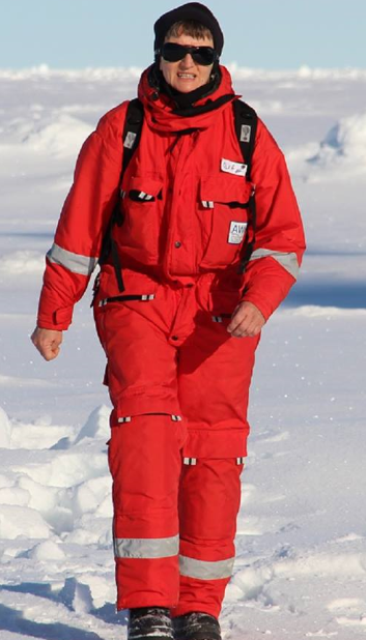
The researchers collected five ice core samples over the course of three expeditions aboard the icebreaker Polarstern, a German research icebreaker of the Alfred Wegener Institute for Polar and Marine Research in Bremerhaven, consisting of measured particles as small as a sixth the width of a human hair.
Most of the particles reportedly were small enough to be eaten by the little marine organisms that live in sea ice.
"That would also get further up the food chain. That’s why it’s important to know we have small particles there," Peeken said, adding that the potential health risks are unknown.
The study also suggested that as ice melts, it releases large amounts of plastic into the Arctic Ocean.
Peeken hoped the research pointing to the routes the plastic is taking will help lead to ways to stop it by cutting back on the use of plastic and banning certain kinds of plastic products.
"I think it's important that we change our plastic behaviour and really reduce our plastic imprint,” she said.
(Reporting by Asha Bajaj)
Support Our Journalism
We cannot do without you.. your contribution supports unbiased journalism
IBNS is not driven by any ism- not wokeism, not racism, not skewed secularism, not hyper right-wing or left liberal ideals, nor by any hardline religious beliefs or hyper nationalism. We want to serve you good old objective news, as they are. We do not judge or preach. We let people decide for themselves. We only try to present factual and well-sourced news.
Support objective journalism for a small contribution.