


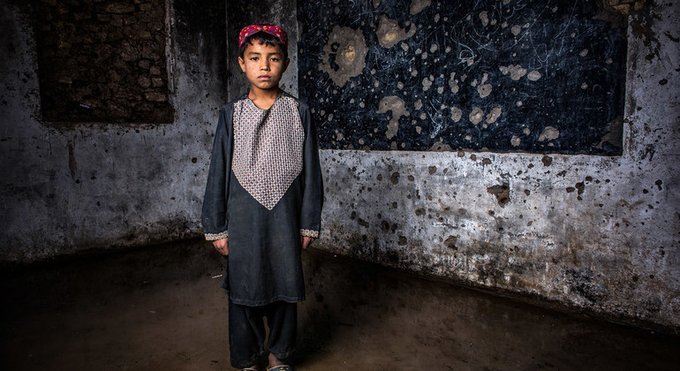
Afghanistan: Civilian casualties down, but hundreds still killed, despite US-Taliban deal
New York/IBNS: In the first quarter of 2020, the number of civilian casualties in Afghanistan fell by nearly a third from the same period a year earlier, representing the lowest first quarter figure since 2012, according to a UN report released on Monday.
Despite that dramatic drop, 533 Afghan civilians - including more than 150 children - were killed due to fighting, highlighting the urgent need for all parties to the conflict to do more to protect civilians from harm.
Those deaths, along with 760 civilian casualties, came amid raised hopes that the Afghan Government and the Taliban would begin substantive peace talks and prioritize efforts to protect all Afghans from the impact of COVID-19.
Intensified fighting, despite diplomatic breakthroughs
The UN Assistance Mission in Afghanistan (UNAMA), which published the report, expressed particular concern over intensified fighting during March and a disturbing uptick in civilian casualties – a trend that follows a period of reduced violence between pro-Government forces and the Taliban from 22 to 28 February, as well as the 29 February signing of an agreement between the United States and the Taliban.
“I call on all parties to seize the opportunity offered by the Secretary-General’s call for a global ceasefire to focus collective efforts on fighting a common enemy, the COVID-19 pandemic”, said Deborah Lyons, the Secretary-General’s Special Representative and head of UNAMA.
‘Imperative’ to stop the violence, UNAMA chief
“To safeguard the lives of countless civilians in Afghanistan - and to give the nation hope of a better future - it is imperative that violence is stopped with the establishment of a ceasefire and for peace negotiations to commence.”
The report found that anti-Government elements were responsible for 55 per cent - or 710 - of the civilian casualties, with 39 per cent attributed to the Taliban, 13 per cent to the ISIL–Khorasan Province extremist group (ISIL-KP) and the remainder to undetermined anti-Government elements.
Pro-Government forces were responsible for 32 per cent - or 412 - of all civilian casualties, the report found, and for at least twice as many child deaths as anti-Government elements. UNAMA attributed 21 per cent of overall civilian casualties to Afghan national security forces, 8 per cent to international military forces and the remainder to pro-Government armed groups and undetermined such forces.
As of Monday, the Afghan Ministry of Public Health reported 1,703 confirmed cases of COVID-19 and 57 deaths in a country with an estimated population of 35 million.
The World Health Organization (WHO) meanwhile has been supporting Afghanistan’s response to COVID-19 since late January, in particular, by training health workers in infection prevention and control. It also has been involved in case management, the establishment of 7 testing laboratories, surveillance and case investigation efforts, screening at points of entry and community engagement initiatives. [source:
Afghanistan’s Health Ministry said in February as concern mounted over the coronavirus public health emergency, it had assigned health teams to screen passengers in the national airports and entry points, established quarantine areas in Kabul and in the provinces, launched awareness campaigns and established inter-sectoral committees to prevent and control the spread of COVID-19
Support Our Journalism
We cannot do without you.. your contribution supports unbiased journalism
IBNS is not driven by any ism- not wokeism, not racism, not skewed secularism, not hyper right-wing or left liberal ideals, nor by any hardline religious beliefs or hyper nationalism. We want to serve you good old objective news, as they are. We do not judge or preach. We let people decide for themselves. We only try to present factual and well-sourced news.
Support objective journalism for a small contribution.


