Adhere to safeguards, avoid pushing back refugees, UNICEF, UN rights experts urge Europe
Emphasizing the need to prevent exploitation and trafficking of children, UNICEF called on the European Union (EU) and its member States to “adhere fully to the principle of non-refoulement as sending children back into harm’s way or returning boats to Libya without a proper plan to protect them, would only add to their hardship.”
It also called for committing resources to strengthen child protection programmes in Libya and for investment in reception and care centres in the country.
“These centres should provide education and health services, and should never be used to detain children based on their migration status,” the agency added.
It also called for additional support to credible resettlement and family reunification programmes so that desperate refugees and migrants do not have to turn to smugglers and risk their lives.
According to the UN agency, a record number of refugee and migrant deaths in the Mediterranean have been reported over the past three months, including an estimated 190 children.
“The growing number of children lost at sea underscores the acute danger of the journey from North Africa to Italy, as well as the pressing need for governments on both sides of the Mediterranean to do more to keep them safe,” said UNICEF Deputy Executive Director Justin Forsyth.
“The decisions taken at the summit could literally mean the difference between life and death for thousands of children transiting or stranded in Libya. They need urgent action now.”
Also on Friday, a group of human rights experts cautioned the EU against supporting a system in which migrants are pushed back to places where they may be at risk of torture, and cruel, inhuman or degrading treatment.
In a news release issued by the Office of the UN High Commissioner for Human Rights (OHCHR), François Crépeau, Special Rapporteur on the human rights of migrants; Nils Melzer, Special Rapporteur on torture; Urmila Bhoola, Special Rapporteur on contemporary forms of slavery; and Sètondji Roland Adjovi, Chair of the Working Group on Arbitrary Detention, stressed that any engagement with third countries needs to be in line with international human rights standards.
“The EU member States cannot balk from their responsibility and are accountable for any human rights violation under such an agreement,” noted the release.
While the experts commended the EU for any action directed at saving lives, they, however, expressed concern that “by agreeing to a deal with Libya, whereby migrants trying to flee human rights violations are being pushed back to those same conditions, the principle of non-refoulement will be violated.”
They raised the concern that limiting departures from Libyan coasts meant “accepting and legitimizing” the human suffering prevailing there and pushing people back to conditions where migrants suffer arbitrary detention, torture, ill-treatment, unlawful killings, trafficking and enforced disappearance. Migrants are also at a risk of labour exploitation and vulnerable to other forms of contemporary slavery, migrant women, in particular, remain at high risk of rape and other sexual violence.
The rights experts further noted measures must allow migrants to disembark immediately at the nearest port where their lives and freedoms would not be threatened, providing them with information, offering care and support, processing their asylum claims equitably.
“From what we know on the conditions in Libya, this country cannot be a port of disembarkation,” they stressed.
Independent experts and Special Rapporteurs are appointed by the Geneva based UN Human Rights Council – an inter-governmental body responsible for promoting and protecting human rights around the world – to examine and report back on a specific human rights theme or a country situation. The positions are honorary and the experts are not UN staff, nor are they paid for their work.
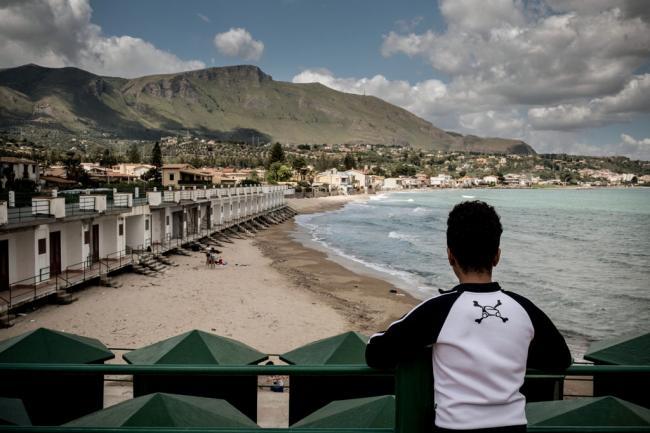
Photo: UNICEF/Ashley Gilbertson VII
Source: www.justearthnews.com
Support Our Journalism
We cannot do without you.. your contribution supports unbiased journalism
IBNS is not driven by any ism- not wokeism, not racism, not skewed secularism, not hyper right-wing or left liberal ideals, nor by any hardline religious beliefs or hyper nationalism. We want to serve you good old objective news, as they are. We do not judge or preach. We let people decide for themselves. We only try to present factual and well-sourced news.
Support objective journalism for a small contribution.