


 Ukraine
A generation in crisis: 4.6 million Ukrainian children face education barriers in year 4 of Russian invasion
This year alone, 4.6 million children in Ukraine are struggling to access education as they endure a fourth academic year under full-scale war.
Since Russian forces invaded Ukraine in 2022, children have continued to bear the brunt of the crisis – unable to attend school regularly, learn safely or experience a sense of normalcy.
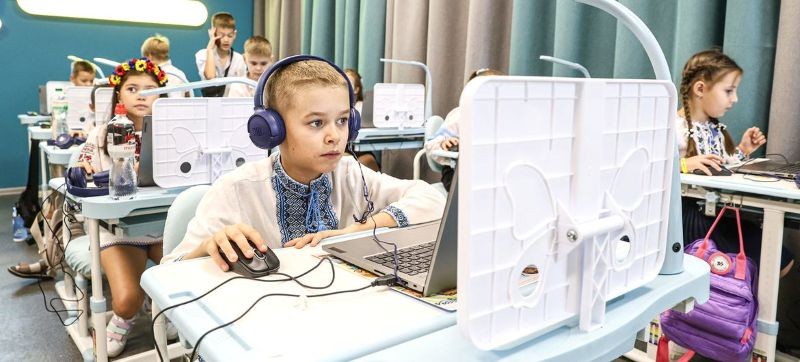
Air raid alarms disrupt classes. Many schools, especially in frontline areas, remain closed because of hostilities or the lack of adequate shelters, forcing almost one million children to study online, according to the UN Children’s Fund (UNICEF).
In 2025 alone, more than 340 educational facilities were damaged or destroyed, further disrupting children’s lives and their right to education. Since the start of the full-scale invasion, the UN has verified that around 2,800 schools have been damaged, though the actual number is likely much higher.
“Schools must be protected spaces where children can learn safely, even during war. In times of crises, education provides a lifeline and sense of normalcy to children,” said Munir Mammadzade, UNICEF Representative in Ukraine.
A critical lifeline
“Despite the challenges, children in Ukraine are determined to continue learning – whether in school or online, in classrooms or in shelters. They are hopeful for a future where they can achieve their dreams,” he added.
UNICEF’s response, alongside government and local partners, has enabled more than half a million children to access inclusive formal or non-formal education, including in-person safe learning, helping them catch up on lost learning through remedial education.
As Ukraine enters another winter of war, UNICEF continues to provide vital cash assistance to help families prepare for the cold months. In October alone, 22,557 households received winter cash support. So far in the 2024–2025 winter season, UNICEF has assisted a total of 43,337 households — reaching 140,234 people, including 63,416 children, 30,738 of them girls.
Protecting schools and children’s right to education is not optional during war – it is imperative, UNICEF stressed, urging international partners to continue supporting Ukraine’s education sector as a “non-negotiable investment” in children and the country’s future.
Support Our Journalism
We cannot do without you.. your contribution supports unbiased journalism
IBNS is not driven by any ism- not wokeism, not racism, not skewed secularism, not hyper right-wing or left liberal ideals, nor by any hardline religious beliefs or hyper nationalism. We want to serve you good old objective news, as they are. We do not judge or preach. We let people decide for themselves. We only try to present factual and well-sourced news.
Support objective journalism for a small contribution.


