The internet game has changed: Why BJP's digital playbook failed during the NEET protest
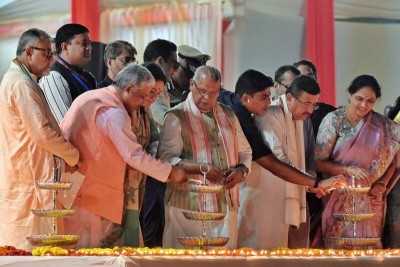
Prime Minister Narendra Modi stopping for a jhalmuri break during an election campaign in West Bengal was once the kind of carefully crafted image that would dominate India's online discourse. For years, the Bharatiya Janata Party (BJP) enjoyed an almost unchallenged advantage on the internet, particularly on X (formerly Twitter) and WhatsApp, where critics often referred to its vast ecosystem as "WhatsApp University."
The NEET protest, however, appears to have caught the ruling establishment off guard.
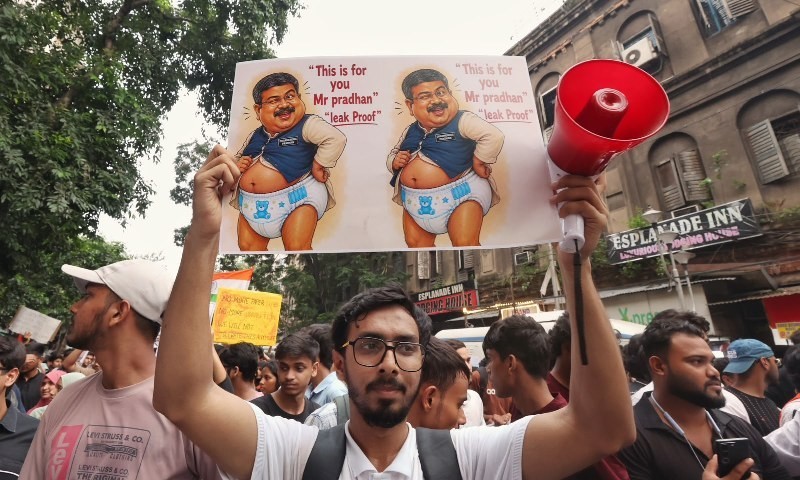 Sweeping protests took over streets of major Indian cities. Photo: Avishek Mitra/IBNS
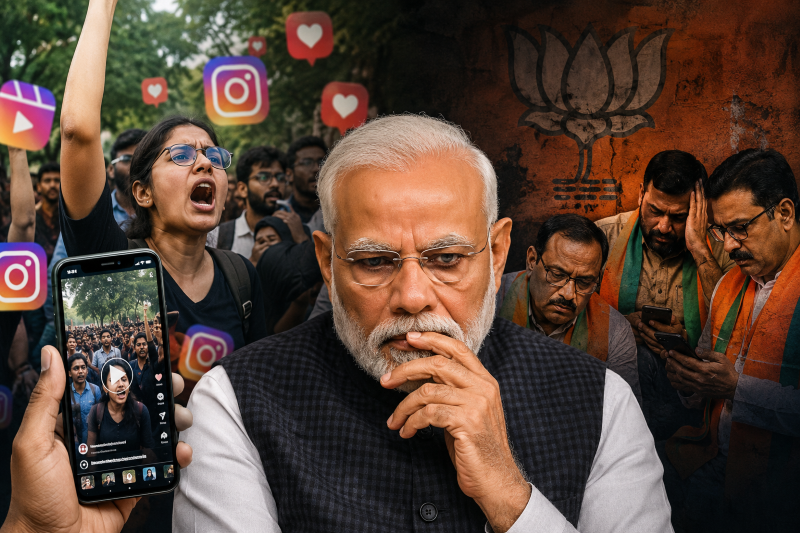
What the government initially dismissed as a fringe agitation evolved into a month-long nationwide movement, driven largely by Instagram rather than X. It exposed the BJP's inability to adapt to a new digital landscape shaped by Gen Z users, short-form videos and creator-led narratives.
Countering Rahul Gandhi's political barbs, responding to Opposition protests in Parliament or launching hashtag campaigns on X had long become routine for the Modi government, which deserves credit for India's "Digital India" push.
But the changing nature of online communication and Gen Z's style of protest presented an entirely different challenge.
When Prime Minister Modi eventually made a renewed push online with strategically timed midnight videos, acknowledging the declining influence of X, it appeared too little, too late.
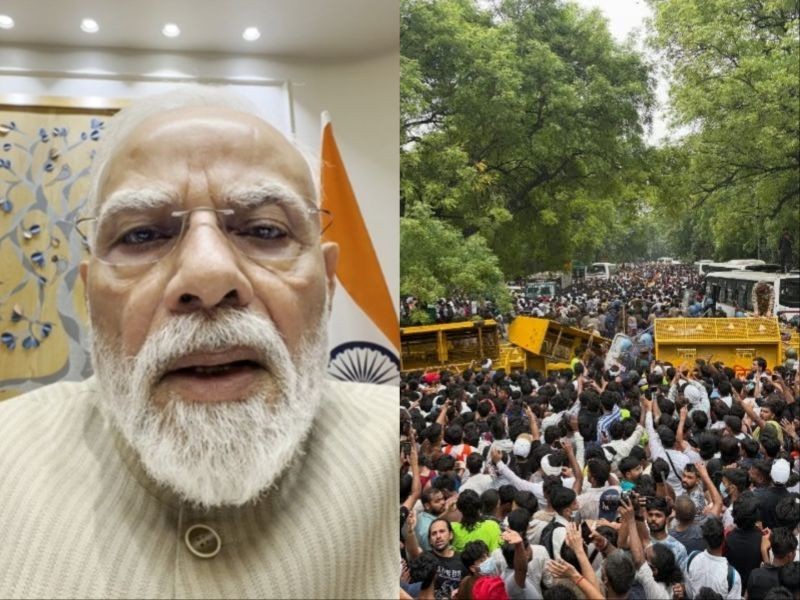 PM Modi's midnight video in an outreach to the youth. Photo: Screen-grab
For weeks, the government had ignored, mocked and dismissed the protesters—often referring to the "cockroaches" as a "foreign-funded gang."
Ironically, the genesis of the online group, the Cockroach Janta Party (CJP), was almost accidental.
Few in the government could have anticipated that an offhand remark by Chief Justice of India Surya Kant would eventually contribute to the circumstances that culminated in Union Education Minister Dharmendra Pradhan's resignation—an outcome which was almost impossible under the current government.
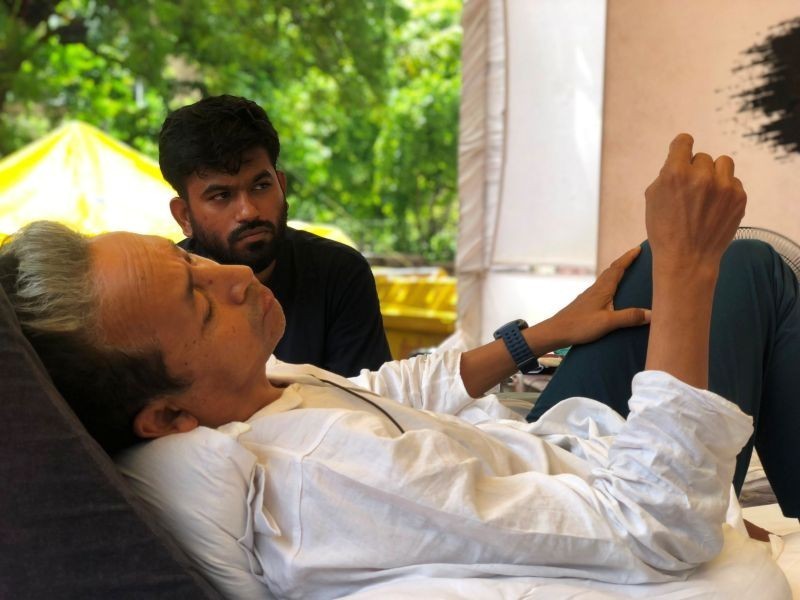 CJP founder Abhijeet Dipke with Sonam Wangchuk at Jantar Mantar. Photo: X/@Cockroachisback
Modi Government Stumbled Upon Hashtags and Reels
Social media belongs to everyone.
Instagram, once a platform built around photographs, has transformed into a reels-driven ecosystem where virtually anyone can become a content creator.
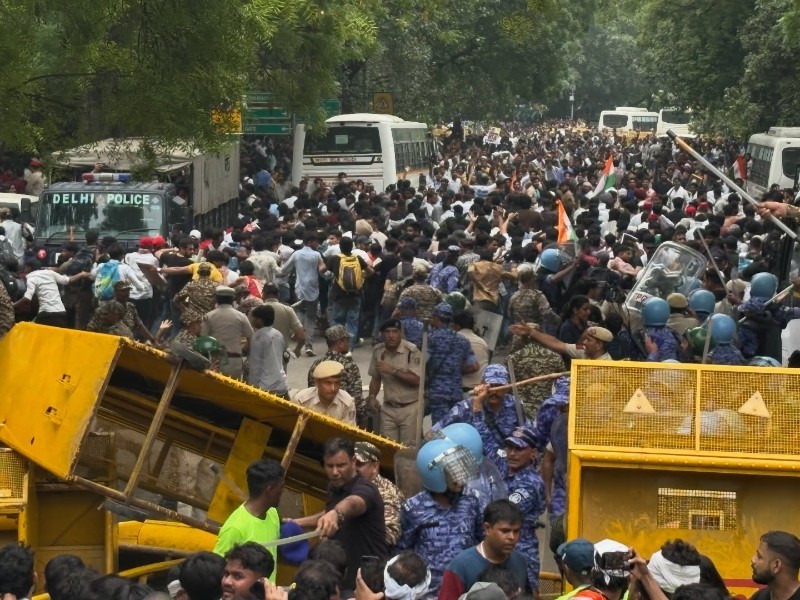 Protesters clashed with police officers during July 20 Parliament march in New Delhi. Photo: CJP/Instagram
Over the last month, users' feeds were flooded with memes, emotional videos and professionally edited reels featuring background music specifically designed to be shared across stories.
One striking example was a Mumbai-based model who single-handedly stopped a police van during the protests. Her images spread overnight, turning the 27-year-old into a familiar face across national and international television channels.
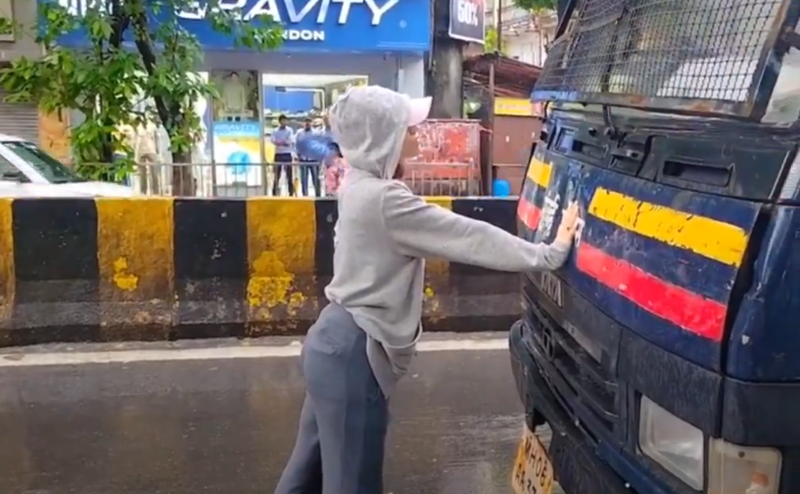 27-year-old Rhiya Ahir who went viral by stopping a Mumbai Police van full of detained protesters. Eventually, all the detained were released following Ahir's resistance. Photo: Screen-grab/X video
Meanwhile, continuous updates from Jantar Mantar dominated Instagram.
Videos documenting the police lathicharge during the July 20 Parliament march generated widespread engagement. As users interacted with these clips, platform algorithms naturally amplified similar content, ensuring that visuals of alleged police excesses repeatedly appeared on viewers' screens.
By contrast, videos from BJP supporters branding the protesters as "anti-India," "anti-Bharat" or "foreign-funded" increasingly appeared repetitive and ineffective after weeks of using the same rhetoric.
Similarly, repeated attempts to ridicule climate activist Sonam Wangchuk appeared less convincing than the powerful visuals of the fasting activist camping at Jantar Mantar for weeks.
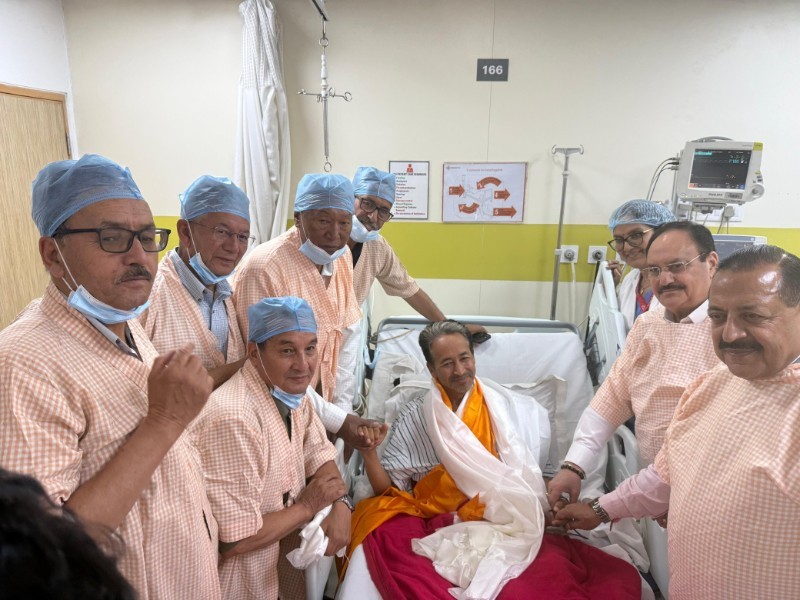 Sonam Wangchuk ended hunger strike after 26 days in the presence of Union Ministers JP Nadda and Jitendra Singh. Photo: X/@Wangchuk66
While the protest became thoroughly "Instafied," ministers and party leaders largely continued relying on the BJP's celebrated IT Cell and X posts—tools that proved far less effective among a young audience that increasingly consumes political content through Instagram.
Mainstream Media vs Alternative Media
For much of the protest that eventually forced Dharmendra Pradhan's resignation, mainstream television channels remained largely indifferent to the developments at Jantar Mantar and Sonam Wangchuk's fast.
This revived the familiar "Godi Media" criticism from the government's detractors.
The vacuum was filled by alternate media platforms and YouTube channels run by independent journalists, which emerged as the primary sources of on-ground reporting.
Although comprehensive data measuring the decline in television news consumption remains limited, younger audiences have increasingly moved away from relying solely on television for political information.
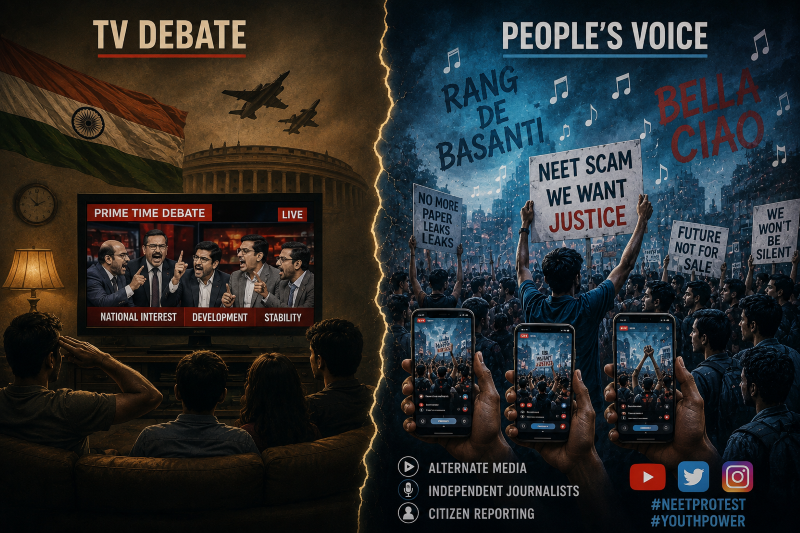 Influencers and content creators provided the ground report while mainstream media remained largely indifferent to the massive protest which was underway at Jantar Mantar. Photo: ChatGPT
As TV debates ignored the movement for weeks, information continued spreading quietly through smartphones.
The narrative wasn't built in prime-time studios.
It was built while people scrolled.
By the time mainstream media significantly increased its coverage, public opinion had already shifted.
The protest had transformed into an online mass movement driven by hashtags, algorithms and trending background music.
Interestingly, patriotic songs gradually gave way to protest anthems such as Rang De Basanti and Bella Ciao, creating a cultural language that proved difficult for the establishment to counter.
A Protest Without Conventional Political Leadership
Governments are accustomed to confronting established political parties.
They understand familiar political language.
The NEET movement, however, was largely leaderless and politically fluid.
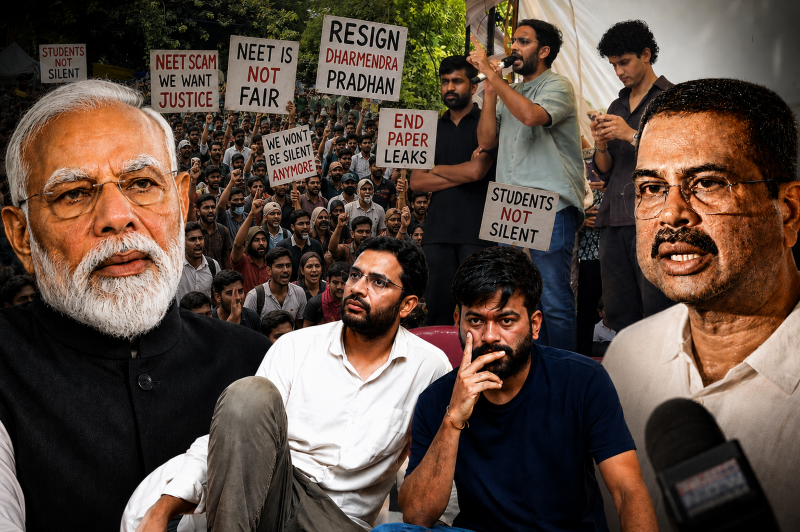 The Modi government was caught off guard as the movement remained largely non-political. Photo: ChatGPT/PIB
In many ways, it resembled the RG Kar protests that confronted then West Bengal Chief Minister Mamata Banerjee in 2024—a citizens' movement that remained outside conventional party structures.
Similarly, Prime Minister Narendra Modi and Union Home Minister Amit Shah, despite decades of political experience, appeared to struggle against a movement that did not fit traditional political frameworks.
Influencers Replaced Traditional Media Outreach
The protest also reflected a broader transformation in public communication.
Rather than lengthy speeches or press conferences, a 20-second Instagram reel often captured the mood more effectively in an era of shrinking attention spans.
The promotional campaign for the recently released Bollywood film Alpha offered a comparable example.
Instead of relying heavily on conventional media interviews with stars Alia Bhatt and Sharvari, Yash Raj Films leaned substantially on influencers to amplify its campaign.
The same model emerged organically at Jantar Mantar.
The protest site became a hub for content creators seeking engagement while simultaneously documenting the movement.
Creators filmed "Get Ready With Me" videos before heading to the protest, shared their journeys throughout the day and offered followers a first-person account of events on the ground.
Long before major television channels returned to cover the agitation, these creators had already brought the movement into millions of smartphones.
Instagram videos documenting alleged police excesses came under particular scrutiny.
Several clips raised questions over the alleged manhandling of women protesters, while one widely circulated video showing a police officer slapping a woman protester reportedly resulted in his removal from duty at Jantar Mantar.
Celebrity Support Added Momentum
Mass movements often gain additional momentum when public figures join them.
From Anna Hazare's anti-corruption movement to the NEET protests, celebrity endorsements have consistently attracted public attention.
Following Prime Minister Modi's outreach to young people through an X post, several Bollywood personalities expressed solidarity with the protesters after the July 20 lathicharge.
Celebrities ranging from Kareena Kapoor Khan to Gen Z actor Ananya Panday posted messages that echoed similar sentiments.
Although the CJP welcomed these expressions of support, many social media users accused several celebrities of remaining silent until after the Prime Minister's intervention.
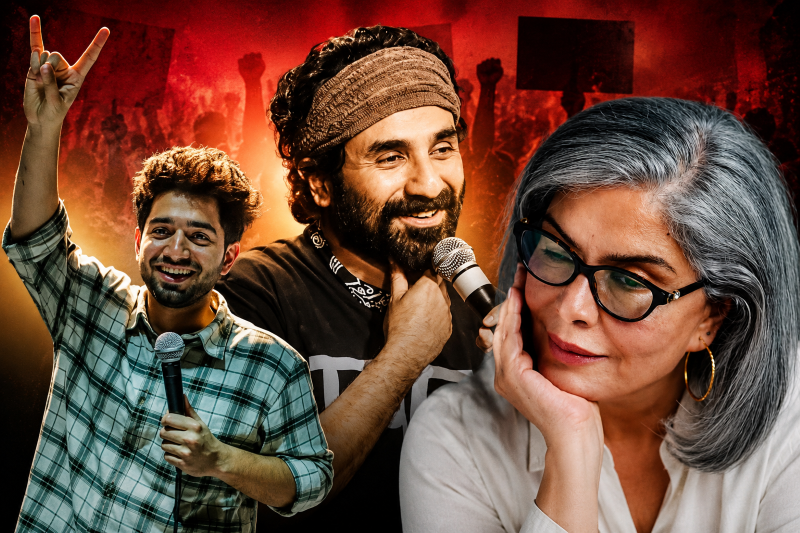 Vir Das, Samay Raina, Zeenat Aman are some of the celebrities younger generation look up to when it comes to the Instagram or digital world. Photo: ChatGPT/Official handles
Actor and FTII chairman R. Madhavan, meanwhile, faced intense criticism online following his post, with some users saying they regretted idolising him during their teenage years.
Some prominent voices—including Naseeruddin Shah, Shabana Azmi and Sonakshi Sinha—had supported the movement from its early stages.
But perhaps the bigger story was the changing nature of influence itself.
Stand-up comedians such as Vir Das and Samay Raina today command enormous audiences online, often rivaling or even surpassing traditional Bollywood stars in terms of cultural influence among younger users.
Veteran actor Zeenat Aman also emerged as one of the early celebrity supporters of the movement. Her carefully curated Instagram posts, blending nostalgia with personal storytelling, have earned her a devoted following across generations, making her endorsement particularly noteworthy in the digital conversation.
Support Our Journalism
We cannot do without you.. your contribution supports unbiased journalism
IBNS is not driven by any ism- not wokeism, not racism, not skewed secularism, not hyper right-wing or left liberal ideals, nor by any hardline religious beliefs or hyper nationalism. We want to serve you good old objective news, as they are. We do not judge or preach. We let people decide for themselves. We only try to present factual and well-sourced news.
Support objective journalism for a small contribution.