'Should there be no show of fairness?': Supreme Court questions Centre over CJI's exclusion from CEC selection panel
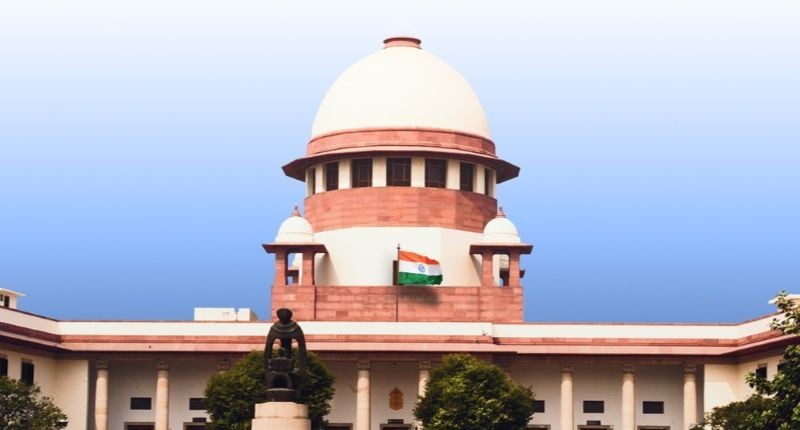
New Delhi/IBNS: The Supreme Court on Thursday questioned the Centre over the exclusion of the Chief Justice of India (CJI) from the three-member committee responsible for appointing the Chief Election Commissioner (CEC) and Election Commissioners, according to media reports.
The selection committee currently comprises the Prime Minister, a Union Cabinet Minister nominated by the Prime Minister, and the Leader of the Opposition in the Lok Sabha.
Supreme Court questions fairness of selection process
Hearing a batch of petitions challenging the constitutional validity of the law governing the appointment of the CEC and Election Commissioners, a bench of Justices Dipankar Datta and Satish Chandra Sharma asked whether the process should not have "some show of fairness".
The court questioned why Parliament, while framing the law, chose to exclude the CJI from the selection panel—a move that has drawn criticism from the Opposition, which alleges that it gives the government greater control over appointments.
Centre defends the law
Defending the legislation, the Centre argued that it would be incorrect to presume that the Prime Minister and other ministers would act in "bad faith" or "against democracy" merely because the government enjoys a numerical majority in the committee.
Emphasising the "sanctity" of the Prime Minister's Office, Solicitor General Tushar Mehta told the court:
"If his decision is not to be trusted and is to be seen as necessarily a bad-faith exercise, then why not have a provision that even while selecting his Cabinet, he must consult some former judge or outsider?"
Mehta further argued that questioning the composition of the committee amounted to doubting Parliament's wisdom.
He also urged the court to refer the matter to a larger Constitution Bench under Article 145(3) of the Constitution, saying it involved substantial questions relating to constitutional interpretation.
Court says issue is about fairness, not trust
Responding to the Centre's arguments, Justice Datta clarified that the issue before the court was not about trusting the Prime Minister but about ensuring fairness in the appointment process.
"We would trust the Prime Minister. But this has not happened over the years. I rest at that. Now it's 2:1. Two on the side of the PM and one on the side of the opposition," Justice Datta observed, as quoted by NDTV.
"The Election Commissioner is supposed to be an independent person. Should the committee not have any show of fairness? We are not saying fairness is not being achieved. But it has to be shown," he added.
The Supreme Court has reserved its order on whether the matter should be referred to a larger bench.
Why is the exclusion of the CJI controversial?
The exclusion of the Chief Justice of India from the selection committee has been a contentious issue for several reasons:
Executive gets a majority
The committee now consists of two representatives from the government—the Prime Minister and a Cabinet Minister—and one representative from the Opposition. Critics argue this effectively gives the ruling government a decisive say in appointing Election Commissioners.
Concerns over institutional independence
The Election Commission is expected to function independently and conduct free and fair elections. Opponents argue that removing the CJI eliminates an independent constitutional authority from the appointment process.
Departure from the Supreme Court's 2023 ruling
In March 2023, the Supreme Court had ruled that, until Parliament enacted a law, appointments should be made by a committee comprising the Prime Minister, the Leader of the Opposition and the Chief Justice of India. The court had said judicial participation would strengthen public confidence in the Election Commission's independence.
Critics contend that the new law departs from the spirit of that judgment.
Questions over electoral neutrality
Several Opposition parties, former Election Commissioners and constitutional experts have expressed concern that a committee dominated by the executive could create a perception of bias, even if the appointed commissioners function independently.
Support Our Journalism
We cannot do without you.. your contribution supports unbiased journalism
IBNS is not driven by any ism- not wokeism, not racism, not skewed secularism, not hyper right-wing or left liberal ideals, nor by any hardline religious beliefs or hyper nationalism. We want to serve you good old objective news, as they are. We do not judge or preach. We let people decide for themselves. We only try to present factual and well-sourced news.
Support objective journalism for a small contribution.