SC's Cauvery water verdict disappointing: Tamil Nadu CM
New Delhi, Feb 16 (IBNS): Tamil Nadu chief minister Edappadi K Palaniswami on Friday said that the Supreme Court's verdict on the Cauvery water dispute is "disappointing," media reports said.
“We appreciate the fact that SC said no one was an owner of the resources but everyone has equal rights over a river. Considering the ground water level and reducing the water allotment for Tamil Nadu from 192 TMC to 177.25 TMC is disappointing,” Palaniswami was quoted as saying by the Hindustan Times.
“We will initiate a detailed discussion with experts on the judgement and then announce its next action plan. We will do our best to ensure that our rights are restored and the best in the Cauvery issue is done,” the Tamil Nadu CM said.
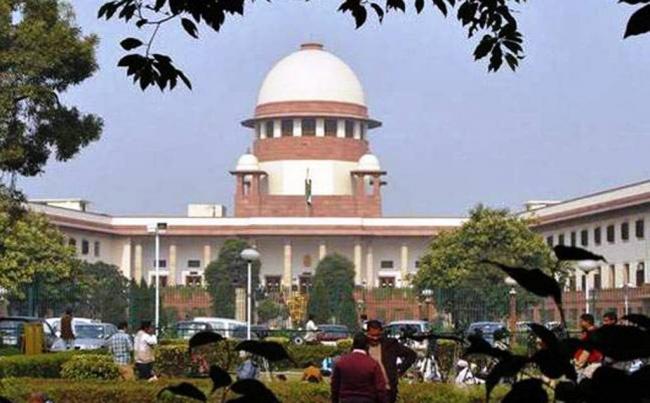
The Supreme Court, on Friday, ordered an increase in water share for Karnataka while delivering a judgement on the Cauvery river dispute, media reports said.
Karnataka will get an additional 14.75 tmc of water. Hence Tamil Nadu's water share has been reduced from 192 tmc to 177.25 tmc.
Delivering the verdict, the three judge bench, which included Chief Justice Dipak Misra, observed that the river water must be shared by all states and it does not belong to any particular state.
The Cauvery river waters are shared by four southern states-Karnataka, Kerala, Tamil Nadu and Puducherry.
The sharing of waters has been a contentious issue between Tamil Nadu and Karnataka since 1892, with the debate growing stronger in 1924 between the erstwhile Madras Presidency and Kingdom of Mysore.
The Cauvery, which flows through Karnataka and Tamil Nadu, is the third largest river -- after Godavari and Krishna -- in south india and is considered the lifeline of Tamil Nadu and Southern Karnataka.
The central government had set up a tribunal- CWDT or Cauvery Water Dispute Tribunal- in 1990 to deal with the dispute.
In Feb 2007, the tribunal delivered its final verdict and allocated 419 tmc of water annually to Tamil Nadu and 284.75 tmc to Karnataka; 30 tmc of water to Kerala and 7 tmc to Puducherry.
Karnataka was ordered to release 177.25 tmc of water to Tamil Nadu in a normal year from June to May.
However, all four states filed review petitions and the dispute continued.
While in 2013, the central government had notified the final award the dispute lingered. Last year in Sep, the Supreme Court reserved its judgement on the CWDT’s final award.
Support Our Journalism
We cannot do without you.. your contribution supports unbiased journalism
IBNS is not driven by any ism- not wokeism, not racism, not skewed secularism, not hyper right-wing or left liberal ideals, nor by any hardline religious beliefs or hyper nationalism. We want to serve you good old objective news, as they are. We do not judge or preach. We let people decide for themselves. We only try to present factual and well-sourced news.
Support objective journalism for a small contribution.