Man seeks to prove biological father alleging birth out of extramarital affair, SC blocks DNA test in landmark ruling
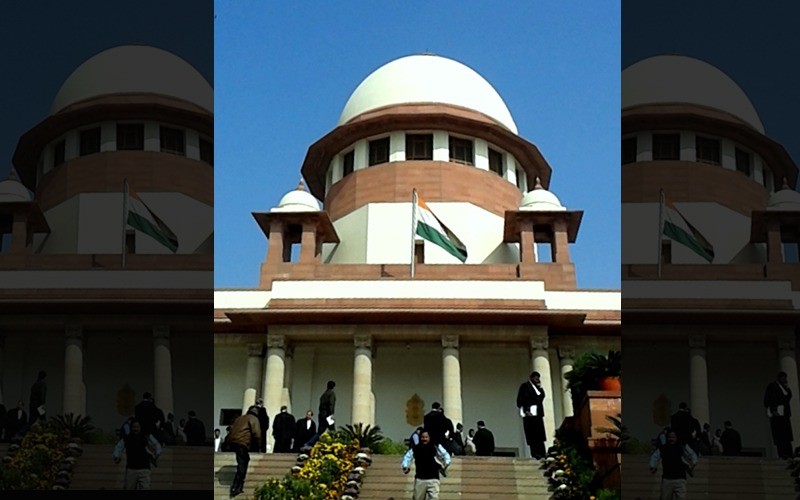
New Delhi/IBNS: In a significant verdict, the Supreme Court Tuesday struck a balance between the right to know the biological father and the right to privacy in a landmark ruling in a two-decades-old case.
The case involves a 23-year-old man seeking to establish his biological father's identity through a DNA test.
The petitioner claimed his birth was a result of his mother’s extramarital affair and sought to prove paternity to claim financial maintenance for mounting medical expenses.
The bench, comprising Justice Surya Kant and Justice Ujjal Bhuyan, heard arguments from both sides.
The petitioner stated he had undergone multiple surgeries due to severe health issues and faced financial hardship alongside his mother in meeting treatment costs.
He pleaded that identifying his biological father would allow him to secure much-needed support.
The alleged biological father, however, opposed the DNA test on privacy grounds, stating that such an action would violate his personal rights.
The case thus presented a conflict between the petitioner’s right to know his origins and the respondent’s right to privacy.
In its ruling, the Supreme Court emphasized the need to balance these competing rights carefully. While acknowledging the petitioner’s situation, the court also underlined the importance of safeguarding individual privacy.
The judgment reflects the judiciary’s attempt to navigate complex personal and legal issues within the framework of constitutional rights.
Support Our Journalism
We cannot do without you.. your contribution supports unbiased journalism
IBNS is not driven by any ism- not wokeism, not racism, not skewed secularism, not hyper right-wing or left liberal ideals, nor by any hardline religious beliefs or hyper nationalism. We want to serve you good old objective news, as they are. We do not judge or preach. We let people decide for themselves. We only try to present factual and well-sourced news.
Support objective journalism for a small contribution.