Indus Waters Treaty suspension decisive step against terror-sponsoring nation: President Murmu
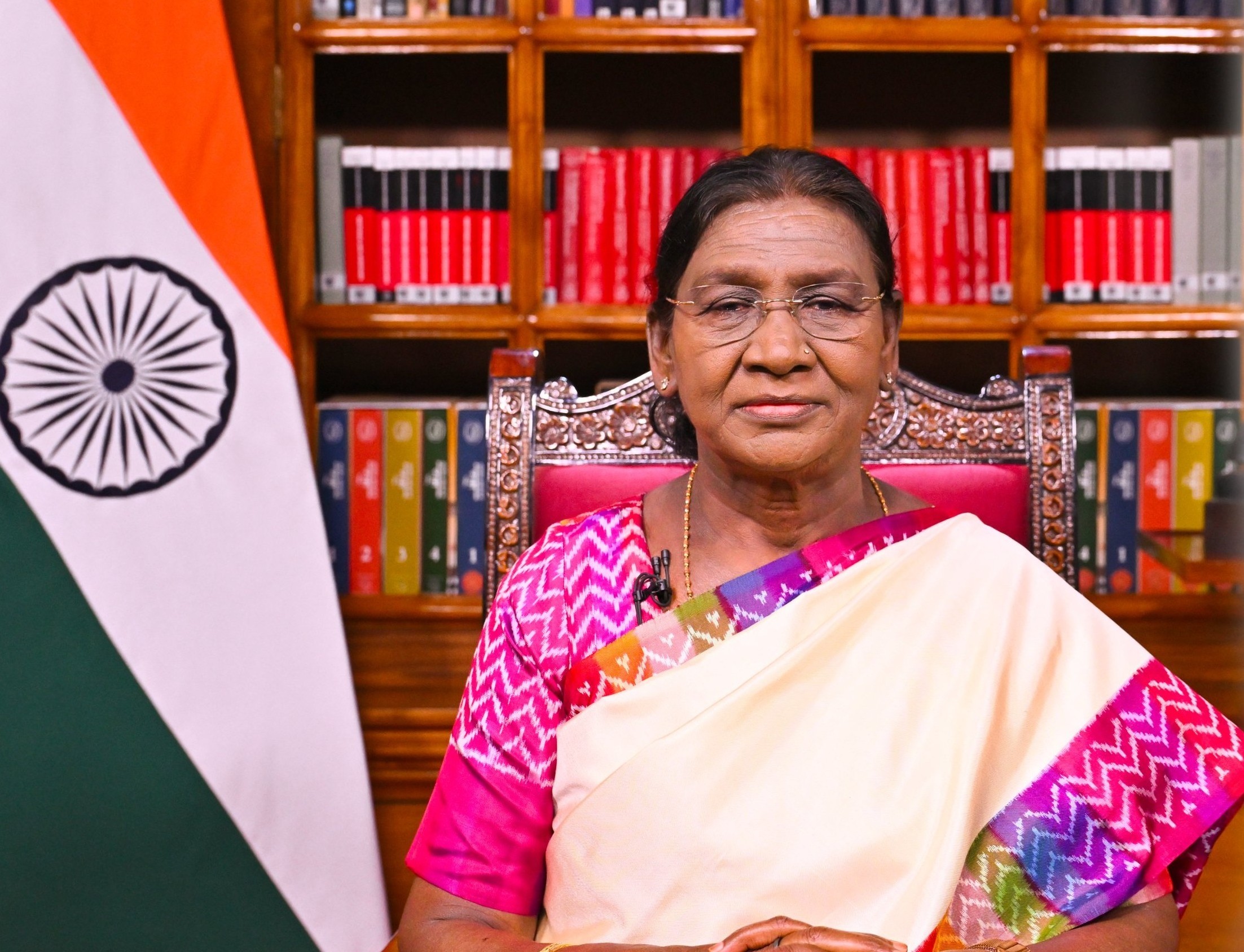
President Droupadi Murmu on Friday described India's decision to keep the Indus Waters Treaty (IWT) in abeyance as a decisive step against a country that provides a safe haven to terrorists, saying the move was taken in the national interest, particularly that of farmers.
Addressing the nation on the eve of India's 80th Independence Day, President Murmu also highlighted India's young population, public examination reforms and the role of the armed forces in combating terrorism.
“Suspension of the Treaty with a country that harbours terrorism is a decisive step in the interest of our nation, especially the farmers,” she said.
India put the 1960 water-sharing treaty with Pakistan in abeyance following the April 2025 Pahalgam terror attack, in which 26 tourists were killed.
'Clear message' to terrorists
Referring to Operation Sindoor, launched on May 7, President Murmu praised the armed forces for their role in responding to terrorism.
“During the commemoration of one year since the launch of Operation Sindoor on May 7, we remembered the unmatched valour of our armed forces,” she said.
She said the operation demonstrated the capability of the Indian armed forces to conduct precision action against terrorism.
We take pride in our tradition of overcoming the forces hostile to humanity, for upholding truth and justice. pic.twitter.com/wQdDwfJf1e
— President of India (@rashtrapatibhvn) August 14, 2026
“It sent a clear and firm message to terrorists and those who support them that no matter where they hide, they will have to face the consequences of their actions,” she said.
India rejects Pakistan's IWT narrative
India has repeatedly maintained that Pakistan's conduct and support for cross-border terrorism are directly linked to the decision to keep the IWT in abeyance.
Last month, New Delhi said Pakistan's aggressive posturing had no bearing on India's decision and reiterated that the treaty would remain in abeyance until Pakistan ends its support for cross-border terrorism.
Pakistan has criticised India's decision internationally, arguing that putting the treaty on hold could set a dangerous precedent for countries sharing transboundary rivers.
India, however, has maintained that the move is linked to national security and Pakistan's alleged support for terrorism.
65% of Indians below 35
In her Independence Day address, President Murmu also underlined India's demographic advantage, noting that 65 per cent of the country's population is below the age of 35.
“This young population is our most valuable asset. The youth of our country are talented, committed, and skilled,” she said.
Calling students the “architects of India's future”, the President stressed the need to protect the integrity of public examinations and ensure that young people have fair access to opportunities.
65 percent of our country's population is below the age of 35. This young population is our most valuable asset.
— President of India (@rashtrapatibhvn) August 14, 2026
A new phase of space exploration has been ushered in through the recent successful rocket launch by a young team with an average age of just 28 years. pic.twitter.com/DmBe6aeP0L
Focus on exam reforms
Her remarks come amid protests over alleged irregularities in competitive examinations, including demonstrations at Jantar Mantar over the NEET-UG examination controversy and protests in Jharkhand over alleged irregularities in recruitment tests.
Our students are the architects of India's future. Just as the government and society must remain united to ensure national security, everyone must contribute through joint and concerted efforts to safeguard the present and future of our students. pic.twitter.com/WEXAHyPQnV
— President of India (@rashtrapatibhvn) August 14, 2026
President Murmu said the government was taking comprehensive measures to reform the examination system.
“The objectives of these reforms are to completely curb the use of unfair means in public examinations, make the examination system more transparent, more secure, and more trustworthy for the youth,” she said.
She also called for collective efforts by the government and society to safeguard the present and future of India's students.
Support Our Journalism
We cannot do without you.. your contribution supports unbiased journalism
IBNS is not driven by any ism- not wokeism, not racism, not skewed secularism, not hyper right-wing or left liberal ideals, nor by any hardline religious beliefs or hyper nationalism. We want to serve you good old objective news, as they are. We do not judge or preach. We let people decide for themselves. We only try to present factual and well-sourced news.
Support objective journalism for a small contribution.