 Indian Railways
Indian Railways rolls out TAG 2026: 122 new trains, 549 speeded-up services across India
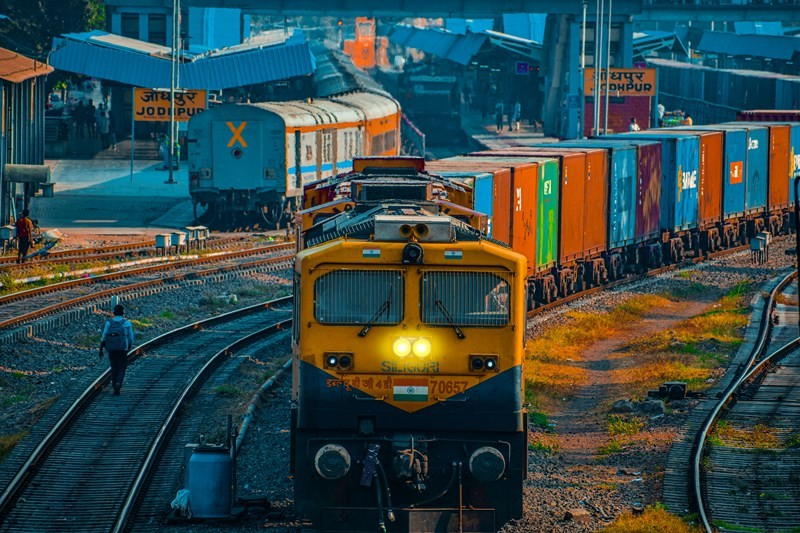
Under the Timetable of Trains (TAG) 2026, Indian Railways has rolled out a wide-ranging network upgrade, introducing new trains, extending existing services, increasing frequencies, converting select services into Superfast trains and significantly reducing travel times across railway zones.
Zone-wise highlights
In the Central Railway (CR) zone, four new trains were introduced, six services extended and 30 trains speeded up.
The East Coast Railway (ECOR) saw four new trains added, four services extended and three trains speeded up.
The East Central Railway (ECR) recorded a major expansion, with 20 new trains introduced, 20 services extended and 12 trains speeded up. In the Eastern Railway (ER), six new trains were introduced, four extended and 32 trains speeded up.
The North Central Railway (NCR) introduced two new trains, extended four services, increased the frequency of two trains and speeded up one service.
The North Eastern Railway (NER) added eight new trains, extended four services, increased frequency for two trains and speeded up 12 services.
The Northeast Frontier Railway (NFR) introduced 10 new trains and speeded up 36 services.
The Northern Railway (NR) added 20 new trains, extended 10 services and speeded up 24 trains.
The North Western Railway (NWR) recorded one of the highest improvements, with 12 new trains introduced, six services extended, frequency increased for two trains and 89 trains speeded up.
In the southern zone, the Southern Railway (SR) introduced six new trains, extended four services, converted two trains into Superfast services and speeded up 75 trains.
The South Western Railway (SWR) led all zones in speed improvements, introducing eight new trains, extending six services, converting eight trains into Superfast and speeding up 117 trains.
The West Central Railway (WCR) introduced eight new trains and speeded up 27 services, while the Western Railway (WR) added 10 new trains, extended 10 services, increased frequency for two trains and speeded up 80 trains.
Overall impact of TAG 2026
Across Indian Railways, TAG 2026 resulted in the introduction of 122 new trains, extension of 86 services, eight frequency increases, conversion of 10 trains into Superfast, and 549 trains speeded up nationwide.
Break-up of new trains introduced
The 122 new trains introduced under TAG 2026 include a mix of premium, express and passenger services. These comprise:
- 26 Amrit Bharat trains, including four introduced via TAG–TOD
- 60 Mail/Express trains, including eight via TAG–TOD
- 28 Vande Bharat trains to enhance semi-high-speed connectivity
- 2 Rajdhani, 2 Jan Shatabdi, 2 Humsafar, and 2 Namo Bharat Rapid Rail services
Together, these categories account for the total of 122 new trains introduced during the period.
Speeding up of trains
A total of 549 trains were speeded up under TAG 2026 to improve punctuality and reduce journey times. Of these:
- 376 trains were speeded up by 5–15 minutes
- 105 trains by 16–30 minutes
- 48 trains by 31–59 minutes
- 20 trains by 60 minutes or more
The South Western Railway (SWR) made the largest contribution, speeding up 66 trains by 5–15 minutes, 29 by 16–30 minutes, 12 by 31–59 minutes and 10 by 60 minutes or more.
Other notable improvements include:
- North Western Railway (NWR): 89 trains speeded up
- Southern Railway (SR): 75 trains speeded up
- Western Railway (WR): 80 trains speeded up
- Eastern Railway (ER): 32 trains speeded up
- Northeast Frontier Railway (NFR): 36 trains speeded up
Focus on faster, more reliable rail services
Overall, TAG 2026 underscores Indian Railways’ strong focus on reducing travel time, improving punctuality and enhancing passenger convenience. With 549 trains speeded up across zones, the initiative marks a significant step towards faster, more reliable and efficient rail connectivity nationwide.
Support Our Journalism
We cannot do without you.. your contribution supports unbiased journalism
IBNS is not driven by any ism- not wokeism, not racism, not skewed secularism, not hyper right-wing or left liberal ideals, nor by any hardline religious beliefs or hyper nationalism. We want to serve you good old objective news, as they are. We do not judge or preach. We let people decide for themselves. We only try to present factual and well-sourced news.
Support objective journalism for a small contribution.