 India-Pakistan
India and Pakistan exchange lists of nuclear installations months after Operation Sindoor
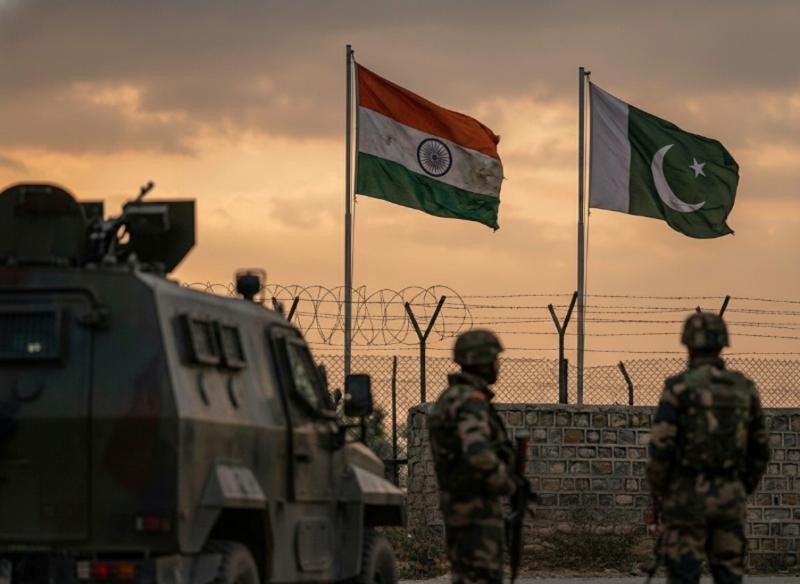
India and Pakistan on Wednesday exchanged lists of nuclear installations and facilities under a long-standing bilateral agreement that prohibits attacks on each other’s atomic sites.
In a statement, the Ministry of External Affairs (MEA) said the exchange took place simultaneously through diplomatic channels in New Delhi and Islamabad.
“India and Pakistan today exchanged the list of Nuclear Installations and Facilities covered under the Agreement on the Prohibition of Attack against Nuclear Installations and Facilities between India and Pakistan,” the MEA said.
The agreement, signed on December 31, 1988, and in force since January 27, 1991, mandates that both countries share details of nuclear installations on January 1 every year. This marks the 35th consecutive exchange of such lists, with the first taking place on January 1, 1992.
Exchange of Prisoners’ Lists
Separately, the two countries also exchanged lists of civil prisoners and fishermen held in each other’s custody under the bilateral Agreement on Consular Access, 2008.
India shared details of 391 civil prisoners and 33 fishermen in its custody who are Pakistani or believed to be Pakistani. Pakistan, in turn, provided details of 58 civil prisoners and 199 fishermen in its custody who are Indian or believed to be Indian.
The Government of India reiterated its call for the early release and repatriation of civil prisoners, fishermen along with their boats, and missing Indian defence personnel from Pakistan’s custody. Islamabad was urged to expedite the release of 167 Indian fishermen and civil prisoners who have already completed their sentences.
India also sought immediate consular access for 35 civil prisoners and fishermen in Pakistan’s custody who are believed to be Indian but have not yet been granted access. New Delhi further stressed the need to ensure the safety, security, and welfare of all Indian and believed-to-be-Indian detainees pending their release.
According to the MEA, sustained diplomatic efforts since 2014 have resulted in the repatriation of 2,661 Indian fishermen and 71 Indian civil prisoners from Pakistan. This includes 500 fishermen and 13 civilian prisoners repatriated since 2023.
Pahalgam Terror Attack and Operation Sindoor
The diplomatic exchanges come against the backdrop of heightened regional tensions. Tourism in Jammu and Kashmir had been steadily recovering following the abrogation of Article 370 in 2019, but the revival was severely disrupted by a terror attack on April 22 in the Baisaran Valley near Pahalgam. The attackers reportedly targeted tourists based on religious identity.
In response, India launched Operation Sindoor in May, striking terror infrastructure in Pakistan-occupied Kashmir and inside Pakistan. Islamabad retaliated with missile and drone attacks, bringing the region close to a dangerous escalation. Intense diplomatic engagement eventually helped defuse the crisis, once again underscoring South Asia’s enduring volatility.
Support Our Journalism
We cannot do without you.. your contribution supports unbiased journalism
IBNS is not driven by any ism- not wokeism, not racism, not skewed secularism, not hyper right-wing or left liberal ideals, nor by any hardline religious beliefs or hyper nationalism. We want to serve you good old objective news, as they are. We do not judge or preach. We let people decide for themselves. We only try to present factual and well-sourced news.
Support objective journalism for a small contribution.