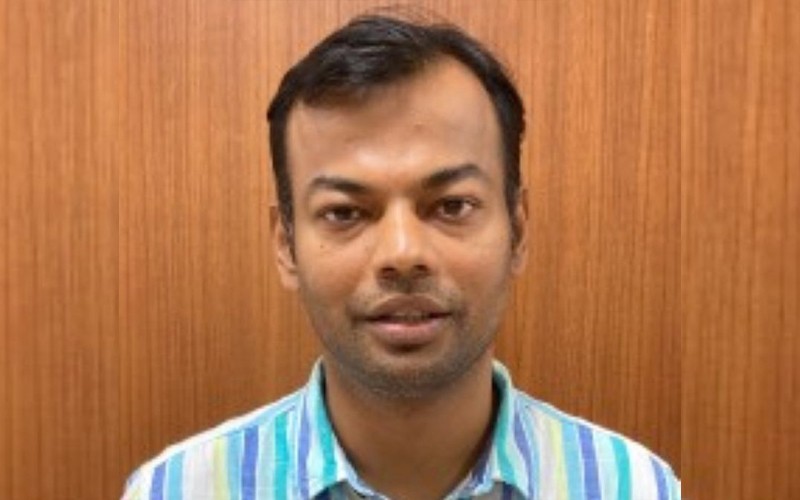
IIT Madras Prof Mitesh Khapra recognised among TIME Magazine's 100 most influential people in AI
Mitesh Khapra, an associate professor at IIT Madras, has been featured in TIME magazine's prestigious 2025 list of the 100 most influential people in artificial intelligence (AI).
He shares the spotlight with global leaders like Elon Musk and Sam Altman.
Khapra has been recognised for his groundbreaking research in natural language processing and machine learning, with a special focus on Indian languages.
Unlike many others on the list who lead AI companies, Khapra's work is primarily academic.
He co-founded AI4Bharat, an initiative that develops open-source tools and datasets to make AI accessible in Indian languages.
According to Time Magazine, nearly every Indian startup working on voice technology for the country's many regional languages relies on the datasets of Mitesh Khapra and his team.
While Western models may perform well on highly represented languages like Hindi and Bengali, they are weaker on underrepresented languages.
To close the gap, Khapra's AI4Bharat conducted a project that took researchers to almost 500 of India's 700 districts, recording thousands of hours of voices from people with diverse educational and socioeconomic backgrounds to capture all 22 of India's official languages.
"Fifteen years ago, an average PhD student in India working on language technology would mostly focus on English-related problems," Mitesh Khapra said.
"But now, with the availability of these datasets, I see a shift, Indian students are increasingly working on challenges specific to Indian languages."
Support Our Journalism
We cannot do without you.. your contribution supports unbiased journalism
IBNS is not driven by any ism- not wokeism, not racism, not skewed secularism, not hyper right-wing or left liberal ideals, nor by any hardline religious beliefs or hyper nationalism. We want to serve you good old objective news, as they are. We do not judge or preach. We let people decide for themselves. We only try to present factual and well-sourced news.
Support objective journalism for a small contribution.