'Flights of political fancy': BJP dismisses Sonia Gandhi’s G RAM G critique as ‘mischaracterisation’
The political standoff between the Bharatiya Janata Party (BJP) and the Congress over the newly passed G RAM G law, which seeks to replace the 20-year-old MGNREGA, escalated on Monday after the BJP dismissed Sonia Gandhi’s criticism as “mischaracterisations” and “flights of political fancy”.
The Viksit Bharat Guarantee for Rozgar and Ajeevika Mission (Gramin), or G RAM G, was cleared by Parliament last week amid strong protests from the Congress-led opposition.
The Congress has argued that the new legislation undermines the employment guarantee enshrined in MGNREGA, particularly flagging changes to the funding structure that require states to bear 40 percent of the cost.
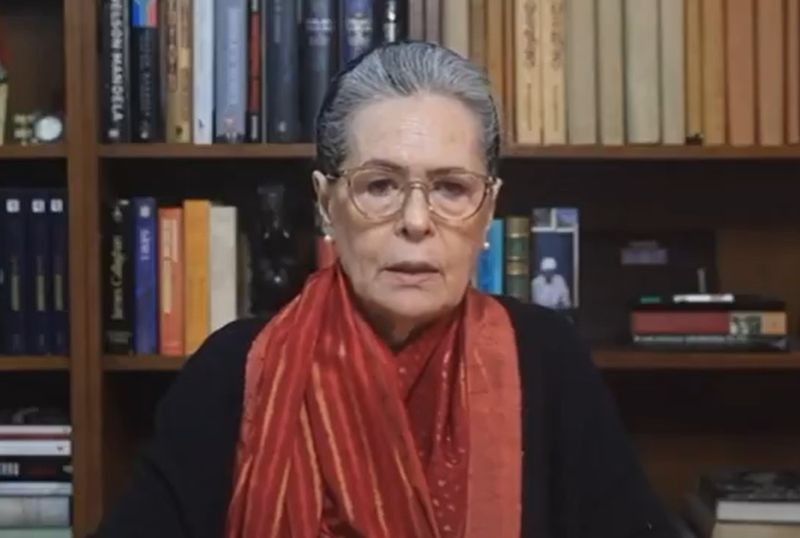
On Saturday, former Congress president Sonia Gandhi released a video message accusing the Centre of bulldozing the Bill through Parliament.
Calling it a “black law”, she said the repeal of MGNREGA would be resisted by Congress workers across the country and alleged that the BJP had jeopardised the livelihoods of crores of farmers and labourers.
Responding on social media platform X, BJP IT cell head Amit Malviya said Gandhi’s remarks showed a lack of engagement with the new law.
Has the Modi Government “Bulldozed” MGNREGA? Or Repaired It?
— Amit Malviya (@amitmalviya) December 22, 2025
Sonia Gandhi’s recent article on MGNREGA reads less like a serious engagement with law or data and more like a flight of political fancy. It is evident that she has not read the VB–G RAM G Act, because her arguments… pic.twitter.com/ffyUAhmS5M
He claimed her arguments were based on selective memory and false assumptions, including the charge that the employment guarantee had been scrapped.
Malviya said the key change under G RAM G was a shift in the budgeting framework—from demand-based funding to a norm-based allocation—while noting that guaranteed workdays had been increased from 100 to 125.
He argued that MGNREGA, while useful in its time, had not kept pace with evolving rural realities.
Citing government data, Malviya said rural poverty had declined sharply and that rising incomes, formal credit access, and MSME growth indicated a need for updated employment policies.
He rejected claims that the Centre was shifting the financial burden to states, asserting that states had already been bearing significant costs under MGNREGA.
Addressing concerns over workday caps and decentralisation, Malviya said the new framework offered flexibility, protected agricultural cycles, and strengthened transparency rather than weakening Panchayats or Gram Sabhas.
He also pointed to alleged structural flaws in MGNREGA, including misappropriation of funds and implementation lapses, while highlighting improvements made under the Modi government such as higher women’s participation, Aadhaar-linked payments, geo-tagging of assets, and near-total digitisation of wage payments.
The BJP maintained that G RAM G represents a reform aimed at modernising rural employment policy rather than dismantling welfare protections.
Support Our Journalism
We cannot do without you.. your contribution supports unbiased journalism
IBNS is not driven by any ism- not wokeism, not racism, not skewed secularism, not hyper right-wing or left liberal ideals, nor by any hardline religious beliefs or hyper nationalism. We want to serve you good old objective news, as they are. We do not judge or preach. We let people decide for themselves. We only try to present factual and well-sourced news.
Support objective journalism for a small contribution.