'10 satellies on round-the-clock surveillance': ISRO chief amid India-Pak tensions
Agartala (Tripura): As tensions between India and Pakistan continue to rise, ISRO is turning to space not only for exploration but as a critical component of national security.
The space agency is using its fleet of satellites to maintain a watchful eye over the country’s land, skies and seas, Moneycontrol report.
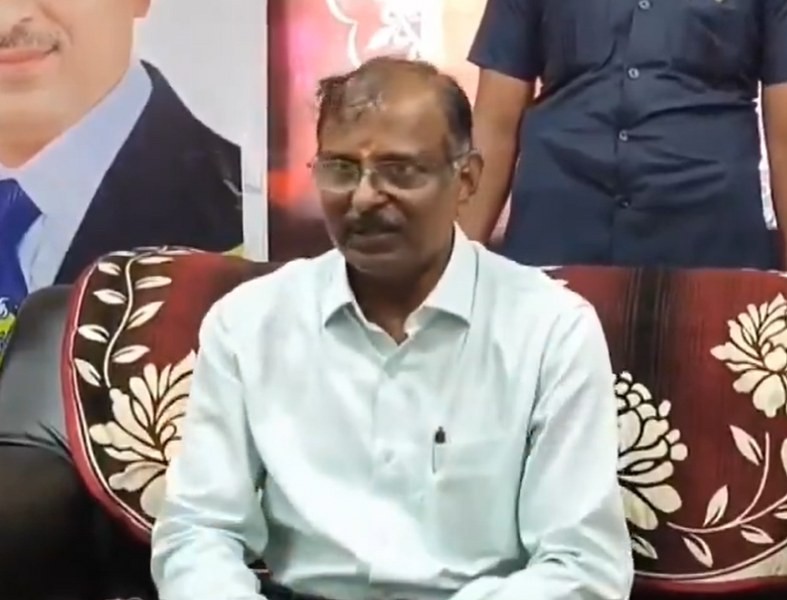
“To protect our country, we must rely on satellites,” ISRO chairman V Narayanan said while addressing the fifth convocation of Central Agricultural University in Agartala.
He said ten satellites are currently engaged in round-the-clock strategic operations, playing a vital role in safeguarding the nation.
Narayanan also underlined the importance of keeping close surveillance over India’s 7,000-km-long coastline, noting that without satellite and drone technologies, many essential goals would remain out of reach.
ISRO has launched 127 Indian satellites so far, including those built by private entities and educational institutions.
Among these, 22 are in low Earth orbit and 29 in geosynchronous orbit, operated by the central government. Around a dozen are surveillance satellites, including the Cartosat and RISAT series, along with EMISAT and MicroSat, each tailored to specific strategic tasks.
India plans constellation of 52 satellites
In a recent announcement, IN-SPACe chairman Pawan Kumar Goenka said India will launch 52 satellites over the next five years, a move that is expected to sharply enhance defence surveillance capabilities.
“We already have solid systems in place, but upgrades are needed continuously,” Goenka said at the Global Space Exploration Conference 2025. He added that the private sector will play a significant role going forward, marking a shift from ISRO’s traditional dominance.
The new constellation will enable real-time monitoring and strategic support for the Army, Navy and Air Force, particularly for tracking enemy movements and bolstering military operations.
Narayanan’s comments come just days ahead of ISRO’s scheduled launch of the EOS-09 (RISAT-1B) satellite on 18 May, which will be placed in a sun-synchronous orbit to enhance India’s surveillance capabilities along sensitive borders.
Beyond defence, Narayanan emphasised how satellite technology is driving development, especially in India’s northeast.
He highlighted ISRO’s contributions to the region’s progress and said the space programme is laying the groundwork for India to emerge as a global leader by the time it marks 100 years of independence.
Urging students to contribute meaningfully to society, he said their education must serve the nation’s growth.
Support Our Journalism
We cannot do without you.. your contribution supports unbiased journalism
IBNS is not driven by any ism- not wokeism, not racism, not skewed secularism, not hyper right-wing or left liberal ideals, nor by any hardline religious beliefs or hyper nationalism. We want to serve you good old objective news, as they are. We do not judge or preach. We let people decide for themselves. We only try to present factual and well-sourced news.
Support objective journalism for a small contribution.