October 03, 2026 08:02 pm (IST)

Follow us:


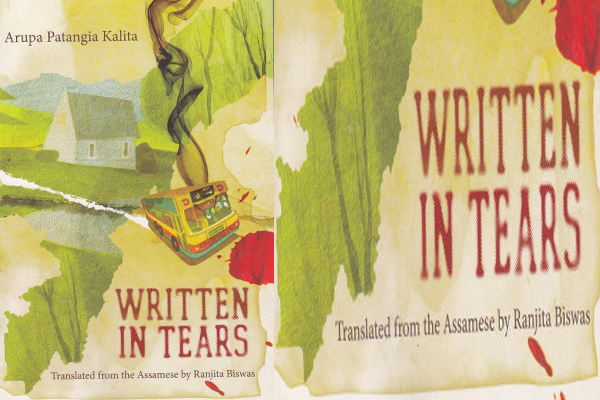
Written in Tears captures a violent period in India's Northeast
Kolkata, Apr 19 (IBNS) "Written in Tears", a recent publication by Harper Collins, offers a glimpse into the Northeast of India, particularly Assam, during a period of violence and political unrest that wrecked the region for a few decades in the contemporary times and its widespread impact on the society.
Written by Arupa Patangia Kalita, a leading voice in contemporary Assamese literature and Sahitya Akademi Award winner (2014) and translated by Ranjita Biswas, an award-winning translator, the collection is a literary chronicle of the conflicting times in Assam in the recent past but its echo resonates even today from time to time.
Arupa P.Kalita is a prolific writer. Her work encompasses many areas but it always focuses on the common people who often face tragedies in an inequitable and unjust society. Strong women protagonists figure in many of her fiction.”As a writer and individual, I have certain political beliefs and they are reflected in my work,” says the writer.
To keep with the theme of this particular compilation, conflict situation and a society caught in the crossfire, the translator has selected three enovellas, long stories and short stories from the author’s collections.
“Arunima’s Motherland” talks about a new bride in a welcoming home witnessing its slow destruction because one member joins an insurgent group; “The Cursed Field of Golden Rice” portrays a simple tribal woman losing her home-twice, due to internecine rivalry between groups; Mainao (“The girl with Long Hair) is compelled to shed her beautiful hair to cruel scissors because she defies a so-called social diktat; a half-burnt bus trudges to a serene and beautiful landscape to a repairing garage but destroys everything on its way with its shadow of killings hanging over its frame in the surrealistic story, “The Half-burnt Bus at Midnight.”
The book also introduces the reader to the rich flora and fauna of the region, local traditions, and folk elements. That a beautiful land and its people be destroyed by hatred, political upmanship and distrust can be a template for similar experiences in the world around today.
Support Our Journalism
We cannot do without you.. your contribution supports unbiased journalism
IBNS is not driven by any ism- not wokeism, not racism, not skewed secularism, not hyper right-wing or left liberal ideals, nor by any hardline religious beliefs or hyper nationalism. We want to serve you good old objective news, as they are. We do not judge or preach. We let people decide for themselves. We only try to present factual and well-sourced news.
Support objective journalism for a small contribution.


Latest Headlines
‘We are the worst storytellers’: Suhel Seth on India’s failure to market itself at 'Kitaab' book launch
Mon, Sep 07 2026
Padma Shri Mukesh Batra launches ‘TOXIC’, explores overlooked forms of modern-day toxicity
Mon, Aug 24 2026
Padma Shri Mukesh Batra launches ‘TOXIC’, explores overlooked forms of modern-day toxicity
Mon, Aug 24 2026
As Taslima Nasreen returns to Kolkata, a look at her controversial books that changed her life journey
Sat, Aug 01 2026
Religion without servility: Journalist Anshul Chaturvedi on why Vivekananda speaks to believers and atheists alike
Sat, Jan 17 2026